
How to Get Rid of Pet Odor in Carpet Permanently
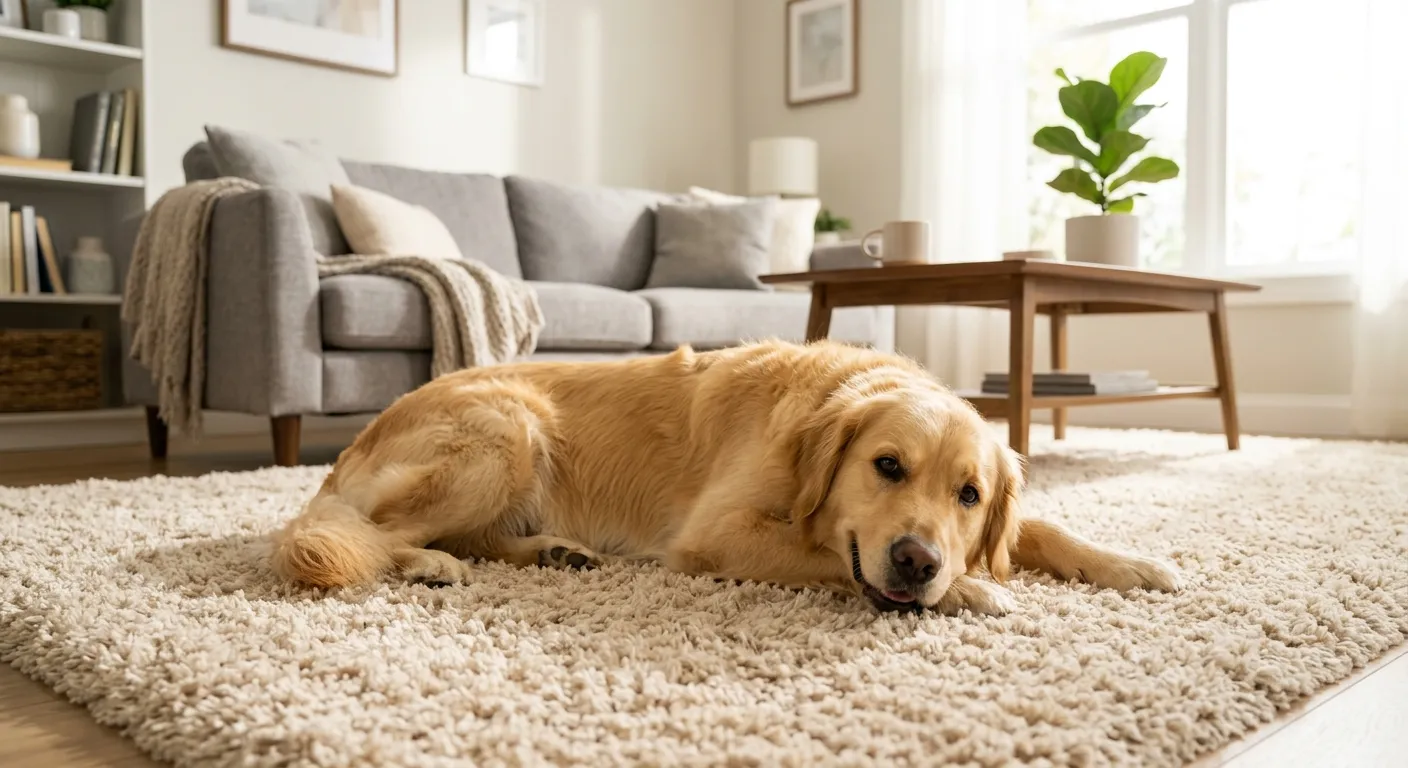
You love your pets, but you do not love the smell they can leave behind in your carpet. If you have tried air fresheners, baking soda, and store-bought carpet deodorizers and the odor keeps coming back, you are not alone. The reason most approaches fail to get rid of pet odor in carpet is that they mask the smell without addressing its source.
Pet urine, in particular, does not just sit on the surface of your carpet. It soaks through the fibers, into the carpet backing, and down into the padding underneath. As it dries, uric acid crystals form that are virtually undetectable to your nose until moisture or humidity reactivates them. That is why the smell seems to disappear and then come roaring back on a humid day or when someone steps on the affected area.
In this guide, we will cover seven proven methods to eliminate pet odor from your carpet, ranging from simple DIY approaches for minor issues to professional treatments for severe contamination. Each method targets a different level of the problem, so you can choose the right approach for your situation.
1. The Baking Soda Deep Treatment
Baking soda is the most accessible odor fighter you probably already have in your kitchen, and when used properly, it is surprisingly effective for mild pet odors.
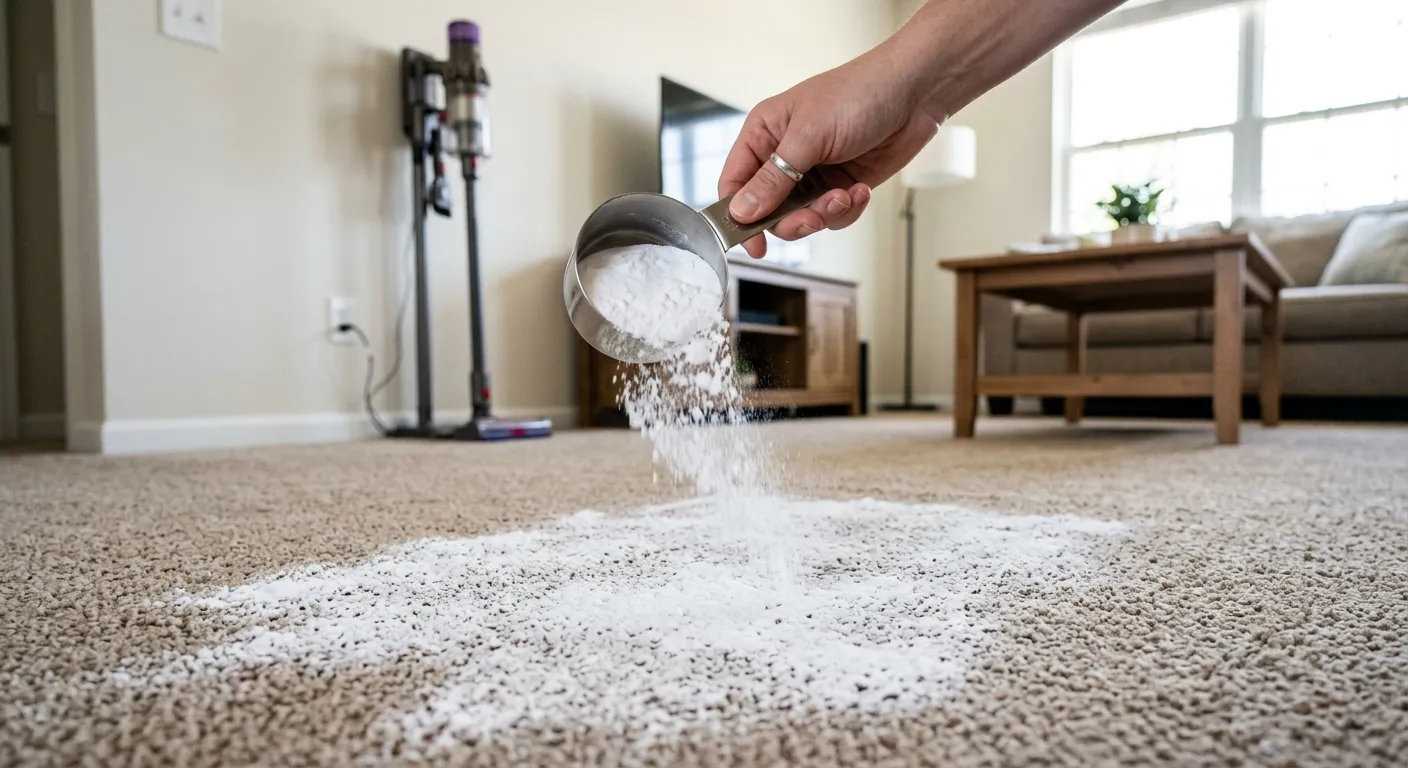
How to do it right: Do not just sprinkle a light dusting and vacuum it up ten minutes later. For pet odors, you need a heavy application. Spread a thick layer of baking soda, about one-eighth of an inch deep, over the affected area. If you can, work it into the carpet fibers with a clean brush or broom. Then leave it for a minimum of 8 hours, and ideally overnight or up to 24 hours. The longer baking soda sits, the more odor-causing compounds it absorbs. Vacuum thoroughly with multiple slow passes.
Best for: Mild surface-level odors, general freshening between deeper treatments.
Limitations: Baking soda only absorbs odors in the upper carpet fibers. It does not reach the backing or padding where the most concentrated urine deposits exist, and it does not break down uric acid crystals. Think of it as a maintenance tool rather than a cure.
2. Enzyme Cleaner Application
Enzyme cleaners are the single most effective DIY tool for pet odor removal. Unlike chemical cleaners that mask odors, enzyme cleaners contain biological enzymes and beneficial bacteria that literally digest the organic compounds causing the smell.
How to do it right: Choose an enzyme cleaner specifically formulated for pet urine, such as Nature's Miracle, Rocco and Roxie, or Bio-One. Saturate the affected area thoroughly. You need the enzyme solution to reach everywhere the urine went, which means soaking through the carpet fibers and into the backing. Cover the treated area with a damp towel or plastic wrap to keep it moist, as enzymes stop working when they dry out. Leave it for 24 to 48 hours. Remove the cover and allow the area to air dry completely. Repeat if necessary.
Best for: Fresh to moderately old urine stains and odors, single-incident accidents.
Limitations: Enzyme cleaners available to consumers are less concentrated than professional-grade products. For repeated accidents in the same spot, consumer enzymes may not fully penetrate the buildup of uric acid crystals in the padding. They also require patience, as the biological process takes time to work.
3. White Vinegar and Water Solution
White vinegar is a natural deodorizer that helps neutralize pet odors, especially combined with other methods.
How to do it right: Mix equal parts white vinegar and warm water in a spray bottle. Spray generously over the affected area and let it air dry. Follow with the baking soda method for best results, as vinegar neutralizes alkaline odor compounds while baking soda absorbs acidic ones.
Best for: Surface-level odors, fresh accidents, supplementing other treatments.
Limitations: Not strong enough for urine that has soaked into carpet padding.
4. Hydrogen Peroxide Treatment
Hydrogen peroxide breaks down odor-causing compounds and helps with stain removal.
How to do it right: Mix half a cup of 3 percent hydrogen peroxide with one teaspoon of dish soap. Test on a hidden area first. Apply to the odor area, let sit 10 to 15 minutes, blot, rinse with cool water, and blot dry.
Best for: Combined stain and odor treatment on light-colored carpets.
Limitations: Risk of discoloration on darker carpets. Not suitable for wool or silk fibers.
Not sure when your carpets were last deep cleaned?
Get an exact price online in about two minutes. No phone tag, no surprise fees.
Get My Instant Quote5. UV Black Light Detection and Targeted Treatment
One reason pet odor persists is that you might not be treating all of the affected areas. Pet urine can spread beneath the carpet surface in ways that are invisible to the naked eye. A UV black light reveals exactly where urine deposits are hiding.
How to do it right: Purchase a UV flashlight (available for $10 to $25 at most hardware stores or online). Wait until dark, turn off all lights in the room, and slowly scan your carpet with the UV light held 1 to 2 feet above the surface. Pet urine will glow a yellowish-green color under UV light. Mark each spot with painter's tape so you can find them again with the lights on. Then treat each spot individually using the enzyme cleaner method described above.
Best for: Identifying hidden urine deposits, verifying that treatment has been thorough, homes where you smell pet odor but cannot locate the source.
Limitations: UV lights can also illuminate other substances (certain cleaning products, food spills) that are not urine, so some false positives are possible. Very old, thoroughly dried urine may not fluoresce as brightly. This is a detection method rather than a treatment method and should be paired with one of the cleaning approaches.
6. Carpet Padding Replacement
Sometimes the padding is the problem. When pet urine has repeatedly soaked through to the padding, uric acid crystals saturate it beyond what surface treatments can fix.
How to do it right: A professional pulls back the carpet, removes contaminated padding, seals the subfloor with an odor-blocking primer (like Kilz), installs new padding, and re-stretches the carpet.
Expected cost: $150 to $400 per affected area. This provides a permanent solution for localized, long-term contamination.
Best for: Severe urine contamination in specific areas, or homes being prepared for sale.
Limitations: Not a DIY project. If contamination is widespread, full replacement may be more cost-effective.
7. Professional Hot Water Extraction with Enzyme Treatment
For moderate to severe pet odor throughout your carpet, professional cleaning is the most effective single-service solution. But not just any professional cleaning. You need hot water extraction combined with professional-grade enzyme pre-treatment.
How it works: At Shiny Rhino, our pet odor treatment protocol begins with a UV light inspection to map all urine deposits. We then apply professional-strength enzyme solution to every identified spot and allow adequate dwell time for the enzymes to begin breaking down uric acid. Next, we perform hot water extraction at temperatures above 200 degrees Fahrenheit with specialized pet-odor neutralizing solution in the rinse water. The high heat helps break down remaining uric acid crystals while the powerful extraction removes them from the carpet and padding.
Expected cost: $200 to $500 for a standard home, depending on the number of affected areas and severity. Sub-surface extraction is additional. While this is the most expensive option on this list, it is also the most thorough single-service treatment available.
Best for: Moderate to severe pet odor, homes with multiple affected areas, situations where DIY methods have not fully resolved the problem.
Preventing Pet Odor from Returning
Once you have eliminated the existing odor, take these steps to prevent it from coming back:
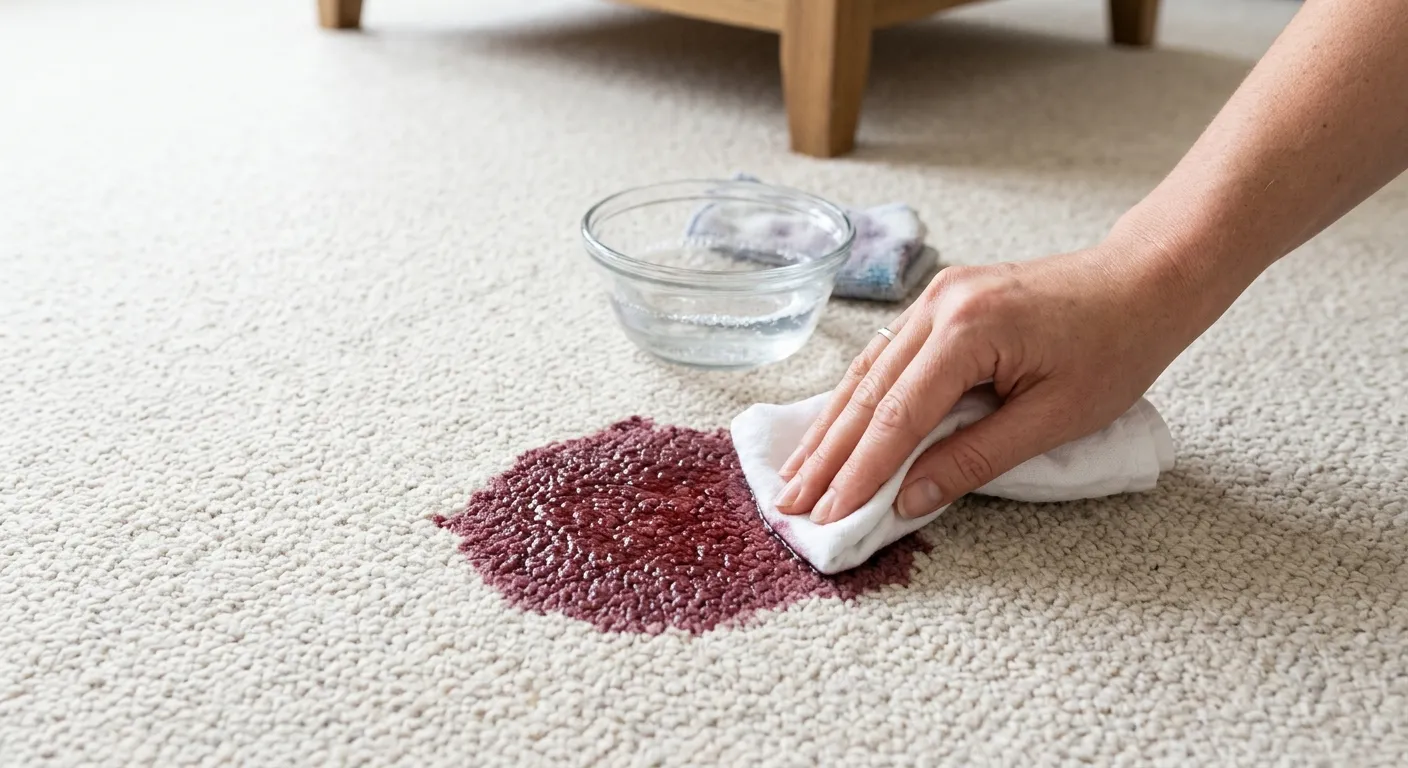
- Address accidents immediately. Blot up as much urine as possible within minutes and apply enzyme cleaner right away. The faster you treat it, the less likely it is to reach the padding.
- Use washable area rugs in areas where your pet spends the most time or in spots where accidents have happened before.
- Schedule regular professional cleaning. For pet-owning households, we recommend professional carpet cleaning every 6 to 12 months. Check out our guide on how often to schedule professional carpet cleaning for a detailed breakdown.
- Groom your pets regularly. Regular bathing and brushing reduces dander, oils, and general pet smell that accumulates in carpet fibers over time.
- Invest in a quality vacuum with a HEPA filter and use it at least twice a week on carpeted areas. This removes pet hair, dander, and surface-level odor particles between deep cleanings.
When to Consider Carpet Replacement
Sometimes cleaning is not enough. If urine contamination has been ongoing for years or the subfloor is damaged, replacement may be the better investment. At Shiny Rhino, we provide honest assessments and will tell you upfront if replacement makes more sense. We also offer tile and grout cleaning and hardwood floor maintenance if you are considering hard-surface flooring.