
Why Hidden Dirt Is More Than Just an Eyesore
You vacuum weekly, wipe down your counters, and keep your bathrooms sparkling. But if you are like most homeowners, there are entire zones in your house that have not been touched in months, or even years. These hidden spots silently collect dust, allergens, mold spores, pet dander, and bacteria that affect the air your family breathes every day.
According to the Environmental Protection Agency, indoor air can be two to five times more polluted than outdoor air. A major contributor is the buildup of contaminants in areas that standard cleaning routines miss. At Shiny Rhino, our technicians have been doing deep cleans for years, and we consistently find the same overlooked areas in home after home. Here are the ten spots that need your attention.
1. Behind and Underneath Your Refrigerator
Your refrigerator sits in the same spot year-round, and behind it a thick layer of dust, grease, food particles, and pet hair accumulates on the floor and condenser coils. This buildup forces your refrigerator to work harder, increasing your energy bill by up to 25 percent according to the U.S. Department of Energy.
How to clean it: Pull the refrigerator away from the wall at least once every three months. Vacuum the floor behind it and use a coil brush to clean the condenser coils on the back or bottom. Wipe down the wall surface, which often collects grease spatters.
2. Inside and Around Air Vents and Registers
Your HVAC system circulates air through every room, and the vents are the delivery points. Over time, dust, pet hair, and allergens collect on and inside vent covers. Every time your system kicks on, it pushes those particles right back into your living space.
How to clean it: Remove vent covers and soak them in warm soapy water. Use a vacuum hose attachment to reach inside the ductwork. For thorough cleaning, professional duct cleaning every three to five years is recommended by the National Air Duct Cleaners Association.
3. The Top of Ceiling Fan Blades
Ceiling fans are dust magnets. The tops of the blades are out of your line of sight, so it is easy to forget them until you turn the fan on and send a shower of dust particles through the room. In bedrooms, this can trigger nighttime allergy symptoms.
How to clean it: Use the pillowcase trick: slide an old pillowcase over each blade, then pull it back slowly so the dust stays trapped inside. Clean ceiling fan blades at least once a month during the seasons you use them.
4. Under Heavy Furniture: Sofas, Beds, and Dressers
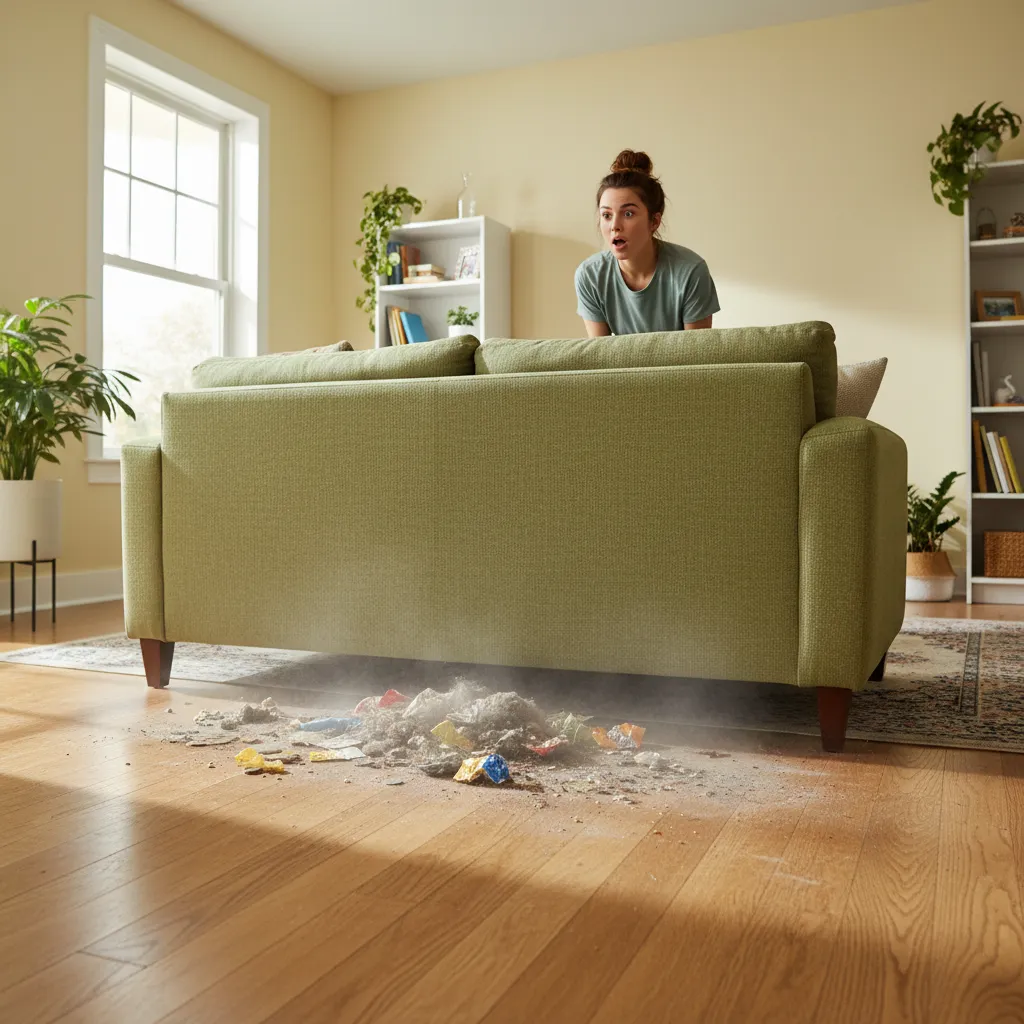
The space under your couch, bed, and heavy dressers is prime territory for dust bunnies, pet hair, and even mold in humid climates. Research published in the journal Indoor Air found that dust under beds contains significantly higher concentrations of dust mites, because the dark, undisturbed environment is ideal for mite reproduction.
How to clean it: Use a flat-head vacuum attachment or an extendable microfiber duster to reach under furniture. Move furniture completely at least twice a year to vacuum the carpet underneath. If you notice discoloration or matting, professional carpet cleaning can restore the fibers.
5. Baseboards and Crown Molding
Baseboards run along the perimeter of every room, catching dust, pet hair, scuff marks, and cobwebs. Crown molding up high collects a fine layer of dust that is nearly invisible until you look from the right angle.
How to clean it: Wipe baseboards with a damp microfiber cloth and all-purpose cleaner. For scuff marks, a magic eraser works well on painted baseboards. Use a long-handled duster for crown molding. This takes only ten to fifteen minutes per room.
6. Inside the Washing Machine
Your washing machine accumulates soap residue, fabric softener buildup, mold, and mildew, especially front-loading models. That musty smell on supposedly clean towels? It is likely coming from a dirty washer drum or gasket. Studies show that 83 percent of front-load washers test positive for mold growth in the door gasket.
How to clean it: Run an empty hot water cycle with two cups of white vinegar once a month. Wipe the rubber door gasket with a vinegar-dampened cloth, paying attention to the folds where moisture hides. Leave the door ajar between loads.
7. Light Switches, Door Handles, and Remote Controls
These are the most frequently touched surfaces in your home, yet they rarely make it onto the cleaning checklist. A University of Virginia study found that light switches and door handles are among the most contaminated surfaces during cold and flu season, with viruses surviving for up to 48 hours.
Not sure when your carpets were last deep cleaned?
Get an exact price online in about two minutes. No phone tag, no surprise fees.
Get My Instant QuoteHow to clean it: Wipe light switch plates, door handles, remote controls, and stair railings with a disinfectant wipe at least once a week. During illness, increase to daily. This takes less than five minutes.
8. Behind the Toilet and Around the Base
Even people who clean their toilet bowl regularly skip the back of the toilet, the base where it meets the floor, and the wall behind it. These areas collect dust, hair, moisture, and urine splatter that can cause persistent odors and discolor grout.
How to clean it: Use a disinfectant spray and a detail brush to scrub around the toilet base and bolts. Wipe down the entire exterior, including the back and underside of the tank. For discolored grout, professional tile and grout cleaning can restore the original appearance.
9. Inside Kitchen Cabinets and Pantry Shelves
Crumbs, spills, expired products, and food dust accumulate inside cabinets without you noticing. This attracts pests like ants and pantry moths. The USDA recommends cleaning pantry shelves every three to six months.
How to clean it: Remove everything from shelves. Vacuum crumbs and debris. Wipe shelves with warm water and dish soap, followed by a vinegar spray. Check expiration dates while everything is out, and use shelf liners for easier future cleaning.
10. Carpet Edges and the Perimeter of Every Room
Vacuum cleaners handle open carpet areas well, but the edges where carpet meets baseboards are hard to reach. This is where dust, pet hair, and allergens build into visible lines of grime called "filtration soiling," caused by air depositing fine particles along carpet edges as it flows under doors and along walls.
How to clean it: Use a crevice tool attachment during regular vacuuming. For filtration soiling that has set in, professional treatment is required. Shiny Rhino's carpet cleaning service includes edge cleaning and filtration soil treatment with every visit.
Creating Your Hidden Spot Cleaning Checklist
You do not need to tackle all ten areas in one day. Rotate through them monthly:
Month 1: Refrigerator area, air vents, ceiling fans
Month 2: Under furniture, baseboards, washing machine
Month 3: High-touch surfaces, behind toilets, kitchen cabinets, carpet edges
When to Call in the Professionals
Some hidden spots respond well to DIY cleaning. Others, like embedded carpet edge soiling, deep allergen buildup in upholstery, or discolored tile grout, require professional-grade equipment. If you have not had a professional deep clean in the past 12 months, there is almost certainly hidden buildup that regular cleaning cannot address.
Shiny Rhino's whole-home deep cleaning covers every surface, including the hidden spots most homeowners miss. Our trained technicians use truck-mounted hot water extraction that removes 99 percent of allergens and bacteria.
Ready to uncover what is hiding in your home? Get a free quote online or call us at (855) 507-8955 to schedule your deep clean today.