
The Hidden Allergen Factory in Your Living Room
You change your bedsheets regularly, vacuum your carpets, and dust your shelves. But when was the last time you thought about what is living inside your couch cushions? For most families, the sofa is the most-used piece of furniture in the home, and it is almost never professionally cleaned. The result is a slow, invisible accumulation of allergens that can seriously affect your indoor air quality and your family's health.
If you have been experiencing unexplained sneezing, congestion, itchy eyes, or worsened asthma symptoms while relaxing at home, your upholstered furniture could be the culprit. At Shiny Rhino, we specialize in both carpet and upholstery cleaning, and what we extract from couches, chairs, and mattresses surprises even the most diligent homeowners.
What Is Hiding in Your Upholstered Furniture
Dust Mites: The Microscopic Roommates
Dust mites are arachnids so small that roughly 100,000 of them can fit in a single square yard of carpet or upholstery fabric. They feed on dead human skin cells, and since the average person sheds about 1.5 grams of skin per day, your couch provides an all-you-can-eat buffet. A single used mattress can contain anywhere from 100,000 to 10 million dust mites, and your sofa is no different.
It is not the mites themselves that cause allergic reactions. It is their waste products. Each dust mite produces about 20 fecal pellets per day, and these pellets contain proteins that are among the most potent indoor allergens known. When you sit on your couch, shift positions, or plump a cushion, you launch these microscopic particles into the air where they remain suspended for minutes before settling on nearby surfaces or being inhaled.
Pet Dander: Beyond What You Can See
If you have cats or dogs, your upholstery absorbs pet dander, tiny flakes of animal skin that are a major allergen. Pet dander is incredibly sticky and lightweight. It clings to fabric fibers and becomes embedded deep in cushion foam where surface vacuuming cannot reach. Even homes without pets can contain pet dander brought in on visitors' clothing. Studies have found measurable levels of cat and dog allergens in homes that have never housed a pet.
Pollen, Mold Spores, and Outdoor Pollutants
Every time you come inside and sit on your couch, you transfer pollen, mold spores, and fine particulate matter from your clothing to the upholstery. During spring and fall allergy seasons, this accumulation accelerates rapidly. Mold spores are particularly concerning because upholstery in humid environments can provide enough moisture for mold to establish and grow, especially on the underside of cushions and in the crevices of the frame.
Bacteria and Viruses
Research published in the journal Applied and Environmental Microbiology found that some bacteria can survive on upholstery fabric for weeks. During cold and flu season, your couch can become a reservoir for illness-causing germs. MRSA, E. coli, and other harmful bacteria have been found on household upholstery in multiple studies, particularly on frequently used seating in family rooms.
How Dirty Upholstery Affects Your Indoor Air Quality
The Allergen Cycle
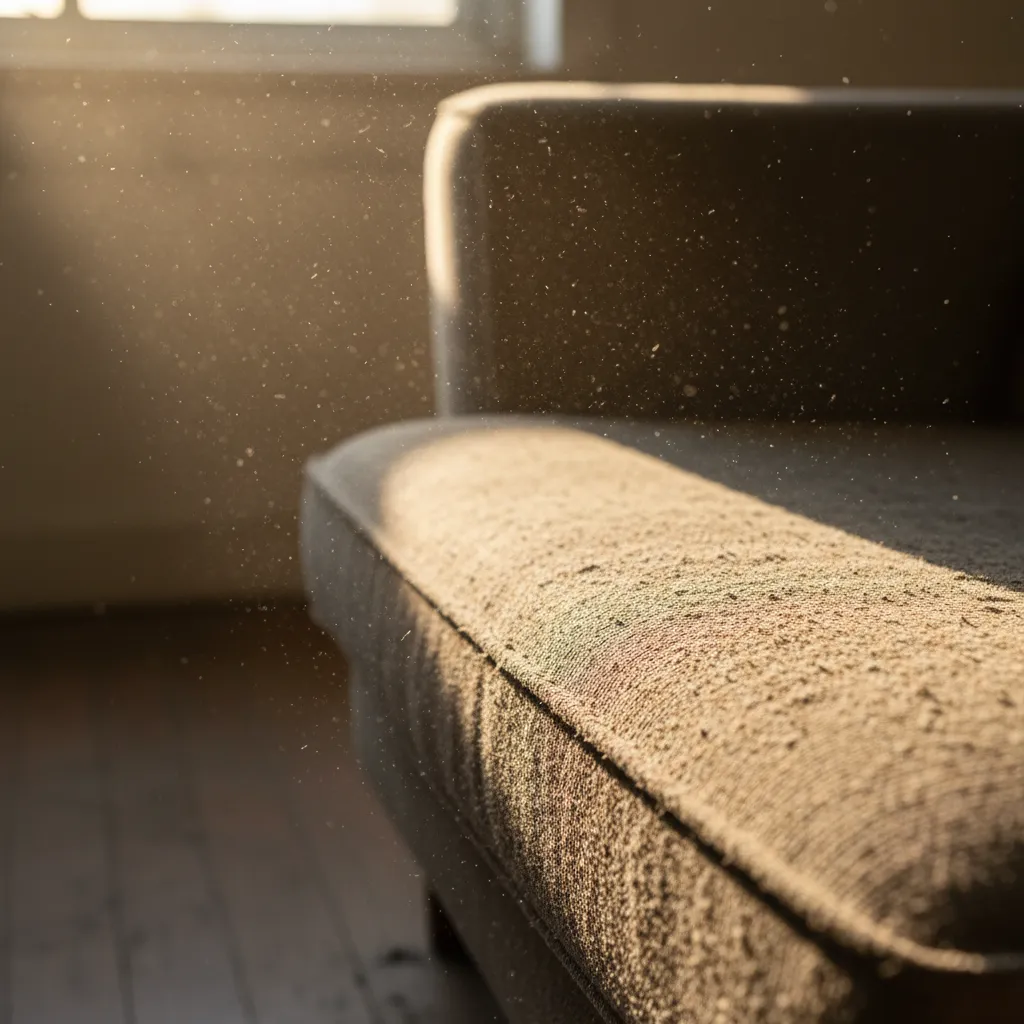
Here is how upholstery contaminants become an air quality problem: particles settle deep into fabric and cushion fibers over weeks and months. When someone sits down, gets up, or even walks past the furniture, mechanical disturbance sends a burst of allergen-laden particles into the air. Your HVAC system picks up these particles and distributes them throughout your home. They settle on other surfaces, only to become airborne again with the next disturbance. This creates a continuous cycle of allergen exposure that no amount of surface dusting can break.
The EPA classifies indoor air quality as one of the top five environmental health risks. Poor indoor air quality has been linked to increased rates of asthma, allergic rhinitis, respiratory infections, and even cardiovascular problems in long-term studies. Upholstered furniture is consistently identified as one of the primary reservoirs for indoor allergens.
Symptoms of Poor Indoor Air Quality from Dirty Upholstery
You may be affected by dirty upholstery if you experience any of the following, particularly when you are at home or after sitting on your furniture:
- Sneezing fits, especially in the evening when relaxing on the couch
- Nasal congestion or runny nose that improves when you leave the house
- Itchy, watery, or red eyes
- Worsened asthma symptoms, including wheezing and tightness
- Skin irritation or unexplained rashes after prolonged contact with furniture
- A musty or stale odor in rooms with heavily used upholstered furniture
- Frequent colds or respiratory infections among household members
If two or more of these symptoms are present and seem to improve when you are away from home, contaminated upholstery is a strong suspect.
What You Can Do: DIY Upholstery Maintenance
Weekly Vacuuming
Use your vacuum's upholstery attachment to go over all seating surfaces, crevices, and underneath cushions at least once per week. A vacuum with a HEPA filter is strongly recommended because standard vacuums can actually make the problem worse by sending fine particles airborne through the exhaust. Pay special attention to the areas where cushions meet the frame, as this is where debris accumulates most heavily.
Spot Cleaning
Address spills and stains immediately using the cleaning method appropriate for your upholstery type. Always check the manufacturer's cleaning code on the tag: W means water-based cleaners are safe, S means solvent-only, WS means either can be used, and X means professional cleaning only. Using the wrong cleaning method can damage fabric, set stains, or create water rings.
Not sure when your carpets were last deep cleaned?
Get an exact price online in about two minutes. No phone tag, no surprise fees.
Get My Instant QuoteDehumidification
Keep indoor humidity between 30 and 50 percent. Dust mites thrive in humidity above 50 percent, and mold requires moisture to grow. A dehumidifier in the main living area can significantly reduce both dust mite populations and mold growth in upholstered furniture.
Protective Covers
Washable slipcovers and throw covers provide a barrier between your body and the upholstery fabric. Washing these covers weekly in hot water (130 degrees Fahrenheit or higher) kills dust mites and removes accumulated allergens. This is especially important for households with allergy sufferers.
Why Professional Upholstery Cleaning Makes a Critical Difference
What DIY Methods Miss
Surface vacuuming and spot cleaning address only the top layer of contamination. The allergens that cause the most problems, including dust mite waste, deeply embedded pet dander, and mold spores in cushion foam, are far below the surface where household tools cannot reach. Think of it like an iceberg: what you can see and clean on the surface represents perhaps 20 to 30 percent of the total contamination.
How Professional Cleaning Works
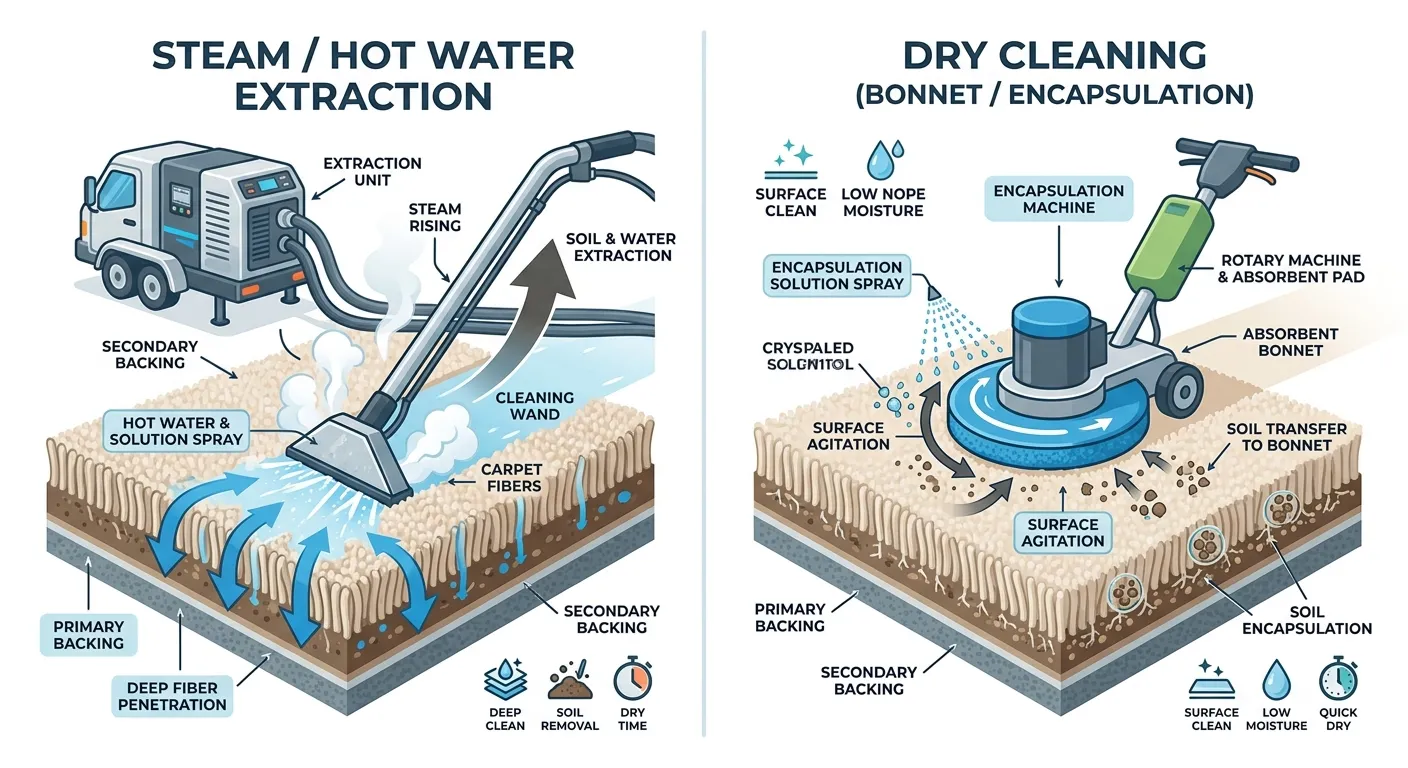
Professional upholstery cleaning uses hot water extraction or specialized low-moisture methods depending on the fabric type. At Shiny Rhino, our process includes:
1. Fabric inspection and testing: We identify your upholstery type and test for colorfastness to ensure we use the safest, most effective method.
2. Pre-treatment: A professional-grade pre-spray breaks down body oils, embedded soiling, and allergen deposits throughout the fabric depth.
3. Deep extraction: Using equipment that generates far more heat and suction than any household tool, we flush contaminants from deep within the fibers and cushion layers.
4. Allergen treatment: For allergy-sensitive households, we apply hypoallergenic post-treatments that neutralize remaining allergen proteins.
5. Rapid drying: Our extraction process removes enough moisture that furniture is typically usable within 4 to 6 hours.
How Often Should You Have Upholstery Professionally Cleaned?
Industry guidelines recommend professional upholstery cleaning every 12 to 24 months for average households. However, certain conditions warrant more frequent service:
- Every 6 to 12 months: Homes with pets, children under five, smokers, or household members with allergies or asthma
- Every 12 months: Homes with moderate use and no specific risk factors
- Every 18 to 24 months: Lightly used furniture in low-traffic rooms
Consider professional cleaning immediately if you notice persistent odors, visible soiling that vacuuming does not remove, or a sudden increase in allergy symptoms at home.
Take the First Step Toward Healthier Indoor Air
If your couch is making you sneeze, the solution is within reach. Professional upholstery cleaning removes the deep allergen reservoir that drives poor indoor air quality, and the results are both immediate and lasting.
Shiny Rhino's trained technicians clean sofas, loveseats, recliners, dining chairs, mattresses, and more using safe, eco-friendly solutions that are gentle on fabric and tough on allergens. We serve homes throughout the area and offer convenient scheduling to fit your routine.
Ready to breathe easier in your own home? Get a free upholstery cleaning quote or call (855) 507-8955 today. Your lungs and your couch will thank you.