
Quick answer: Carpet holds onto dust, pollen, and pet dander instead of letting it float through the house, but holding allergens is not the same as releasing them into the air. Whether carpet helps or hurts indoor air quality comes down to how well it's maintained, not whether you have it at all.
Ask ten people about carpet and allergies and you'll get ten different opinions, usually based on what worked in their own living room. The research is less dramatic than the internet debate: carpet fibers can trap airborne particles the way a filter does, but a neglected carpet eventually gives that load back. Maintenance, not material alone, decides which way it goes.
What Actually Lives in Carpet: Dust Mites, Dander, and Pollen
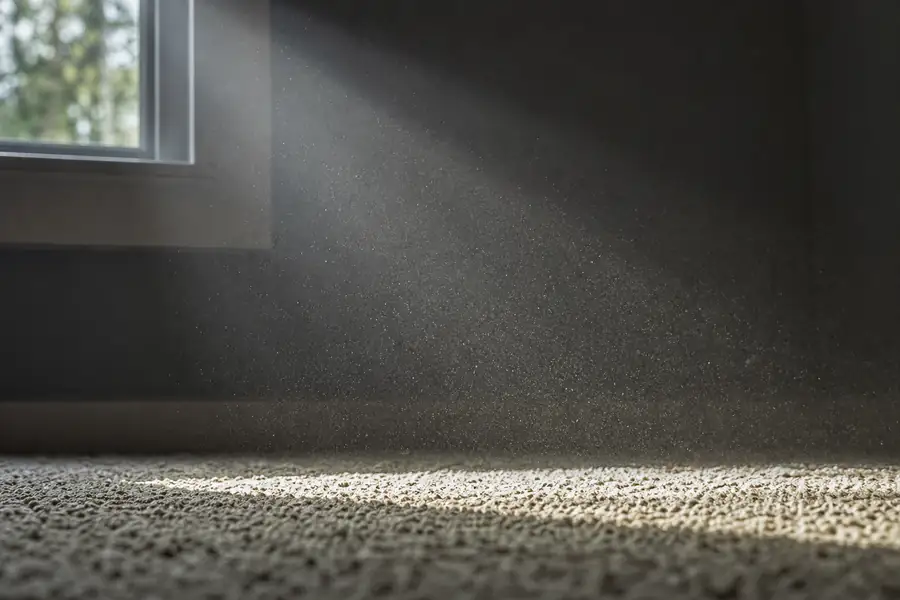
Carpet fibers hold three main allergen sources: dust mites, pet dander, and pollen tracked in from outside. Dust mites are microscopic organisms that feed on shed skin cells and thrive in the humidity carpet padding can hold, and their waste particles are a common household allergen. Pet dander, flakes of skin shed by cats and dogs, works down into the pile and settles near the base of each fiber rather than staying on the surface. Pollen grains, carried in on shoes and clothing, get ground into the pile with foot traffic and can sit there for weeks between cleanings.
None of that is unique to carpet. Hard floors, upholstery, and bedding collect the same particles. Pet owners managing shedding and tracked-in allergens often pick up a few extra habits worth knowing, covered in our pet owners guide to clean floors. Carpet just holds more volume because its fiber structure gives allergens somewhere to settle instead of drifting around with every draft.
Carpet and Allergies: The Reservoir vs Airborne Debate
Carpet behaves more like a reservoir than an air pollutant, and that is the counterintuitive part of the carpet and allergens research: a clean, well-maintained carpet can keep more particles out of the breathing zone than a bare floor does. Carpet fibers capture dust, pollen, and dander on contact and hold them below ankle height, where normal air currents rarely stir them back up.
That protective effect only holds while the carpet has capacity left. Once the fibers are saturated with years of buildup, or once the carpet is disturbed hard enough (kids rolling around, a vacuum with a weak filter, a dry sweep), some of that trapped material becomes airborne again. The reservoir effect is real, but it's temporary and conditional, not a permanent fix.
When Carpet Makes Allergies Worse
Carpet becomes a bigger problem for allergy sufferers mainly under three conditions: deep pile, high humidity, and infrequent cleaning. Deep, plush pile gives dust mites and dander more surface area and more protected space than a low, tight weave does. Humidity above 50 percent lets dust mite populations grow faster, since mites need moisture in the air to survive. And carpet that goes two or three years without a deep clean simply runs out of reservoir capacity, so more of what it's holding ends up back in the room.
Homes in humid climates feel this more. In Miami, for example, year-round humidity means carpet padding dries slower after any spill or cleaning, giving dust mites a longer window to multiply between professional visits.
The HEPA Vacuuming Routine That Matters
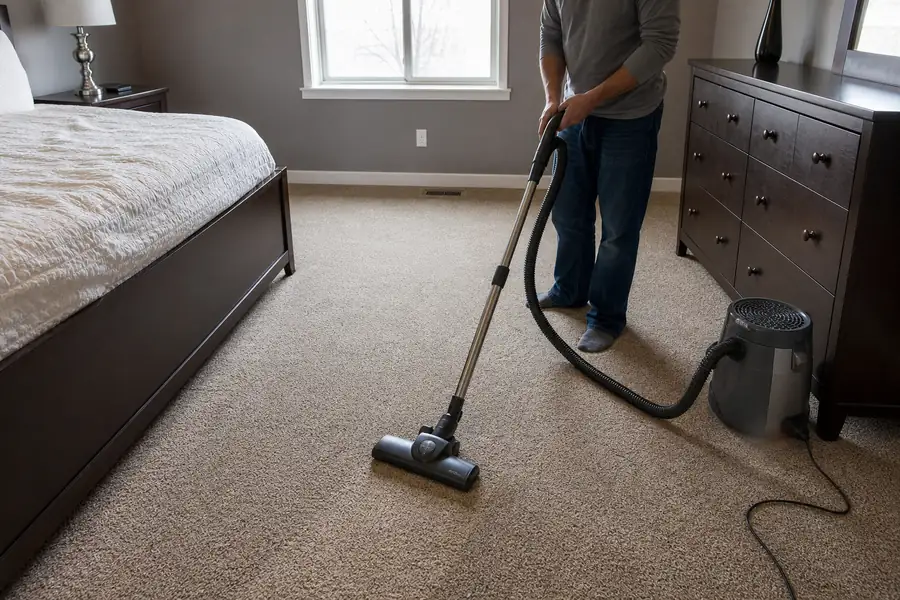
A HEPA filter vacuum, one built with a high-efficiency particulate air filter that captures particles down to 0.3 microns, is the single biggest factor in keeping carpet allergens from recirculating during routine cleaning. A standard vacuum without a sealed HEPA filter can push fine dust and dander back into the air through its exhaust, undoing the reservoir benefit carpet otherwise provides.
For allergy-sensitive households, vacuuming high-traffic carpet two to three times a week, and bedrooms at least weekly, keeps the surface load manageable between deep cleanings. Slow, overlapping passes work better than quick ones, since dust mite waste and dander are light enough to need extra dwell time under the brush roll to lift out of the pile.
Not sure when your carpets were last deep cleaned?
Get an exact price online in about two minutes. No phone tag, no surprise fees.
Get My Instant QuoteHumidity Control and Carpet Allergens
Keeping indoor humidity between 30 and 50 percent is the most effective long-term step for limiting dust mites in carpet, since mites can't reproduce in drier air. A dehumidifier or a well-sized air conditioner run consistently, rather than only during visible humidity spikes, keeps carpet padding and fibers from holding the moisture mites need.
Climate plays a role too. Denver's dry heat keeps carpet naturally drier and slows dust mite growth, while homes in gulf coast cities need more deliberate humidity control to get the same effect. A hygrometer reading under 50 percent is a better guide than judging by feel.
What Hot Water Extraction Removes From Carpet
Hot water extraction, the method of flushing carpet fibers with roughly 200°F water at 400+ PSI and immediately extracting it, removes the deep, built-up allergen load that vacuuming alone can't reach. Vacuuming lifts surface dust; hot water extraction breaks down and rinses out the dander, pollen residue, and dust mite debris that settle at the base of the fiber and in the padding below.
Shiny Rhino technicians run truck-mounted hot water extraction rather than portable rental units, which hold more heat and pressure and pull more moisture back out, so carpet dries faster and doesn't sit damp long enough to invite new mite growth. For a closer look at the right interval, see our guide on how often you need professional carpet cleaning, which resets the reservoir capacity carpet needs between visits.
Carpet vs Hard Floors: A Fair Comparison for Allergies
Neither flooring type is automatically better for allergies; each trades one risk for another. Carpet traps more allergens but releases less into the air day to day, while hard floors hold less dust overall but let whatever settles become airborne again with every footstep or draft.
| Factor | Carpet | Hard Floors |
|---|---|---|
| Allergen capacity | High (fibers and padding trap dust, pollen, dander) | Low, little to hold onto |
| Airborne release day to day | Low, until disturbed or saturated | Higher, particles resettle easily |
| Cleaning effort needed | HEPA vacuuming plus periodic deep cleaning | Frequent sweeping or mopping |
| Humidity sensitivity | High, feeds dust mite growth | Low |
For households already managing allergies, the better choice usually comes down to how realistic the cleaning routine is. A well-vacuumed, periodically deep-cleaned carpet can outperform a dusty hard floor, and the reverse is just as true. Upholstery collects the same allergen load as carpet, so furniture and rugs deserve the same attention as the flooring itself.
Shiny Rhino technicians are trained in fiber identification and IICRC-certified methods, and every crew is background checked before stepping into a home. If carpet allergens have built up past what regular vacuuming handles, booking a professional carpet cleaning resets that load with hot water extraction deep enough to reach the padding, and booking online applies an automatic discount.