
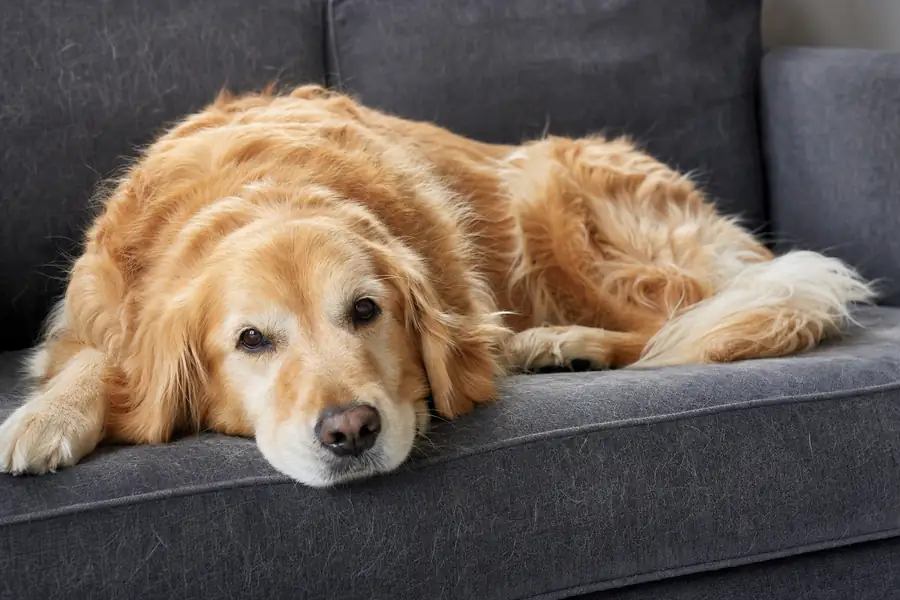
Every list of pet hair tricks contains the same dozen items, and about half of them will not work on your sofa.
That is because pet hair removal is not one problem. Hair clings to upholstery by two different mechanisms - static and mechanical interlocking - and which one you are fighting depends entirely on your fabric. Microfiber grips hair in its dense nap. Velvet holds it by direction. Loose weaves let it work down between the threads. Leather barely holds it at all and it slides around instead.
Match the tool to the fabric and this takes five minutes. Mismatch it and you will push hair around for half an hour.
Key Takeaways
- Rubber beats fabric. A rubber squeegee or rubber-edged brush is the most effective tool on most upholstery, and it is cheap.
- Dampness kills static. A very lightly damp rubber glove or cloth gathers hair that a dry tool scatters - but check your cleaning code before using any water.
- Always work in one direction, with the nap. Back-and-forth redistributes hair and drives it deeper.
- Cat hair is harder than dog hair - finer, often barbed, and it works further into the weave.
- Vacuum last, not first, on most fabrics. Gather the hair into clumps with rubber, then vacuum.
- Check for an S or X cleaning code before anything damp touches the sofa.
- Fabric choice is the long-term fix - tight weaves release hair; loose weaves and velvet trap it.
First: check the tag
Before using anything damp, find the cleaning code - under the cushions, under the seat deck, or on the underside of the frame.
| Code | Means |
|---|---|
| W | Water-based cleaning is safe |
| S | Solvent only - no water. Water leaves rings and can cause browning |
| WS | Either, applied lightly |
| X | Vacuum and brush only. No water, no solvent |
Every method below that involves moisture is for W and WS fabric. On S and X, stay dry - dry rubber tools, lint rollers, pumice and vacuuming all work fine. Much microfiber is coded S, which is worth knowing before you reach for a damp cloth. More in upholstery cleaning codes.
The tools that work, ranked
1. A rubber squeegee. A plain window squeegee is the most effective pet hair tool most people already own. Drag it across the fabric in one direction with moderate pressure and it pulls hair out of the nap into a ridge you can lift off by hand. Works dry, works on almost everything, costs very little. Start here.
2. A rubber-edged pet brush or rubber glove. Same principle, better for curved and tight areas - arms, seams, the back of a cushion. Rubber gloves have the advantage of letting you feel what you are doing.
3. A damp rubber glove or cloth (W and WS fabric only). Slightly damp, not wet. Water kills the static holding fine hair and the hair balls up on the glove as you sweep. Noticeably better than dry on fine cat hair. Wipe the glove clean constantly.
4. A pumice stone or upholstery stone. Sounds alarming, works well on durable tight-weave fabric. It catches hair and rolls it into clumps. Light pressure, test in a hidden place first, and keep it off velvet, chenille, loose weaves, silk, leather and anything delicate.
5. A vacuum with an upholstery or pet tool. Essential, but better used after the rubber work on most fabrics. Vacuum suction alone struggles with hair that is mechanically interlocked in a nap - gathering it first with rubber and then vacuuming is faster than vacuuming alone. Use the crevice tool along every seam, which is where most of it accumulates.
6. Lint rollers and tape. Fine for a final pass on a visible cushion face or for a quick tidy before guests. Too slow and too wasteful for a whole sofa.
7. A balloon. The static trick works on short fine hair on smooth fabric, and children enjoy doing it. Not a serious method for a hairy sofa, but it is real.
What does not work well: fabric brushes and clothes brushes (they push hair around rather than lifting it), dryer sheets (mildly antistatic, leave residue, do almost nothing mechanically), and vacuuming alone on microfiber.
Fabric by fabric
Microfiber and microsuede
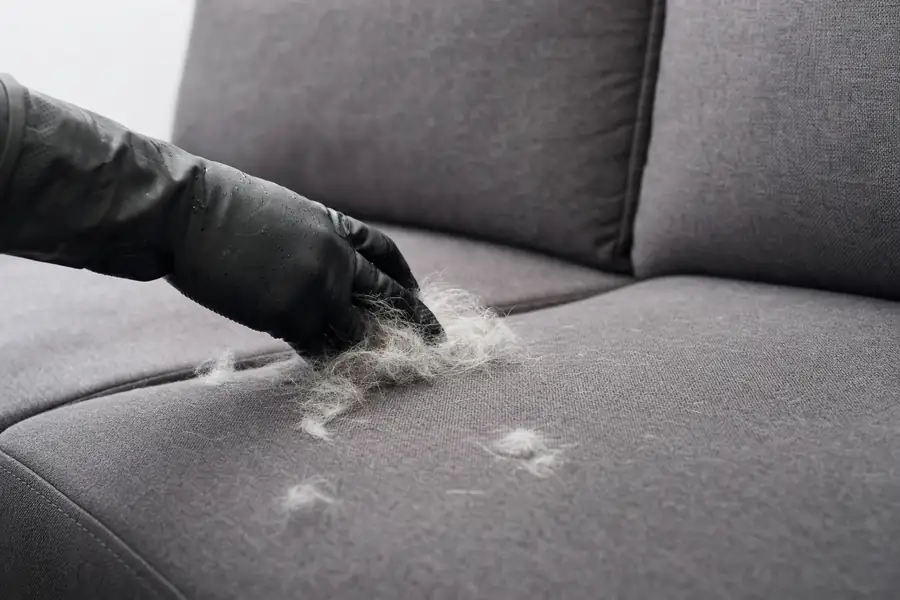
Hair sits in the dense nap rather than on it, so suction struggles. Rubber squeegee or rubber glove, in one direction, then vacuum the clumps. Check the code first - much microfiber is S, so keep it dry. Brush the nap back afterward with a soft brush, since microfiber shows directional shading and looks patchy until it is evened out. See how to clean a microfiber couch.
Velvet and chenille
Pile fabrics with a direction. Always work with the nap, never against it - against the nap pushes hair in and roughs up the pile. A soft rubber brush or a damp cloth (code permitting), light pressure. No pumice stone, which will damage the pile.
Tight weaves - cotton, linen, canvas, tweed
The easiest case. Rubber squeegee or pumice stone, then vacuum. Hair tends to sit on the surface rather than working in, so most methods succeed.
Loose and chunky weaves
The hardest case, because hair migrates down between the threads where nothing can reach it. Vacuum with a crevice tool first to get what is loose, then rubber over the surface. Accept that some hair in the weave is not coming out, and prioritize regular light maintenance over occasional deep efforts.
Leather and faux leather
Hair does not grip, it just sits - and slides when you push it. A slightly damp microfiber cloth collects it in one wipe. Dry buff afterward. Keep rubber tools and anything abrasive off leather, and get hair out of the seams and the gap at the back of the seat with a vacuum crevice tool, which is where it all ends up.
Linen and delicate fabrics
Vacuum on low suction with an upholstery tool, plus a lint roller. No abrasives, no aggressive rubber, minimal moisture.
Cat hair vs dog hair
The queries are separate because the problems are.
Cat hair is harder. It is finer and lighter, so it works deeper into a weave and is held more by static than by weight. Many cat hairs are also slightly barbed, which is why they seem to anchor into fabric and why they are so hard to remove from a loose weave. Fine hair responds much better to damp methods and static control than to suction.
Not sure when your carpets were last deep cleaned?
Get an exact price online in about two minutes. No phone tag, no surprise fees.
Get My Instant QuoteDog hair is generally easier but there is more of it, and short stiff hairs - from a Labrador, Beagle or Staffordshire terrier - can embed like tiny needles, particularly in loose weaves. These respond best to rubber tools with firm pressure and to a pumice stone on durable fabric.
Double-coated breeds shedding undercoat in season will defeat any sofa routine. The answer there is upstream: brushing the dog more often, outdoors.
The order of operations
For a sofa that has not been done in a while:
- Remove cushions and work on them separately, both faces.
- Vacuum the exposed frame and deck - all of it collects in the crevices.
- Crevice tool along every seam, pushing into the piping.
- Rubber squeegee each surface in one direction, gathering hair into ridges and lifting them off.
- Vacuum the clumps you have raised.
- Lint roller for the final pass on visible faces.
- Brush the nap back on pile fabrics.
- Replace cushions, rotated and flipped.
Fifteen minutes for a badly affected three-seater, and the result is far better than an hour of vacuuming alone.
Keeping on top of it
- A washable throw or sofa cover on your pet's favorite spot. Unglamorous and by far the most effective thing on this list.
- Brush your pet more often, outdoors. Hair removed before it reaches the sofa is hair you never deal with twice.
- A quick squeegee pass twice a week beats a monthly deep effort.
- Vacuum seams weekly, which is where hair and dander concentrate.
- Buy for it next time. Tight weaves, leather and performance fabrics release hair readily. Loose weaves, velvet, chenille and bouclé trap it.
- Manage static in dry weather - low humidity makes fine hair cling much harder.
Hair is not the only thing in there
Worth knowing if anyone in the house has allergies or asthma. Upholstered furniture is a dust mite reservoir alongside bedding, mattresses, carpets and curtains, and mites thrive in warm conditions above 50% humidity. 84% of US homes have detectable dust mite allergen, 8 in 10 people are exposed, and the relative risk of asthma is almost five times greater at high dust mite exposure (above 10 µg/g) than at lower levels.
Pet dander sits in the same place. Surface hair removal does nothing about either - both need extraction from the depth of the upholstery, which is a different job from the one above. See spring deep clean for allergy season.
Frequently Asked Questions
How do I remove pet hair from a couch?
Drag a rubber squeegee or rubber-edged brush across the fabric in one direction to gather hair into ridges, lift them off, then vacuum with an upholstery tool and run a crevice tool along the seams. Finish with a lint roller on visible faces.
How do I get cat hair off a couch?
Cat hair is fine and held by static, so a slightly damp rubber glove or cloth works much better than dry suction - on W or WS fabric only. On S or X coded fabric, use a dry rubber tool and a lint roller.
How do I get dog hair off a couch?
A rubber squeegee with firm pressure, in one direction, then vacuum the clumps. For short embedded hairs on durable tight-weave fabric, a pumice stone works well.
What is the best tool for pet hair on upholstery?
A plain rubber window squeegee, for most fabrics. It outperforms most purpose-made gadgets and costs very little.
Does a lint roller work on a couch?
For a final pass on a cushion face, yes. For a whole sofa it is slow and wasteful - gather the bulk with rubber first.
Will fabric softener or dryer sheets remove pet hair?
Barely. They reduce static slightly and leave residue. Use a damp rubber glove instead, if your cleaning code allows moisture.
Can I use a carpet cleaner on pet hair?
No - remove hair dry first. Wet hair mats together and clogs the machine, and a wet-cleaned sofa with hair still in it looks worse than before.
When the sofa needs more than hair removal
There comes a point where the hair is the least of it - the dander, the oils from where the dog sleeps, the general ground-in soil of a sofa a pet lives on.
Our upholstery cleaning is matched to the fabric code, with extraction powerful enough to pull dander and soil out of the depth of the piece rather than wetting the surface. We also clean vehicle interiors, which is the same problem in a smaller space, and carpet and rugs.
25+ years, 50,000+ customers, removing 99% of allergens, biodegradable solutions, no upsells at the door, come-back guarantee. Call (855) 507-8955 or get a free quote.