
Quick answer: Carpet is installed wall-to-wall and fixed permanently to the floor beneath it. A rug is a freestanding, movable textile that sits on top of any flooring and can be picked up, rotated, or relocated to another room entirely.
That single fact, fixed versus movable, drives almost every other difference between the two: how they're made, what they cost over time, and how each one gets cleaned. Once you understand the installation difference, the rest of the carpet vs area rug decision falls into place.
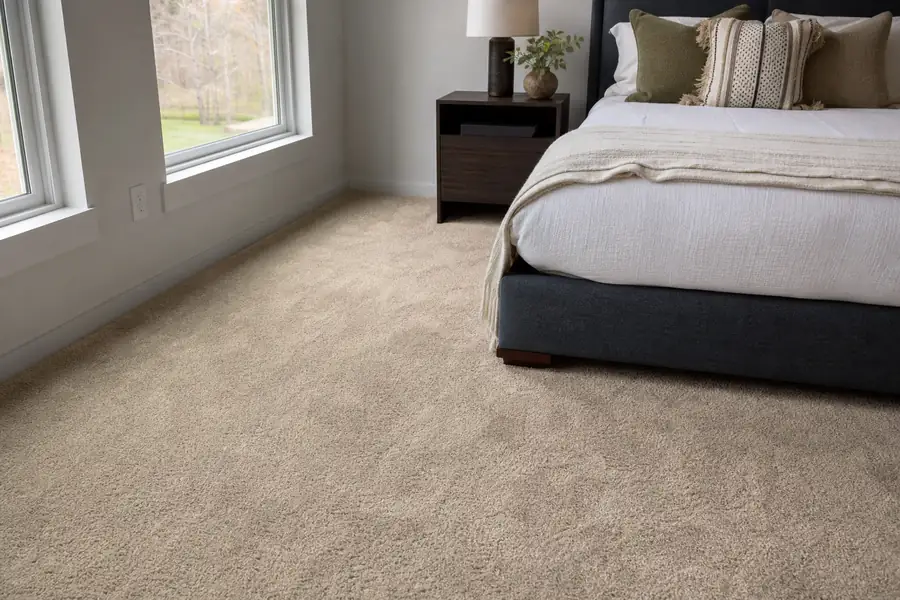
The simple distinction between carpet and rug
Carpet is stretched over padding and secured to the subfloor with tack strips or adhesive, covering a room edge to edge with no visible gaps. A rug has its own backing and simply rests on top of whatever flooring already exists, whether that's hardwood, tile, or carpet itself.
Because carpet is permanently attached, it can't be lifted, flipped, or moved to another room without professional removal. A rug can go anywhere in the house, which is why area rugs so often appear on brand-new hardwood floors or layered over existing wall-to-wall carpet in a bedroom.
The terminology jungle: area rug, runner, broadloom, and carpet tiles
Flooring terminology muddies the carpet versus rug question further, since several related terms get used loosely in showrooms and online listings.
Area rug
An area rug is any rug sized to define a specific zone of a room, like under a dining table or in front of a sofa, rather than covering the entire floor.
Runner
A runner is a long, narrow rug, typically 2 to 3 feet wide, made for hallways, staircases, or galley kitchens where a full-size rug wouldn't fit.
Broadloom
Broadloom refers to carpet woven on looms wider than 6 feet, the industry standard for wall-to-wall installation. It isn't a separate product from carpet, just the trade term for carpet sold by the roll and cut to fit a room.
Carpet tiles
Carpet tiles are modular squares of carpet, usually 18 to 24 inches, that glue or press directly to the subfloor. They install like carpet but can be replaced section by section like a rug, splitting the difference between the two categories.
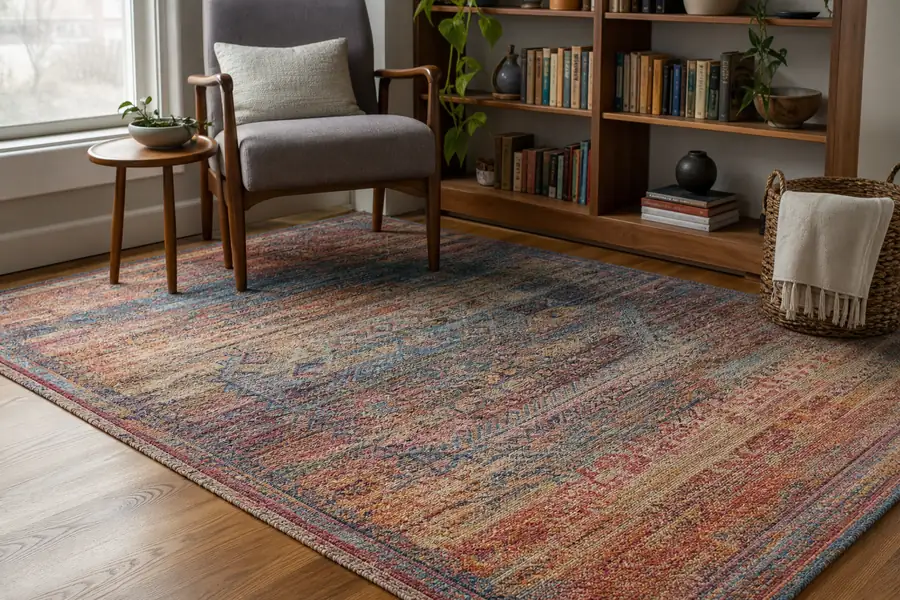
Carpet pros and cons
Carpet's biggest advantage is continuous, wall-to-wall insulation and sound dampening, since its backing traps warm air against the subfloor and muffles footsteps between rooms. It also tends to cost less per square foot than an equivalent-size rug when covering a large room, and it stays put under furniture without sliding or bunching.
Not sure when your carpets were last deep cleaned?
Get an exact price online in about two minutes. No phone tag, no surprise fees.
Get My Instant QuoteThe tradeoff is cleaning access. Because carpet is fixed in place, dirt, dander, and allergens that work down into the pile have nowhere to go until equipment comes to the room, and a damaged section can't be swapped out on its own. Homeowners who want this insulation without the cleaning limitation often rely on a professional carpet cleaning service on a regular schedule rather than trying to manage buildup with a vacuum alone.
Rug pros and cons
A rug's main advantage is flexibility: it can move between rooms, get flipped to even out wear, or be rolled up and stored during a renovation. Rugs also let you mix flooring styles in one room, such as a wool rug warming up a tile kitchen or a jute runner protecting a hallway's hardwood.
The downside is that rugs shift and slip on hard floors without a non-slip pad underneath, and an undersized rug can look lost in a large furniture grouping. Delicate fibers like silk or natural jute also need gentler handling than most carpet, which is part of why an area rug cleaning service uses different methods than what's used on installed carpet.
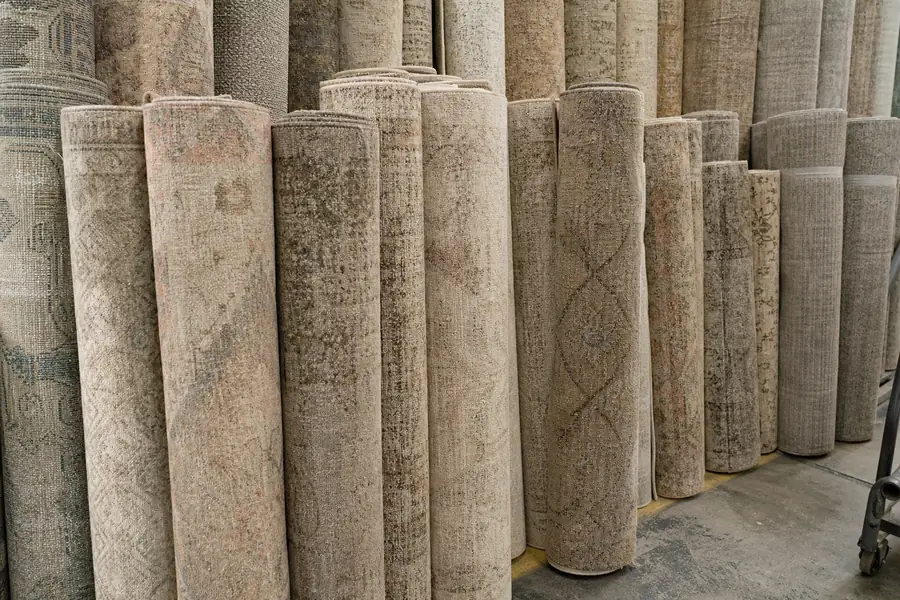
How cleaning differs between carpet and rugs
Installed carpet gets cleaned in place with hot water extraction, where truck-mounted equipment forces heated water and cleaning solution deep into the pile at high pressure, then immediately vacuums it back out along with the loosened soil. This method, sometimes compared against other approaches in steam cleaning vs. dry cleaning discussions, works because the carpet backing can handle moisture and the technician can treat the entire floor in one pass.
Rugs are often better served off-site. Because a rug can be removed from the room, many cleaners submerge it fully, flush out ground-in soil and pet accidents from the backing, and control drying conditions in a controlled space rather than guessing how fast a damp spot will dry on top of a wood floor. That full-immersion approach reaches deep into natural fibers like wool or jute in a way that spot cleaning never fully matches.
Which is right for your room
High-traffic living rooms and bedrooms usually favor wall-to-wall carpet for the warmth and uniform look across the whole floor. Rooms with hardwood or tile already in place, or spaces where you want to change the look seasonally, usually favor a rug instead.
Many homeowners end up with both: carpet in bedrooms for comfort underfoot, and an area rug anchoring the living room furniture on top of hardwood. Either way, routine cleaning matters more than the material choice itself, since both carpet and rugs trap dust, allergens, and spills that only get worse the longer they sit.