
No-scrub grout cleaning isn't a trick, it's chemistry doing the job a brush used to do. Give the right cleaner enough contact time on the grout lines and most everyday grime lifts free with a rinse or a light wipe, no scrubbing required.
The catch is that "no scrubbing" doesn't mean "no effort." It means trading arm strength for patience: mixing the right solution, spreading it evenly, and walking away long enough for it to work. Here's how that plays out with four real methods, what each one is actually good for, and where even the best dwell-time cleaner hits its limit.
- Oxygen bleach dwell is the most reliable no-scrub method for everyday grout grime and easy grout cleaning between deep cleans.
- A steam cleaner pass loosens soil with heat alone but still needs a wipe, and won't lift years-old staining.
- Baking soda and hydrogen peroxide paste left overnight handles stubborn, isolated stains without a brush.
- Cling gel cleaners work on vertical and uneven grout because they stay put long enough to break down grease.
- None of these fix cracked, unsealed, or deeply discolored grout. That needs professional extraction cleaning and sealing.
Why Grout Resists Mopping
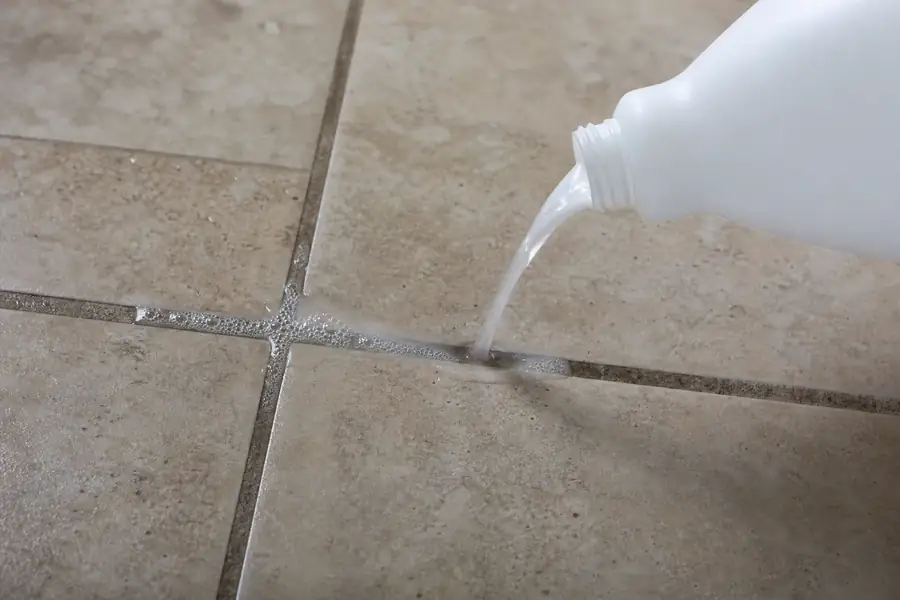
Grout resists mopping because it's a porous, cement-based material, not a sealed surface like the tile around it. Mop water sits on tile but soaks into grout, carrying dirt, grease, and soap film down into the tiny pores instead of lifting it away.
Every mop pass without a real cleaning step just redistributes that grime and lets it dry back into the surface. Over months, that buildup darkens the lines and makes them feel gritty underfoot. A complete approach to cleaning tile and grout treats the two surfaces differently for exactly this reason: tile needs wiping, grout needs a cleaner that can get down into the pores and lift what's already there.
Method 1: Oxygen Bleach Dwell for Easy Grout Cleaning
Oxygen bleach is the closest thing to an easy grout cleaning method that works on nearly every stain type, because it releases oxygen as it dwells and that reaction breaks organic grime loose on its own.
Mix powdered oxygen cleaner with warm water into a thick paste, following the label ratio. Spread it directly onto the grout lines with a small spatula or an old spoon, keeping it off painted or metal surfaces. Let it dwell for 15 to 30 minutes, misting with water if it starts drying out, then wipe the paste away with a damp microfiber cloth or mop. Rinse once with clean water.
This method is biodegradable and safe around kids and pets once rinsed, and it's the method Shiny Rhino technicians recommend for maintenance between professional visits.
Method 2: Steam Cleaner Pass
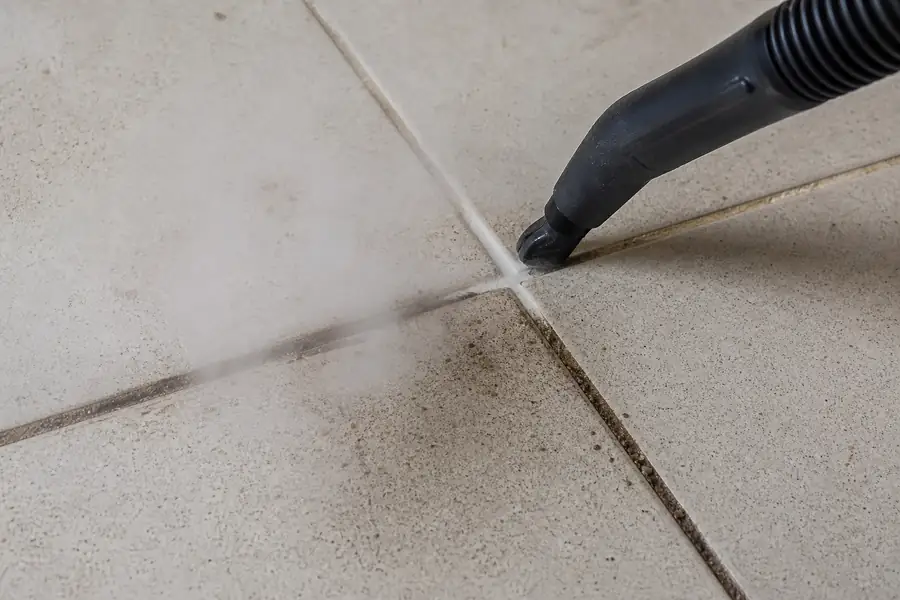
A steam cleaner pass loosens grout grime using heat and moisture alone, which makes it the fastest true no-scrub option for lightly soiled floors.
Run a steam cleaner's grout attachment slowly over each line, letting the vapor sit for a few seconds before moving on, then wipe the loosened residue with a cloth. Steam works well on grease and soap scum because heat breaks down oils that cold water can't touch.
It has real limits, though. Steam softens surface soil but doesn't pull stains out of grout that's absorbed color from years of coffee spills, dye transfer, or mildew. For that kind of buildup, steam is a maintenance step, not a fix.
Method 3: Baking Soda and Peroxide Paste Overnight
A baking soda and hydrogen peroxide paste left on grout overnight breaks down stubborn stains through slow oxidation, so there's nothing to scrub off the next morning.
Mix baking soda with 3% hydrogen peroxide at roughly a 2-to-1 ratio until it forms a spreadable paste. Work it into the stained grout lines, cover loosely with plastic wrap to slow evaporation, and leave it for 8 to 12 hours. In the morning, wipe the residue away with a damp cloth.
Not sure when your carpets were last deep cleaned?
Get an exact price online in about two minutes. No phone tag, no surprise fees.
Get My Instant QuoteThis method is slower than oxygen bleach but often reaches deeper into set-in stains like wine, coffee, or pet accidents, because the extended contact time gives the peroxide longer to break the stain molecules apart.
Method 4: Cling Gel Products
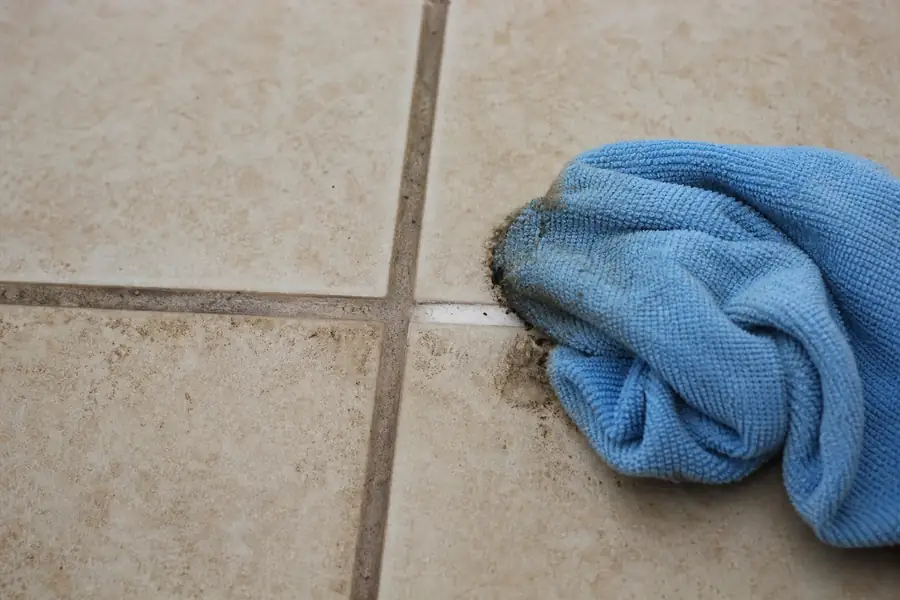
Cling gel grout cleaners work without scrubbing because their thick, sticky texture clings to vertical and uneven grout lines long enough for the active ingredients to break down grime.
Apply the gel directly along the grout with the bottle's nozzle, let it sit for the label's recommended time (usually 5 to 10 minutes), then rinse with water or wipe with a damp cloth. Because the gel doesn't run off, it's especially useful on shower walls and vertical grout where liquid cleaners drip away before they can work.
Cling gels tend to cost more per application than a mixed paste, and they're built for spot treatment rather than a whole floor. For a large kitchen or entry floor, oxygen bleach paste covers more ground for less money.
Ranked by effort against result, the four methods split by dwell time more than elbow grease:
| Method | Effort | Dwell Time | Best For |
|---|---|---|---|
| Oxygen bleach paste | Low | 15-30 min | Whole floors, everyday grime |
| Steam cleaner pass | Low-Medium | Seconds per line | Light soil, quick maintenance |
| Baking soda + peroxide paste | Low | 8-12 hours | Set-in stains, discoloration |
| Cling gel | Low | 5-10 min | Shower walls, vertical grout |
What No-Scrub Methods Cannot Fix
No-scrub methods can't fix grout that's cracked, unsealed, or stained all the way through, because at that point the discoloration lives inside the porous cement, not just on top of it. Surface treatments can only lift what sits on the surface.
Grout that's gone gray or black despite regular dwell-time cleaning usually needs two things a bottle can't provide: pressure and extraction. Shiny Rhino's Tile & Grout Cleaning service uses truck-mounted hot water extraction at up to 400 PSI and 200°F to flush ground-in soil out of the grout pores instead of pushing it around. Technicians follow that with a sealant application, which fills the pores so future spills sit on top of the grout instead of soaking in.
That sealing step is what actually ends the scrubbing cycle. Once grout is sealed, an oxygen bleach dwell or a quick Neutral Tile & Grout Cleaner wipe-down is usually all it takes to keep it looking new. In hard-water regions like Texas, where mineral deposits build up fast in grout lines, sealing after a deep clean makes a bigger difference than any single cleaning method.
Shiny Rhino technicians are trained by a master technician, background checked, and IICRC certified, so the same crew that flushes out old grout stains can also spot early signs of cracked or failing grout before it turns into a bigger repair.