
Water damage on a hardwood floor isn't one problem, it's several, depending on how long the water sat and how far it soaked in. The right fix always starts the same way: dry the floor completely, then assess what's left to repair. Skip the drying step and you'll refinish boards that keep cupping back up, or tear out boards that would have recovered fine.
- White haze or spots usually mean finish damage only, not structural damage.
- Cupped boards often flatten back out once the floor is fully dry.
- Full drying takes 1 to 3 weeks with dehumidifiers running, not days.
- Crowned or buckled boards have usually passed the point sanding alone can fix.
- A moisture meter, not a guess, decides when repair can start.
Diagnose the Water Damage on Your Hardwood Floor First
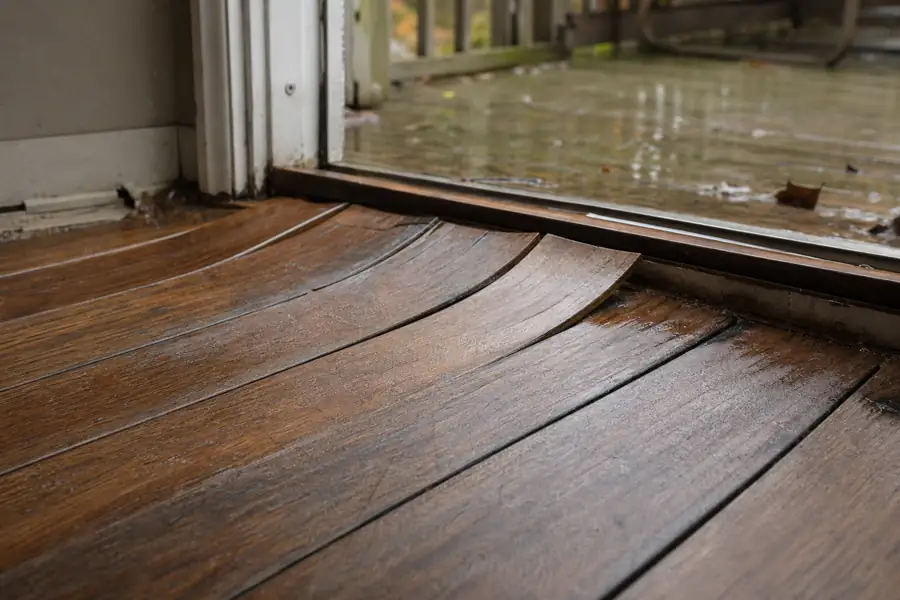
Most water damage on hardwood floors falls into four visible patterns, and each one tells you how far moisture reached into the wood.
White Surface Spots
White or cloudy spots mean moisture got trapped in the finish, not the wood itself. This is the mildest form of water damage on wood, and usually the easiest to fix without sanding to bare boards.
Cupping
Cupping is when board edges sit higher than the center, because the underside absorbed moisture and swelled faster than the top. Run a hand across the floor; a shallow trough down each plank means cupping.
Crowning
Crowning is the reverse of cupping, with the center of the board rising above the edges. It usually shows up after a floor was sanded flat while the wood underneath was still wet.
Buckling
Buckling is the most serious stage, where boards pull loose from the subfloor and lift in ridges or waves, sometimes several inches high. Buckled hardwood has almost always sat in standing water for an extended period and needs professional attention right away.
Dry It Out First: The Real First Step to Fix Water Damage on Wood
Drying has to happen before any repair decision, because wet wood hides how bad the damage actually is. Start with water extraction to pull out standing water, then run commercial dehumidifiers and air movers, not a box fan from the garage.
Plan on 1 to 3 weeks of continuous drying, not days, especially if water sat under the floor for hours rather than minutes. Humid climates slow this further: a floor drying out in Florida can take noticeably longer than one in a drier region.
A moisture meter is the only reliable way to know drying is finished, with readings close to the dry areas of the same floor before sanding or refinishing starts. For anything beyond a small spill, a water damage restoration crew brings truck-mounted extraction and commercial drying equipment that moves faster than rented gear. Our guide on what to do after water damage covers the first 24 hours in more detail.
Fixing White Spots and Finish-Level Water Damage
White spots and light clouding usually buff out once the floor is bone dry. A light screening and recoat of the finish, or simply buffing with a hardwood-safe cleaner in mild cases, brings the shine back without sanding to raw wood.
Between cleanings, a pH-balanced product like Shiny Rhino's Hardwood Floor Cleaner helps prevent the dull haze that standing water and harsh cleaners both leave behind. If spots don't lift after buffing, moisture reached deeper than the finish and the board needs a closer look for cupping underneath.
Not sure when your carpets were last deep cleaned?
Get an exact price online in about two minutes. No phone tag, no surprise fees.
Get My Instant Quote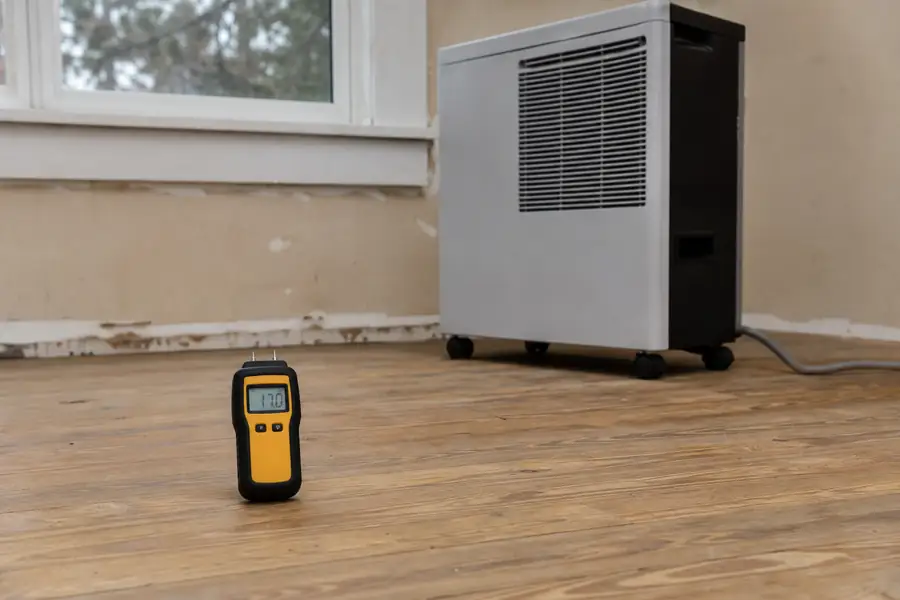
Cupped Boards: Dry and Wait Before Sanding
Cupped hardwood floors often flatten back out on their own once fully dry, so sanding too early is the most common mistake homeowners make. Sanding a cupped board flat while it's still swollen carves a permanent dip once the wood finishes drying and shrinks back down.
Wait at least 30 days after a moisture meter confirms the floor is dry before considering sanding. Mild cupping, less than about 1/8 inch between edge and center, usually levels out on its own in that window; anything deeper may still need sanding, but only after drying is confirmed.
When Water-Damaged Boards Must Be Replaced
Boards must be replaced when they've crowned, buckled, cracked, or separated from the subfloor, because sanding and refinishing can't undo structural movement in the wood. Soft, spongy spots underfoot mean the board has broken down from the inside and won't hold a finish even after drying.
Delamination in engineered hardwood, where the top veneer separates from the plywood core, also means replacement rather than repair. Spot-replacing a handful of boards is normal and far cheaper than refinishing an entire room, and a close color match is usually possible if the rest of the floor isn't badly faded.
Check the Subfloor and Watch for Mold
The subfloor under water-damaged hardwood needs its own inspection, because mold can establish itself underneath without ever showing on the surface. Standing water left more than 24 to 48 hours is enough time for mold to start growing in a dark, damp subfloor cavity.
A musty smell that lingers after the visible floor looks dry is usually the first sign something's growing underneath. If boards were pulled up to dry or replace, that's the moment to inspect the plywood or joists directly instead of covering them back up.
DIY vs Professional Water Damaged Wood Floor Repair
DIY handles the mild end of water damaged wood floor repair well: light white spots, a quick buff and recoat, or replacing one or two boards you're confident matching. Anything involving cupping beyond a slight edge lift, structural replacement, or refinishing a full room calls for a professional, since even sanding and color matching across a whole floor are easy to get wrong.
Shiny Rhino technicians are trained by a master technician and background checked before entering a customer's home, and the same team behind hardwood floor cleaning and refinishing can assess a floor for structural water damage too. If you're not sure which category your floor falls into, a free assessment settles it before you spend money sanding a board that needed replacing, or replacing one that only needed time to dry.