
Quick answer: Grease and oil need to be absorbed out of carpet fibers before you clean them, not blotted like a coffee or wine spill. Cover the spot with cornstarch or baking soda to pull the oil to the surface, let it sit, then work in a few drops of dish soap to break down whatever the powder leaves behind.
Skip the hot water. Heat loosens oil and pushes it deeper into the backing and surrounding fibers, which turns a small, tidy oil stain on carpet into a wider, blurrier one. The steps below work whether the grease came from a dropped plate of fried food, a butter smear, or a drip of motor oil tracked in from the garage.
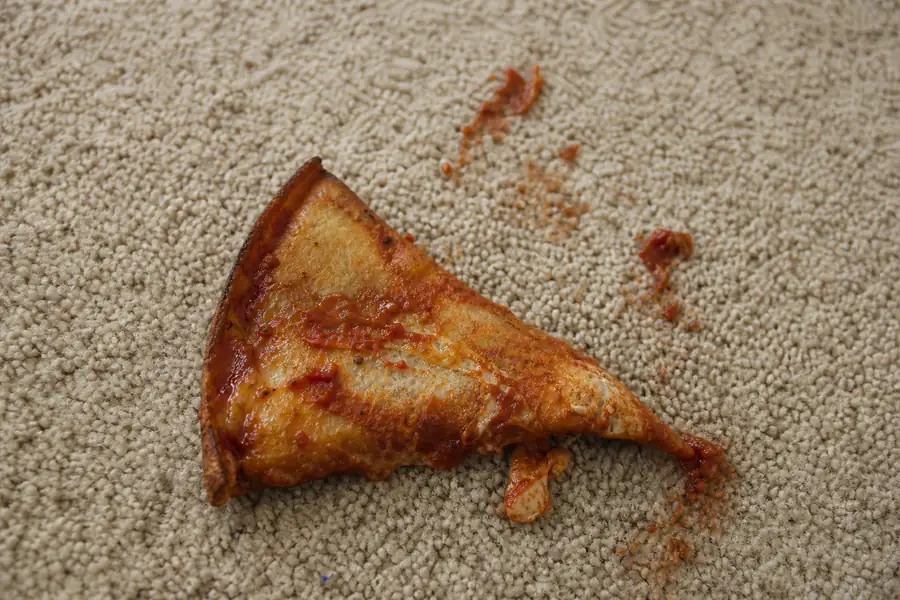
Why grease will not blot up like other stains
Grease will not blot up like other stains because oil repels water instead of dissolving in it. Most carpet stains, wine, coffee, mud, are water-based, so a damp cloth and some pressure lift them out. Oil molecules bond to the carpet fiber itself, and pressing a wet rag against them just spreads the oil sideways across a bigger patch of pile.
That is why the usual blot-and-rinse method fails here and sometimes makes the stain look worse. For stains that do respond to water and a clean cloth, the step-by-step method in Shiny Rhino's guide to removing carpet stains covers the right order of lifting, blotting, and rinsing. Grease needs a different first move: absorb, then degrease.
Step 1: the absorb-first rule (cornstarch dwell)
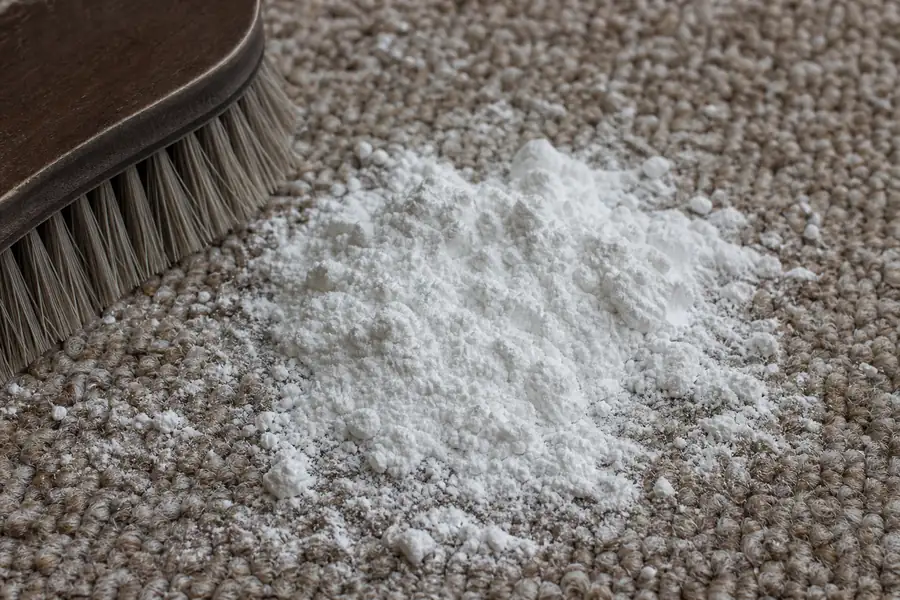
Pour a generous layer of cornstarch or baking soda directly onto the grease stain and let it sit for 15 to 20 minutes. Both powders are fine, dry, and absorbent enough to draw oil up out of the fibers and into the powder itself instead of further into the carpet.
Resist the urge to rub it in. Light tapping with a spoon helps the powder make contact with the stain, but scrubbing just works the oil deeper. Once the dwell time is up, vacuum the powder away completely before moving to the next step; any oil left in the pile at this point is clumped into the powder, not smeared loose.
Step 2: dish soap degreasing (why it works on oil)
Dish soap works on oil because its molecules grab grease on one end and bond with water on the other, lifting the oil off the fiber so it can be rinsed away instead of just pushed around. Mix a few drops of dish soap into a cup of cool water, dip a clean cloth in it, and blot the stain from the outside edge inward.
Work in small sections and switch to a clean part of the cloth often, so you are not reapplying the grease you just lifted. Rinse the spot with a cloth dampened in plain cool water, then blot dry with a towel. Cool water matters here too: hot water reactivates the oil and undoes the progress you just made.
Not sure when your carpets were last deep cleaned?
Get an exact price online in about two minutes. No phone tag, no surprise fees.
Get My Instant QuoteStep 3: rubbing alcohol for the residue ring
Rubbing alcohol dissolves the thin oily film that dish soap sometimes leaves behind, especially around the edges of an older grease spot. Dampen a cotton ball or clean cloth with isopropyl alcohol, test it on a hidden patch of carpet first, then dab it around the stain's perimeter where a faint ring tends to show.
In drier climates, like the stretch of Colorado's Colorado cities Shiny Rhino serves, alcohol evaporates fast, so work in small passes and keep the cloth damp rather than soaked. Let the spot air dry fully before deciding if another round is needed.
Dried grease: the repeat loop
Dried grease comes out of carpet through repetition, not one stronger pass. Reapply cornstarch, let it dwell, vacuum, degrease with dish soap, rinse, and dry. Repeat that loop two or three times rather than scrubbing harder on any single attempt.
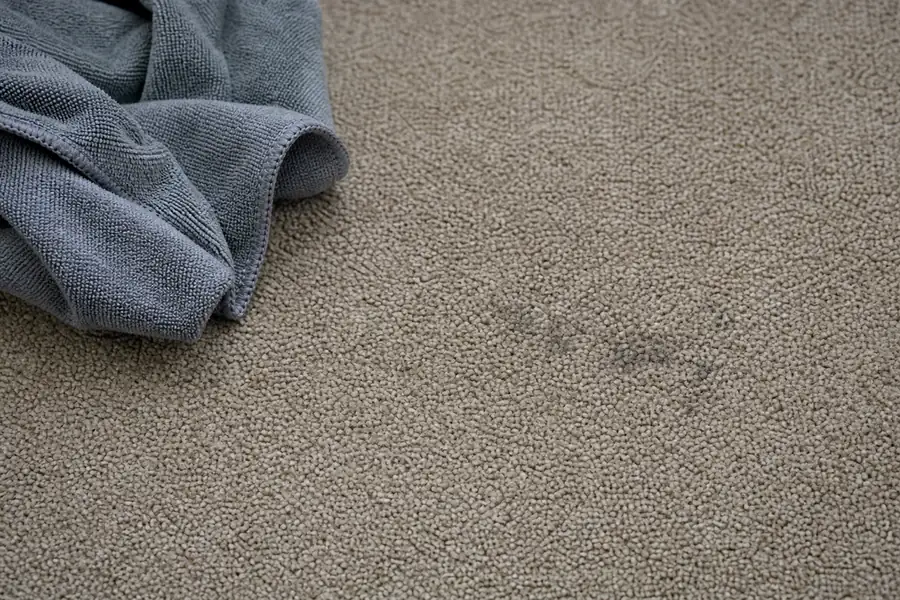
Many Shiny Rhino customers keep a bottle of Shiny Rhino Spot Remover on hand for exactly this kind of follow-up pass between full cleanings. If a dried oil stain on carpet still leaves a shadow after two or three cycles, the grease has likely worked into the backing and pad. That is when professional carpet cleaning using truck-mounted hot water extraction can pull oil out of layers a spot treatment can't reach.
Cooking oil vs butter vs motor oil differences
Cooking oil, butter, and motor oil all respond to the same absorb-then-degrease method, but they do not behave the same once they hit carpet fiber.
| Type | Behavior on carpet | Removal note |
|---|---|---|
| Cooking oil | Spreads thin and fast, wicks sideways | Treat immediately, usually lifts in one or two cycles |
| Butter | Solidifies as it cools, sits closer to the surface | Scrape off solids first, then follow the normal steps |
| Motor oil | Dark, dense, and stains dye as well as fiber | Often needs multiple cycles and may leave faint discoloration |
Olefin carpet, a petroleum-based fiber used in many loop-pile Berber styles, is an oil magnet: its chemical makeup attracts and holds grease more readily than nylon or wool, and it releases absorbed oil slowly even after cleaning. If you have Berber carpet in olefin, expect a grease spot to need an extra absorb-and-degrease cycle and to resist a quick fix more than other fiber types.