
The short version of how to clean natural stone is this: use a pH-neutral cleaner, and never reach for vinegar, lemon juice, or other acidic products on marble, travertine, or limestone. Acid breaks down the calcium carbonate in these stones on contact, leaving a dull, permanently etched spot that no amount of scrubbing removes. That single habit protects a stone floor more than any cleaning technique or expensive product ever will.
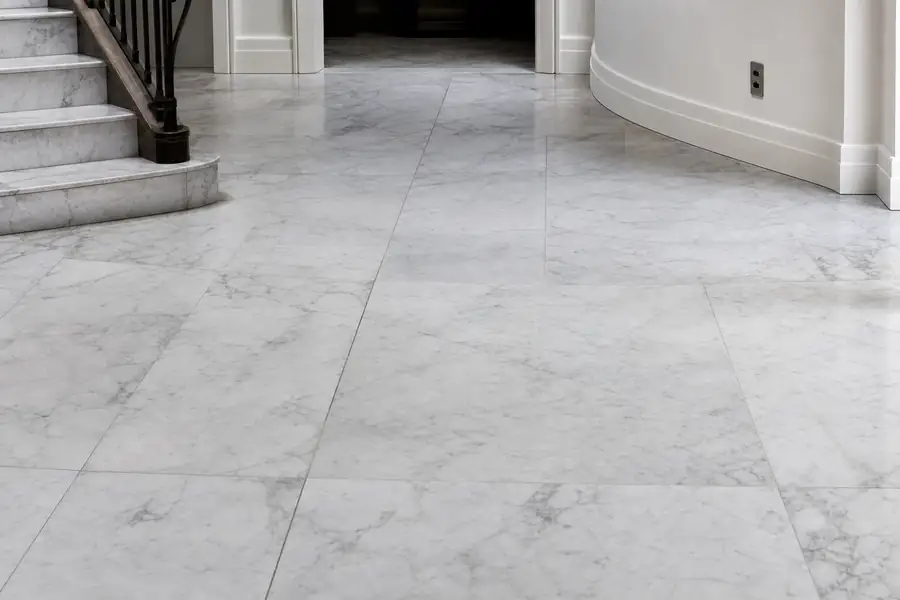
The One Rule That Saves Natural Stone Floors
Most stone floor damage traces back to one mistake: using an acidic cleaner on a surface that can't tolerate it. Household vinegar, lemon-based sprays, bleach, and some "soap scum remover" bathroom cleaners all carry a low pH that reacts instantly with calcite-based stone. A pH-neutral cleaner, sitting at 7 on the pH scale, is the only safe everyday choice for marble, travertine, limestone, and onyx.
Granite and slate tolerate acid better, since they're silicate-based rather than calcite-based, but a neutral cleaner is still the safer habit across every stone type. It won't dull a finish, strip a sealer, or leave a hazy residue. Technicians trained for Natural Stone Cleaning carry pH-balanced products for exactly this reason.
Why Acids Etch Natural Stone
Acid etches stone by dissolving the calcium carbonate, or calcite, that makes up marble, travertine, and limestone, leaving a rough, dull patch where the polish used to be. Calcite reacts with acid on contact, even mild acid, which is why a splash of orange juice left overnight on a marble floor can leave a permanent ring while the same spill does nothing to ceramic tile.
The reaction isn't a stain sitting on top of the stone. It eats away the polished layer itself, so the etched spot looks cloudy and feels slightly rough compared to the surrounding shine, and wiping harder afterward won't fix it.
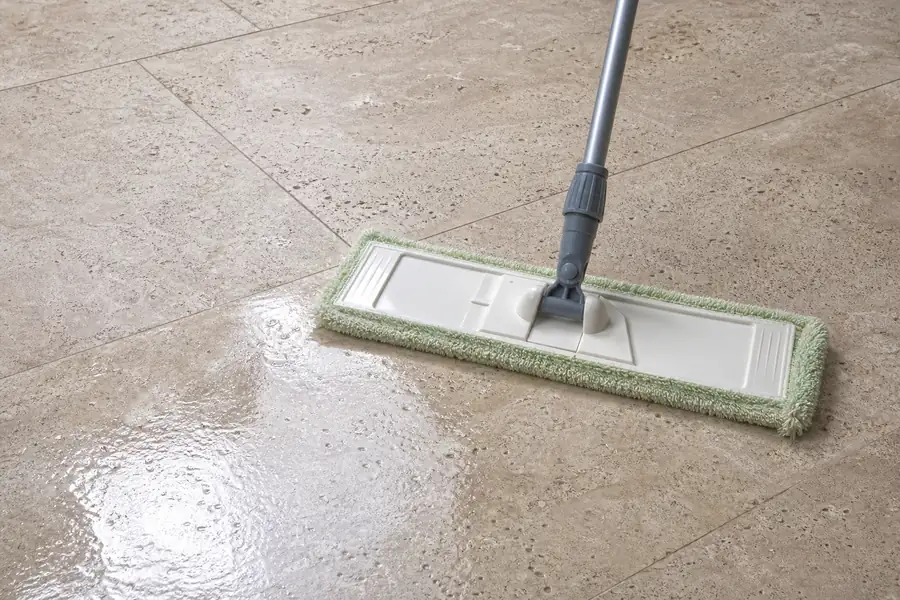
Know Your Stone: Marble, Travertine, Granite, and Slate
Marble
Marble is the most acid-sensitive stone used in flooring and shows etching fastest. Marble floor cleaning should always use a pH-neutral cleaner, a soft microfiber mop, and quick blotting of any spill, especially wine, coffee, or citrus juice.
Travertine
Travertine is a porous limestone with a naturally pitted surface, so travertine cleaning has to account for both etching risk and faster absorption. Spills soak in quicker than on polished marble, shortening the window to blot up citrus or wine before it sinks in.
Granite
Granite is silicate-based, not calcite-based, so it resists acid etching far better than marble or travertine. It can still stain if left unsealed, so a neutral cleaner and a working sealer still matter.
Slate
Slate is another silicate stone with good acid resistance, but its rough, cleft surface traps grit more easily than polished stone, making regular dust-mopping the bigger priority.
The Daily and Weekly Routine for Cleaning Natural Stone
Dust-mop a natural stone floor daily, or every other day in busy households, to remove grit that scratches polish under foot traffic. Sand and dirt act like sandpaper, dulling the finish long before any spill does.
Once a week, damp-mop with a pH-neutral cleaner diluted according to the label, such as Shiny Rhino's Neutral Tile & Grout Cleaner, which works on stone floors between professional visits. Rinse with clean water afterward if the label calls for it, since leftover residue can build a hazy film over several cleanings.
Not sure when your carpets were last deep cleaned?
Get an exact price online in about two minutes. No phone tag, no surprise fees.
Get My Instant QuoteBlot spills immediately instead of wiping, which spreads an acidic liquid across more surface area. A folded paper towel pressed straight down lifts the liquid without smearing it further.
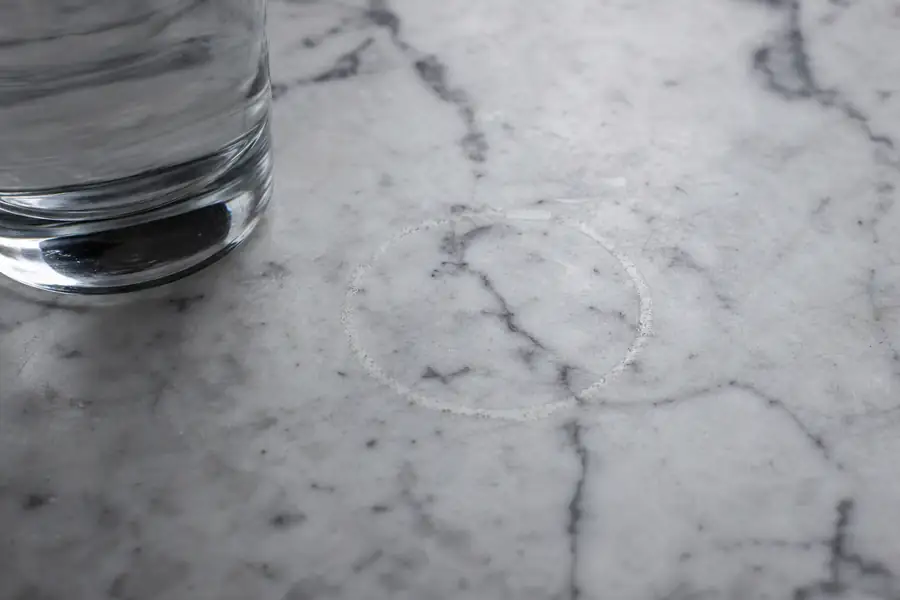
Etch vs. Stain: The Crucial Difference
An etch is surface damage from acid that dulls the polish, while a stain is liquid that soaked into the stone's pores and discolored it from within. The fix for each is different, so identifying which one you're looking at matters before treating it.
An etch mark usually looks like a dull ring or cloudy patch exactly where the liquid sat, and it feels smooth rather than layered. Honing, which gently abrades away a thin layer of stone to remove the damaged surface, corrects an etch; cleaning alone can't.
A stain needs a poultice instead: an absorbent paste applied over the discolored area and left for 24 to 48 hours to pull the trapped liquid back out. Scrubbing a stain with more cleaner usually just pushes it deeper into the stone.
Is Your Stone Sealed? The Water Test
A simple water test shows whether a stone floor's sealer is still working: drop a few teaspoons of water on the stone and watch for 10 to 15 minutes. Water that beads up means the sealer is doing its job; water that soaks in and darkens the stone within minutes means the sealer has worn through.
Humid climates speed up that wear. In Florida, where ambient moisture stays high year-round, sealed stone floors often need retesting more often than in drier regions. Hard water, common around Austin in Texas, can leave a mineral haze on stone that looks like a failed seal but is really just buildup, which a neutral cleaner usually lifts. Sealing protects grout the same way, covered in how to seal grout.
What Professional Honing, Polishing, and Sealing Fix
Honing removes etch marks and scratches by grinding away a microscopically thin layer of stone, then polishing restores the gloss honing temporarily dulls. Sealing adds a layer that slows how fast liquid and acid reach the stone, buying time to blot a spill before it causes damage.
None of these steps reverse years of neglect in a single pass, and floors with deep etching across a large area usually need more than one honing round to come back to a uniform shine. Shiny Rhino technicians, trained and background-checked with over 25 years restoring marble, travertine, and granite floors, assess the depth of damage before recommending a honing schedule. Scheduling a professional natural stone cleaning visit resets a dull floor without any guesswork.