
Cement grout is porous, full of tiny channels that pull in coffee, wine, and grease before you can wipe them up. Grout sealer plugs those pores so spills sit on the surface long enough to clean instead of soaking in for good.
Sealing is one of the cheapest ways to protect a tile floor or backsplash, and it takes an afternoon once the grout is properly clean. This guide covers when sealing matters, which sealer fits your grout, and the exact steps that keep the seal from failing early.
- Cement grout is porous and stains without sealer; sealer blocks moisture and soil, it doesn't change grout color.
- The water-drop test tells you in under a minute whether grout needs resealing.
- Penetrating sealer is the standard choice for most floors; membrane sealer suits low-traffic accents.
- Reseal every 1 to 2 years in kitchens and bathrooms, longer in low-traffic rooms.
- Permanently stained grout can often be fixed with color sealer instead of a full regrout.
- Sealing over dirty grout locks stains in permanently, so cleaning always comes first.
What Grout Sealer Actually Does
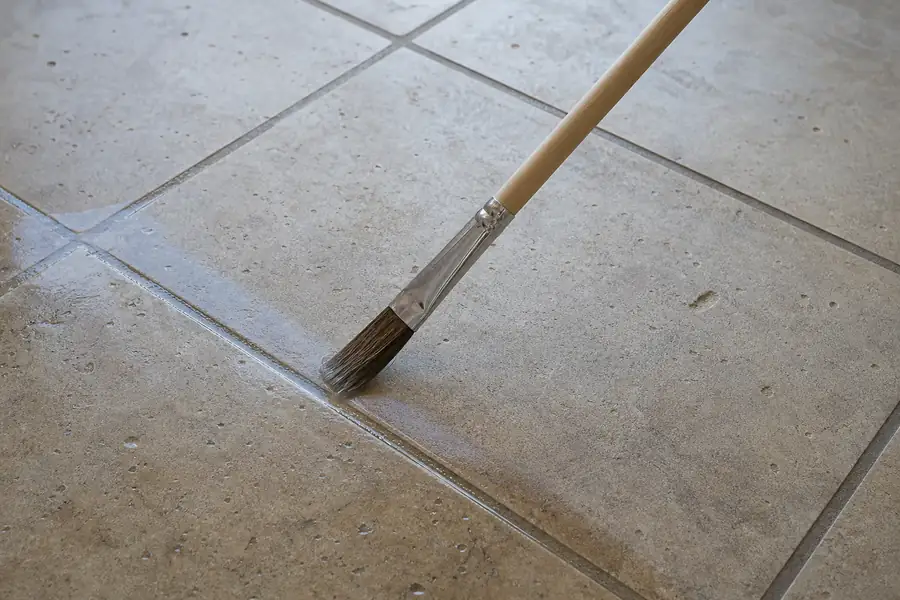
Grout sealer works by filling the microscopic pores in cement grout so water, oil, and dye-based spills bead on the surface instead of soaking in. Cement grout absorbs liquid and body oils the way a sponge does, which is why unsealed grout darkens and stains over time even with regular mopping. Sealer doesn't change the grout's color or texture; it just buys a few extra minutes so a spill wipes away instead of setting in.
For the deep-clean steps that should always come before sealing, our complete guide to cleaning tile and grout covers the scrubbing process in detail.
Do You Need to Seal? The Water-Drop Test
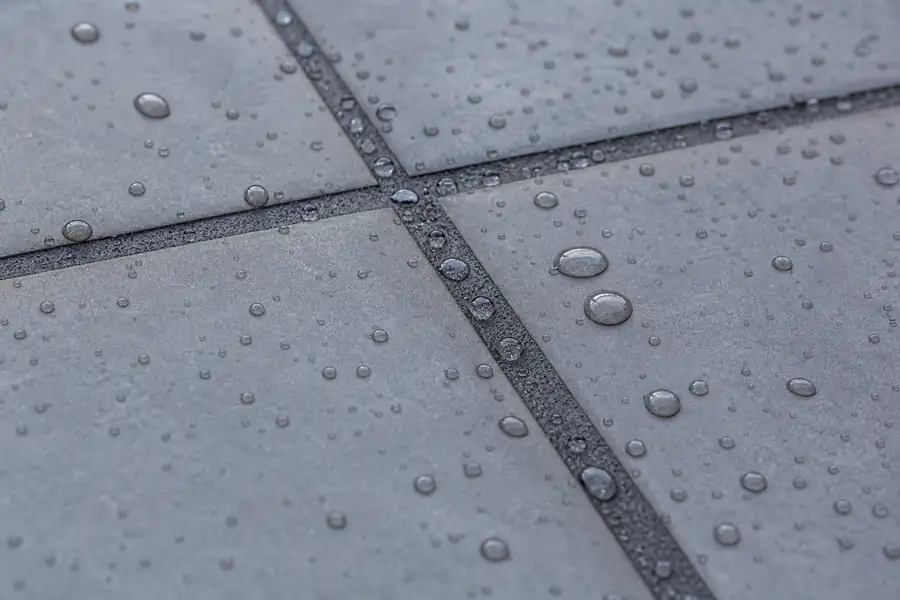
Drop a few drops of water directly onto a clean grout line and watch it for 60 seconds. If the water beads up and sits on the surface, the sealer is still doing its job. If it soaks in and darkens the grout within a minute, the seal has worn off and it's time to reseal.
Run the test in three or four spots, including a high-traffic walkway and a low-traffic corner, since sealer wears unevenly across a floor. A floor that fails the test in the busiest areas but passes near the baseboards usually just needs a touch-up pass rather than a full reseal.
Penetrating vs Membrane Sealers (Which to Choose)
Penetrating sealer is the right call for almost every residential tile floor because it soaks into the grout pores and cures below the surface, leaving the grout looking natural. Membrane sealer sits on top of the grout as a topical film, which adds more shine but wears faster underfoot and can peel in high-traffic areas.
| Sealer type | Best for | Typical lifespan |
|---|---|---|
| Penetrating | Floors, showers, backsplashes | 1-2 years, up to 5 on unsanded grout |
| Membrane | Low-traffic accents, some stone | 6-12 months |
| Color-sealer | Stained or mismatched grout | 2-4 years |
Shiny Rhino technicians default to penetrating sealer on most jobs because it holds up under foot traffic and cleaning chemicals without changing the grout's sheen.
How to Seal Grout Step by Step
Deep clean first
Grout has to be completely clean and dry before sealer goes down, because sealer locks in whatever is already sitting in the pores, dirt included. Scrub grout lines with a stiff brush and a pH-neutral cleaner such as Neutral Tile & Grout Cleaner, rinse thoroughly, then let the floor dry for at least 24 hours.
Application
Apply sealer along the grout lines with a small brush or foam applicator, working in sections so it doesn't dry before you can wipe excess off the tile face. One coat is enough for most penetrating sealers; a second thin coat after the first dries adds extra protection in showers and kitchen floors.
Cure time
Most penetrating sealers need 24 to 72 hours to cure fully, and the room's humidity and temperature shift that window. Dry climates cure faster: grout sealed in a low-humidity home in Denver, Colorado, can often handle light foot traffic within a day, while a humid bathroom needs the full window before it gets wet again.
Not sure when your carpets were last deep cleaned?
Get an exact price online in about two minutes. No phone tag, no surprise fees.
Get My Instant QuoteHaze wipe
Buff the tile face with a dry microfiber cloth about 15 to 20 minutes after application, before the sealer sets into a hazy film. Skipping this step is the most common reason DIY sealing jobs look cloudy or streaked once they cure.
How Often to Reseal Grout by Room and Traffic
Kitchens and bathrooms need resealing every 1 to 2 years because water, grease, and foot traffic wear the seal down fastest. Entryways and mudrooms often need the same schedule, especially where sand and grit grind into the grout lines. Low-traffic rooms like guest bathrooms or formal dining areas can often stretch to 3 years between resealing.
Hard water speeds the process along. Homes in areas with heavy mineral content, including much of Austin, Texas, see grout lines pick up a chalky film that breaks down sealer faster than in soft-water regions, so the water-drop test is worth running twice a year in those homes.
Color-Sealing: The Fix for Permanently Stained Grout
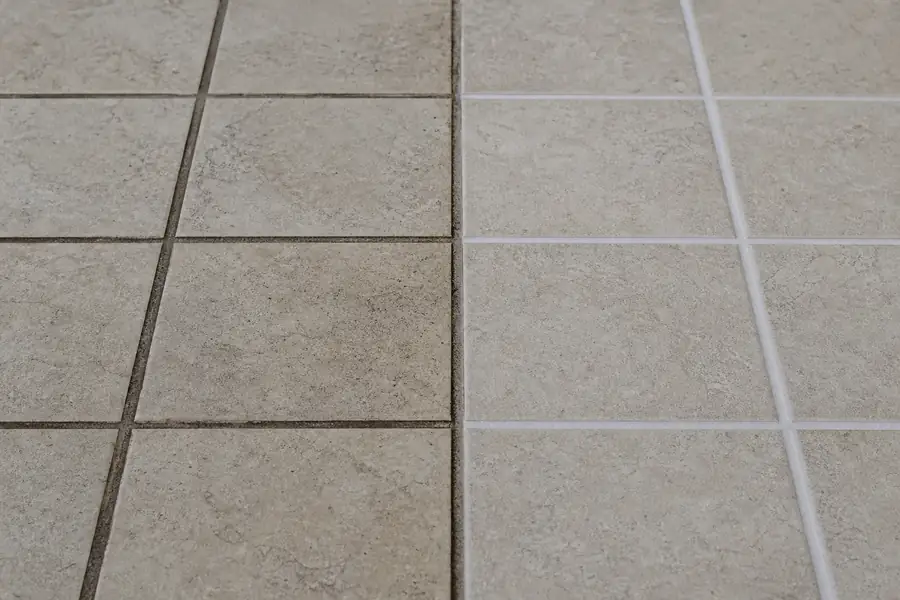
Color-sealing restores grout that's stained beyond scrubbing by coating it with a pigmented sealer that covers discoloration instead of removing it. It costs a fraction of regrouting and works well on grout that's structurally sound but permanently gray, yellowed, or blotchy from years without sealer.
The color coat needs the same clean, dry surface as clear sealer, and it typically lasts 2 to 4 years before it needs a fresh coat. It won't fix cracked or crumbling grout, though. Grout that's pulling away from the tile needs regrouting before any sealer, colored or clear, will hold.
DIY vs Professional Clean-and-Seal
DIY sealing works fine for a small, easy-to-reach area if you're willing to scrub grout by hand and wait out the dry time before applying sealer. It gets harder to do well across a whole kitchen or shower, where uneven cleaning leaves patchy sealer and missed spots that stain again within months.
Professional clean-and-seal service starts with a deeper clean than a scrub brush can manage, often using hot water extraction to lift soil out of the grout pores before sealer goes on, so the seal bonds to clean grout instead of trapping dirt underneath it. If your grout hasn't been resealed in a few years or shows stains that won't lift, it's usually faster and more even to book a grout sealing service than to redo a DIY job that didn't take.
Shiny Rhino technicians train under IICRC-certified methods and pass background checks before they clean or seal a single tile floor, backed by a long track record nationwide.