
Quick answer: Get wax out of carpet by making it brittle with ice or soft with heat, never by rubbing it into the fibers. Harden small wax drips with an ice pack until they crack off, or melt larger spills into a paper towel with a warm iron, then treat any leftover color with rubbing alcohol.
Candle wax on carpet looks like a disaster the moment it hits the fibers, but it's one of the easier stains to fix once you skip the instinct to wipe it up while it's still soft. Rubbing wet wax only spreads it and pushes it deeper into the pile. The fix works the opposite way: change the wax's temperature first, then lift it out. For general spill basics beyond wax, Shiny Rhino's guide on how to remove carpet stains covers techniques that apply to almost anything that lands on your floor.
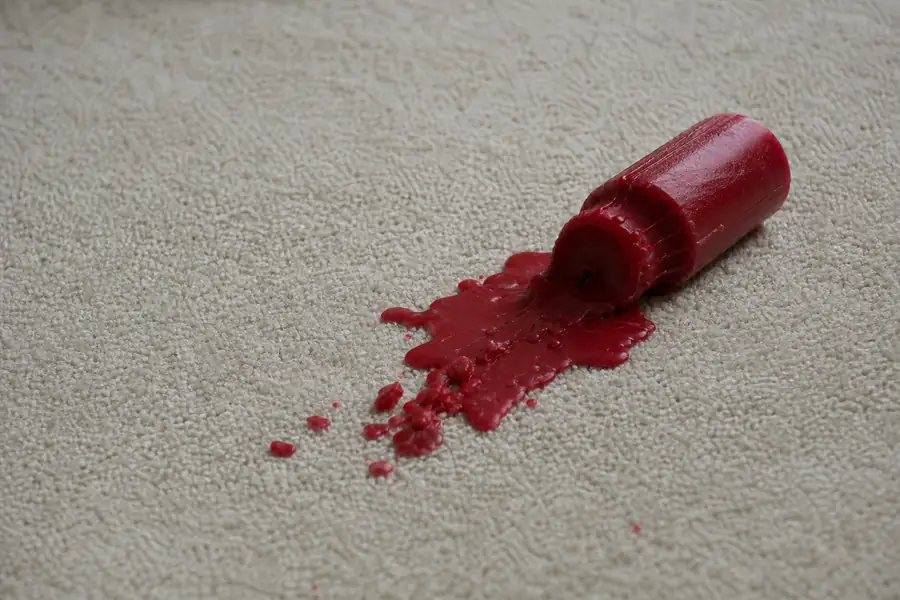
Freeze It First: The Ice Method
Hardening wax with ice is the fastest way to get wax out of carpet without heat or chemicals. Cold makes wax brittle enough to snap and lift away from carpet fibers instead of smearing into them.
- Fill a sealed plastic bag with ice cubes and set it directly on the wax for 5 to 10 minutes.
- Check that the wax feels hard and slightly frosted before moving on.
- Scrape the wax loose with a dull butter knife or the edge of a credit card, working from the outer edge toward the center.
- Vacuum up the crumbs right away so they don't get pressed back into the pile.
This step alone handles most candle wax on carpet from small drips and votives. Bigger pools of wax usually need heat to finish the job.
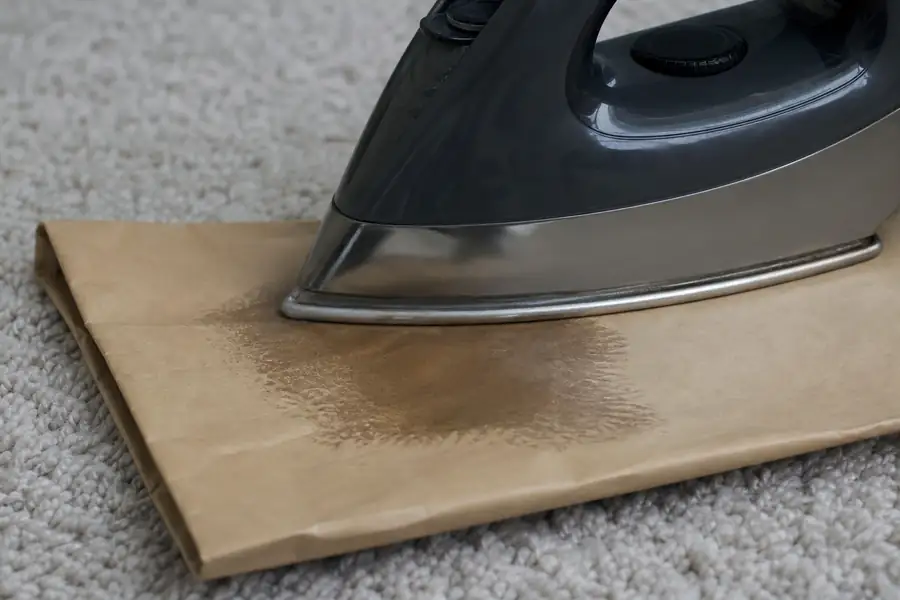
The Iron and Paper Bag Lift
Melting leftover wax into a paper bag pulls it out of carpet fibers instead of pushing it in deeper. This works best on wax that's too thick or spread out for the ice method alone.
- Set an iron to its lowest setting with the steam function off.
- Lay a piece of a brown paper bag or a few plain paper towels directly over the wax.
- Press the warm iron over the paper for 3 to 5 seconds at a time, keeping it moving.
- Lift the paper and check it. Melted wax should be soaking into the paper, not the carpet.
- Move to a clean section of paper and repeat until no more wax transfers.
Never rest the iron in one spot. Carpet fibers and the paper barrier both scorch fast under sustained direct heat.
The Hair Dryer Variant
A hair dryer softens wax gently enough to lift with a paper towel, without the scorch risk of a hot iron pressed directly on carpet. Hold the dryer on its warm, low setting a few inches above the wax and move it in slow circles.
Once the wax turns soft and shiny, blot it with a clean paper towel or white cloth, pressing straight down instead of wiping sideways. Switch to a fresh section of paper towel as soon as one gets waxy. This method takes longer than the iron trick, but it's the safer choice for wool blends and delicate rugs that can't take direct heat.
Not sure when your carpets were last deep cleaned?
Get an exact price online in about two minutes. No phone tag, no surprise fees.
Get My Instant QuoteColored Wax: Removing the Leftover Dye Stain
Rubbing alcohol removes the dye stain that colored candle wax leaves behind after the wax itself is gone. Red, blue, and green candles are the worst offenders because their dyes sit in the wax and transfer to carpet fibers on contact.
Dampen a white cloth with rubbing alcohol and blot the stain starting at the outer edge, working inward so the color doesn't spread further. Rinse the spot with a little cool water on a clean cloth, then blot dry with a towel. Repeat the alcohol blotting if a faint tint remains, checking a hidden patch of carpet first to confirm the alcohol doesn't affect the carpet's own dye.
Greasy Residue Cleanup
A dish soap solution cuts through the oily residue that wax leaves behind even after the solid piece is gone. Mix a few drops of dish soap into a cup of warm water and work it into the spot with a clean cloth.
Blot, don't scrub, then rinse with a cloth dampened in plain water and blot dry again. For stubborn grease spots, Shiny Rhino technicians often reach for a dedicated product like the Shiny Rhino Spot Remover, which is formulated to break down oily residue without leaving a soapy film behind.
Fiber Warning: Synthetics Melt
Synthetic carpet fibers like olefin and polypropylene can melt or fuse under direct iron heat, so the iron should never touch bare carpet. Always keep a full layer of paper between the iron and the fibers, and test the lowest heat setting on a hidden corner before working on a visible area.
Berber and looped carpets are especially sensitive because a scorched loop shows up as a permanent flat spot, not just a stain. If wax has worked deep into a dense or looped weave, or the fibers already look singed, stop and call in help rather than risk more damage. Shiny Rhino's carpet cleaning service uses truck-mounted hot water extraction that lifts embedded wax and residue without the guesswork of a household iron, and booking online applies an automatic discount.