
Quick answer: Vinegar gradually dulls polyurethane finish and is not recommended for regular hardwood floor cleaning. The acetic acid in vinegar slowly breaks down the protective topcoat, leaving floors hazy, less water resistant, and more prone to scratching over time.
That doesn't mean one accidental splash will ruin your floor tomorrow. But cleaning hardwood floor with vinegar as a weekly routine, the way a lot of cleaning advice online suggests, wears down the finish that's actually protecting the wood underneath.
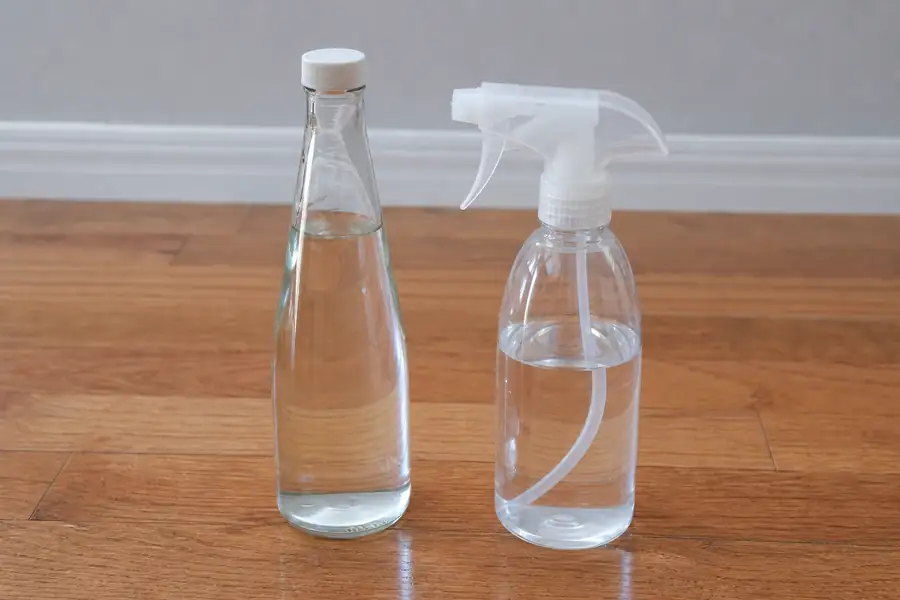
The Short Answer: Is Vinegar Safe on Hardwood Floors?
Vinegar is not safe for regular use on polyurethane-finished hardwood floors because its acidity slowly strips away the finish's shine and protection. Most hardwood floors installed in the last few decades are sealed with polyurethane, a plastic-like topcoat that keeps moisture and dirt from reaching the wood fibers below.
A single wipe-up of a spill with a vinegar-water mix probably won't hurt anything. The real damage comes from repetition: acid exposure week after week, month after month, chips away at that topcoat's clarity and durability.
What Vinegar Actually Does to Your Floor's Finish
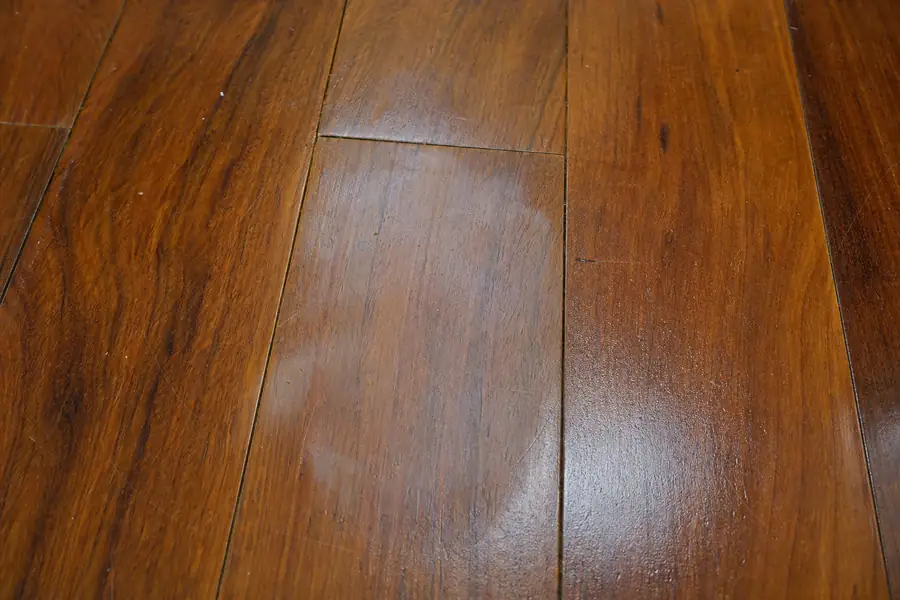
Vinegar is acetic acid diluted to roughly 5% strength, with a pH around 2.5. Polyurethane finish is built to resist water and mild household chemicals, but it isn't built to resist ongoing acid exposure. Each application microscopically etches the surface, and those etches accumulate into a visible haze or cloudiness that no amount of mopping fixes.
There's a second problem: water. Vinegar and water on hardwood floors means liquid sitting on a surface that's supposed to stay dry. Any moisture that seeps between floorboards or through a worn seam can cause wicking, where wood fibers along the edges absorb water and swell or cup. Once that happens, sanding and refinishing is usually the only fix.
Why the Vinegar Myth Refuses to Die
The vinegar myth persists because it used to be true. It's cheap, it cuts through grease and grime, and plenty of people remember a grandmother mopping with it for decades without issue.
What that memory usually skips is the finish underneath. Older homes commonly had wax or shellac-finished floors, which react to vinegar very differently than modern polyurethane does. Shellac and wax also required regular reapplication anyway, so a little extra wear from vinegar wasn't as noticeable. Today's polyurethane finishes are meant to last 7 to 10 years without recoating, and acid exposure cuts into that lifespan.
Not sure when your carpets were last deep cleaned?
Get an exact price online in about two minutes. No phone tag, no surprise fees.
Get My Instant QuoteIf You Insist on Cleaning Hardwood Floor With Vinegar: The Least-Risky Dilution
If you're going to use vinegar anyway, the least damaging approach is a heavy dilution used sparingly, not as a standing routine. Mix about a quarter cup of white vinegar into a gallon of warm water, no stronger than that.
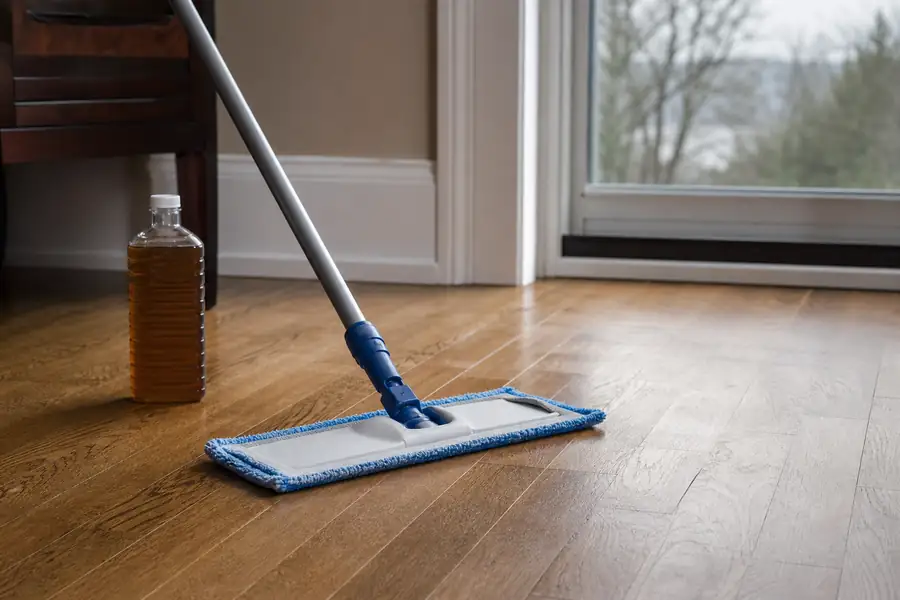
Apply it with a well wrung mop or microfiber cloth so the floor gets damp, not wet, and dry it immediately with a clean towel. Save this for the occasional stuck-on spot, not weekly maintenance, and never use it on floors finished with wax, oil, or left unfinished, where the acid reacts even faster.
What to Use Instead of Vinegar and Water on Hardwood Floors
A pH-neutral wood cleaner is the safer standard because it lifts dirt without attacking the finish the way vinegar and water on hardwood floors can. pH-neutral means the formula sits close to 7, neither acidic nor alkaline, so it cleans without the slow chemical erosion vinegar causes.
Shiny Rhino recommends a dedicated formula like the Hardwood Floor Cleaner, made to clean without dulling or streaking, or the full Hardwood Floor Cleaner Kit for routine upkeep between deep cleans. Both skip the harsh acid and the guesswork of mixing your own dilution.
The Finish-Safe Cleaning Routine That Actually Works
A finish-safe routine relies on dry dusting daily, damp mopping weekly with a pH-neutral cleaner, and a professional deep clean once or twice a year. Dust mopping or vacuuming on a hard-floor setting removes the grit that scratches finish before it ever needs a liquid cleaner.
Sticking to a set schedule, similar to the seasonal approach in Shiny Rhino's year-round deep clean schedule, keeps buildup from reaching the point where someone reaches for vinegar out of desperation. When floors need more than routine mopping, a professional hardwood floor cleaning service restores shine without any risk to the finish, using pH-balanced solutions matched to your specific wood species and sealant.