
Quick answer: Vacuum the rug thoroughly in both directions, then clean it in place with a low-moisture method like dry foam or an absorbent cleaning compound instead of soaking it. This handles everyday soil, pet hair, and small spills on most area rugs; saturated rugs, wool pieces, and large set-in stains still need to come up or go out for a full cleaning.
You don't have to haul a 9x12 off the living room floor every time it needs attention. Most routine soil responds to vacuuming plus a low-moisture pass, which is exactly what it means to clean a rug in place. If you want the full removal method for deeper cleans, our guide on how to clean an area rug covers that process too.
When cleaning in place makes sense
Cleaning a rug in place works best for light to moderate soiling on synthetic or natural-fiber rugs sitting over hardwood, tile, or wall-to-wall carpet. It's the right call when the rug is anchored under heavy furniture, taped down to stop slipping, or simply too large and heavy for one person to carry outside without help.
It also saves your floor from the scuffs and scratches that come from dragging a rug across hardwood. If the rug is small, lightly soiled, and easy to lift, taking it outside for a shake and a hose-down is still the faster option.
Protect the floor underneath first (plastic sheeting on hardwood)
Before any moisture touches the rug, slide a sheet of plastic or a moisture barrier under the edges you can lift to keep dampness off the hardwood below. Lift one corner at a time, tuck the plastic a few inches under the rug's edge, and tape it lightly in place so it doesn't shift while you work.
This step matters most on hardwood and engineered wood, where standing moisture can cup or discolor boards. On tile, stone, or concrete subfloors the risk is lower, but a barrier still speeds up cleanup and keeps any residue off the grout lines.
Vacuum both directions, edges included
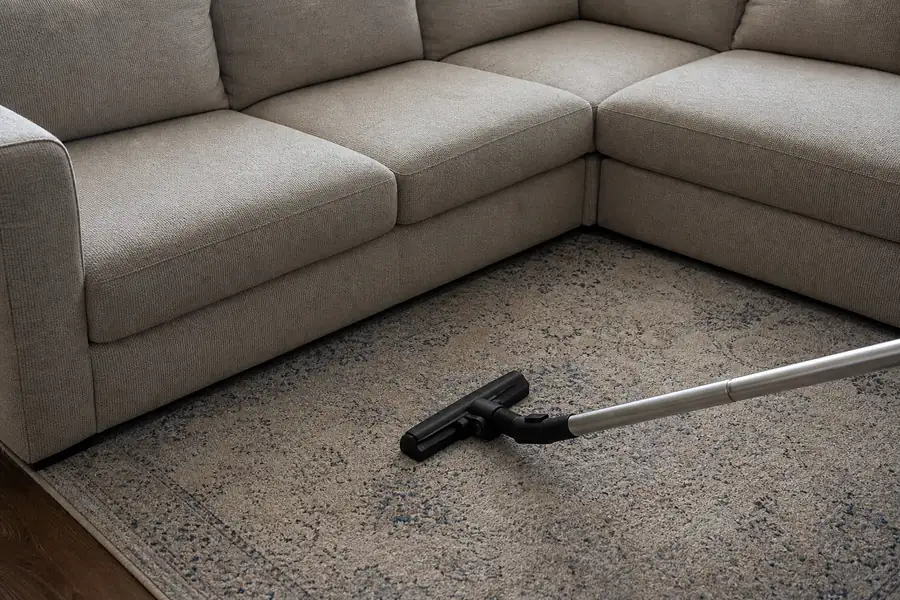
Vacuuming a rug from two directions, lengthwise and then widthwise, pulls up embedded dust, dander, and grit that a single pass leaves behind. Dirt sits down in the pile at an angle, so crossing your strokes lifts particles a straight back-and-forth motion misses.
Run a crevice tool along the edges and under any furniture legs, and switch to a low suction setting on fringe so you don't fray or pull the threads. This pass alone removes most of the surface soil that would otherwise turn into mud once moisture gets introduced.
Not sure when your carpets were last deep cleaned?
Get an exact price online in about two minutes. No phone tag, no surprise fees.
Get My Instant QuoteThe low-moisture dry foam method step by step
The dry foam method lets you clean an area rug without moving it because the foam carries almost no liquid down into the backing or the floor underneath. Here's the process Shiny Rhino technicians use on in-home visits:
- Test the cleaner on a hidden corner first and check for color change after it dries.
- Whip the cleaning solution into a dry, airy foam rather than a wet lather.
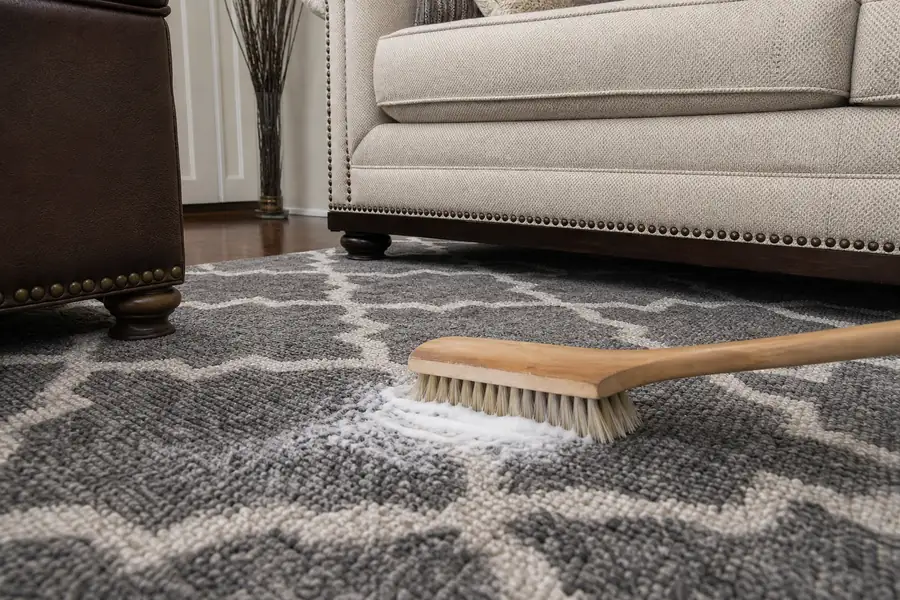
- Apply the foam in small sections with a soft brush, working with the nap, not against it.
- Agitate gently to loosen soil, then let the foam sit for the time the product label specifies.
- Extract the residue with a dry towel or a wet/dry vacuum before it has a chance to settle back into the pile.
- Set up a fan or two over the rug to finish drying it within a few hours.
For rugs with deeper soiling, stubborn odor, or a family history of spills the foam method can't fully clear, Shiny Rhino's area rug cleaning service can perform the same low-moisture process in your home or pick the rug up for a full off-site clean.
Spot-cleaning and deodorizing in place
Spot-clean a fresh stain immediately by blotting, not rubbing, so the spill lifts out of the fibers instead of spreading or sinking toward the floor. A pH-balanced product like Shiny Rhino Spot Remover works on coffee, wine, and pet accidents without leaving a sticky residue that attracts more dirt later.
For odor rather than a visible stain, an enzyme-based treatment such as Odor Out Plus breaks down the organic matter causing the smell instead of just masking it. Apply sparingly, blot dry, and give the spot the same drying attention as a wet-cleaned section.
Airing the underside and when in-place cleaning isn't enough
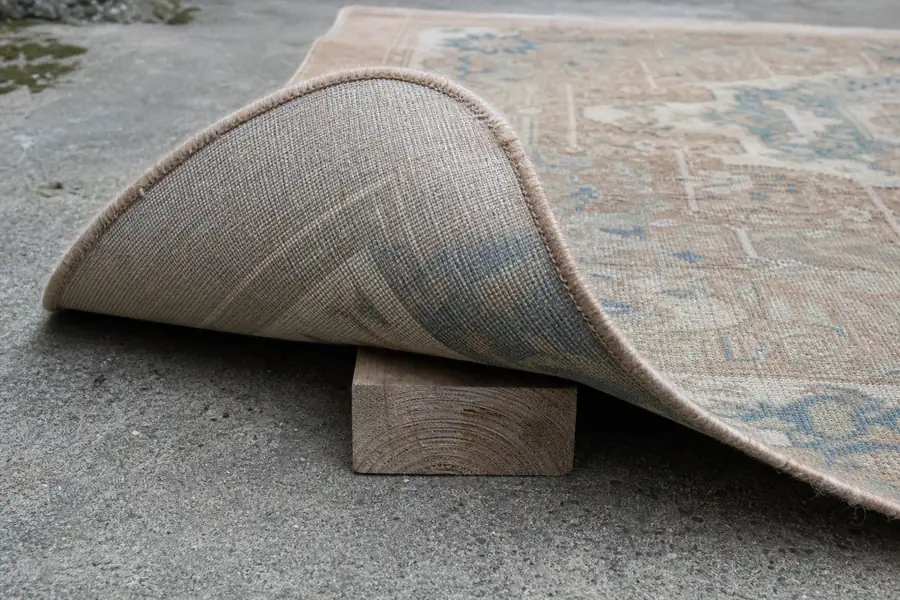
Lifting one corner of the rug for 30 to 60 minutes after cleaning airs out the underside and the floor beneath it, which speeds drying and heads off wicking, where trapped moisture migrates back up through the backing after the surface looks dry. Prop the corner with a book or a chair leg and point a fan underneath for faster results. In humid markets like Florida, plan on extra airing time since ambient moisture slows evaporation.
In-place cleaning stops being the right choice once a rug has been soaked through, not just spilled on, since trapped water under a rug can warp hardwood or breed mold within 24 to 48 hours. Wool rugs are also a poor fit for DIY in-place cleaning, because moisture can cause the dye to bleed or the backing to shrink unevenly; our guide on how to clean a wool area rug explains why those pieces usually need gentler, slower handling. Large, deeply set stains that survive a foam pass and a spot treatment are a sign the rug needs a full extraction clean rather than another round in place.