
Quick answer: Most area rugs can be cleaned at home by vacuuming both sides, spot-treating fresh spills right away, and hand-washing or hosing off rugs made from synthetic fiber, then drying them flat with air moving underneath. Wool, oriental, antique, and heavily soiled rugs hold dye and moisture differently, so professional rug cleaning is usually the safer call for those.
The method that works depends entirely on what the rug is made of and how dirty it's gotten. Get that wrong and you can shrink a wool rug, bleed a dye, or trap moisture that turns into mold before you ever notice it.
Check the label and fiber first
The fiber in your area rug decides whether it can touch water at all. Flip a corner and look for a manufacturer tag; if there isn't one, a quick feel test tells you a lot. Smooth, slightly shiny fibers are usually synthetic. Soft, springy fibers with natural variation are wool. Flat, woven, rough-textured strands are often jute or another plant fiber.
Synthetic
Synthetic rugs made from polypropylene, nylon, or polyester are the most forgiving fiber to clean at home. They resist water damage and dye bleeding, which is why most machine-made area rugs from big box stores fall into this category and can safely be hand-washed or hosed off.
Wool
Wool rugs react to water and heat by shrinking, felting, or bleeding dye, so hand-washing carries real risk without the right technique and gentle, cool-water process. Hand-knotted wool and oriental rugs are almost always better handled through professional rug cleaning.
Cotton
Cotton rugs can usually be hand-washed, or machine-washed if they're small enough to fit a standard washer, but they take a long time to dry fully and can shrink in hot water. Stick to cool water and a gentle cycle.
Jute and natural fiber
Jute, sisal, and seagrass rugs should never get soaked, because plant fibers absorb water, swell, and can rot or mildew from the inside out. Clean these with vacuuming, dry baking soda treatments, and light surface misting only, never a full wash or hose-down.
Routine care: vacuum both sides
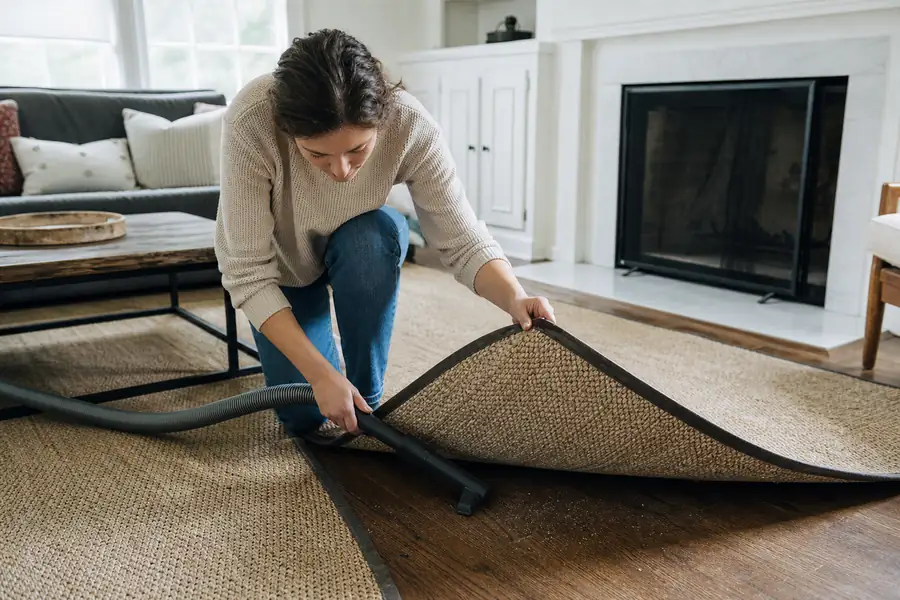
Vacuuming both sides of an area rug every one to two weeks removes the grit that cuts fibers and dulls color long before you'd ever call it dirty. Flip the rug and vacuum the backing first to loosen dirt trapped near the base of the fibers, then vacuum the front. Turn off the beater bar on wool, jute, or fringed rugs so it doesn't fray or pull the weave.
How to spot-clean a rug
Spot-cleaning a fresh stain within minutes keeps it from setting into the fibers or the backing. Blot, don't rub, using a clean white cloth to lift as much liquid as possible before you apply anything. Mix a few drops of mild dish soap or a dedicated product like Shiny Rhino Spot Remover with cool water, work from the outside of the stain inward, then blot dry and weigh the spot down with a towel and a heavy book overnight. For tougher, older marks, our guide on how to remove carpet stains covers techniques that translate well to rugs.
How to wash an area rug by hand
Hand-washing works well for small to medium synthetic or cotton rugs that fit in a bathtub or lay flat on a clean concrete surface. Vacuum the rug first so you're not scrubbing loose grit into the fibers. Test colorfastness by dabbing a damp white cloth on a hidden corner; if color transfers, stop and call a professional instead.
Not sure when your carpets were last deep cleaned?
Get an exact price online in about two minutes. No phone tag, no surprise fees.
Get My Instant QuoteMix a pH-balanced detergent with cool water and work it into the pile with a soft-bristle brush, always in the direction of the nap. Rinse thoroughly, more than once if needed, because leftover soap residue actually attracts dirt faster than before you started. Press out excess water with a towel; never wring or twist a rug, which can distort the shape and weaken the backing.
The hose-off method for washable rugs
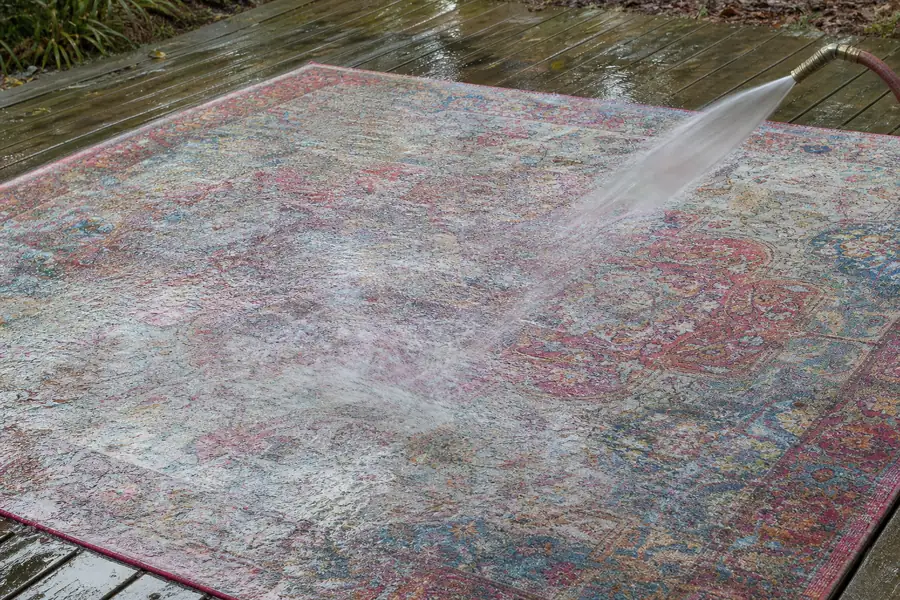
Hosing off a rug outdoors is the fastest way to deep clean a machine-made synthetic rug without hauling it into a tub. Vacuum the rug first, then lay it flat on a driveway or hang it over a sturdy railing or fence. Apply a diluted, pH-balanced detergent, work it in with a soft brush, and rinse from the top with a hose until the water running off is completely clear.
Flip the rug and repeat the rinse on the back side, since soap and dirt collect on the backing too. Squeegee off as much water as you can before moving to drying, which cuts drying time significantly.
Drying: the step everyone gets wrong (mold risk underneath)
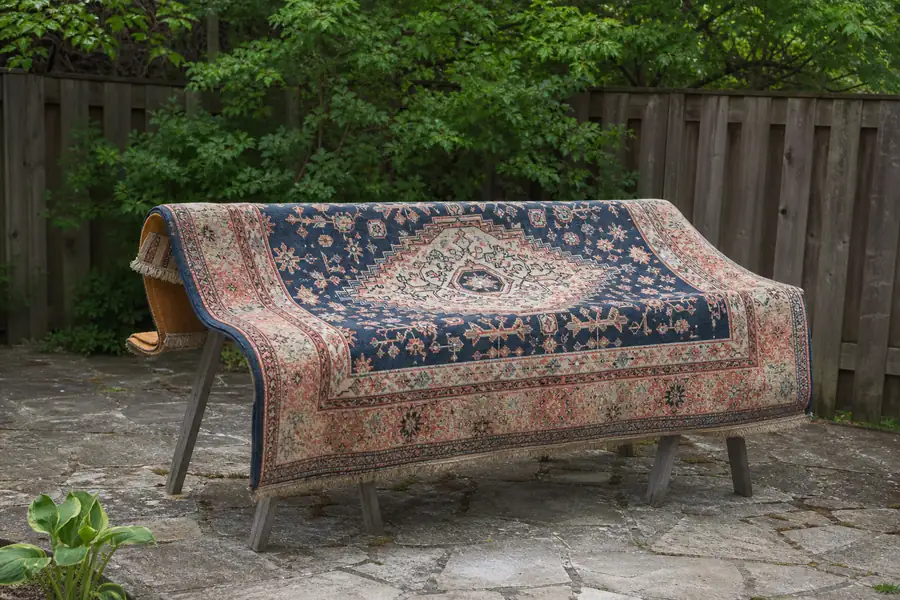
Rugs that dry slowly from the bottom up cause more mildew and musty odors than the washing itself ever does. Air has to move on both sides of the rug, not just across the top. Dry outdoors over a rack, sawhorses, or a railing, or indoors on a raised drying rack with a fan blowing underneath and a dehumidifier running in the room.
Never lay a wet rug straight back onto hardwood or carpet; the padding and subfloor underneath will trap moisture against both surfaces. In dry climates like Colorado, a rug can be dry within hours; in humid regions, plan on a full day or more, flipping periodically to check the middle, which always dries last.
Rugs you should never wash yourself
Wool, oriental, antique, and heavily soiled area rugs are safer left to professional rug cleaning than to a garden hose or a bathtub. Hand-knotted wool and oriental rugs use natural dyes that bleed under saturation, and their fringe and foundation can separate or unravel once fully wet. Rugs with old pet stains or heavy odor need enzyme-based treatment that reaches deep into the backing, not surface soap.
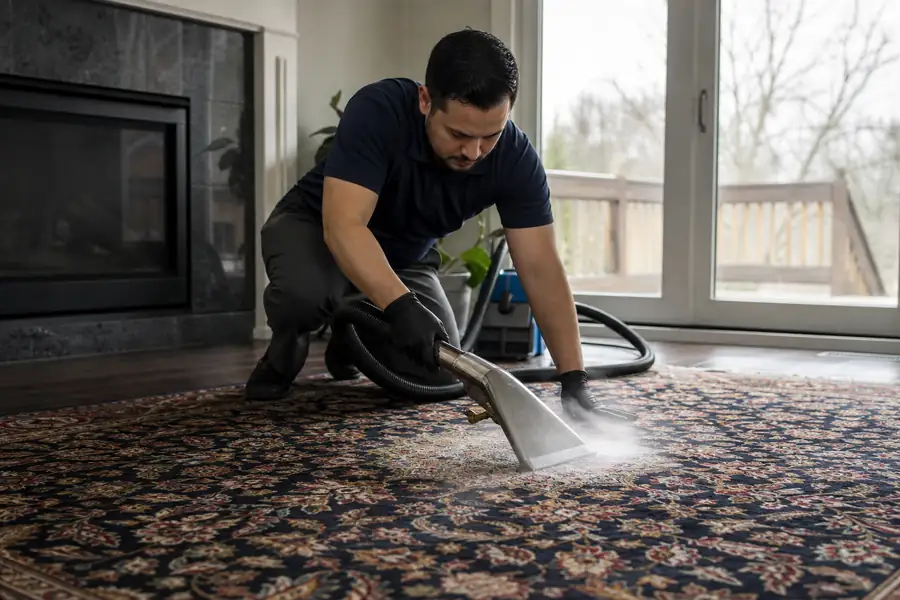
Shiny Rhino technicians are trained to identify fiber type before they ever touch a rug with water, and background-checked crews use controlled hot water extraction rather than guesswork. If a rug is a family heirloom, an antique, or simply too big to manage safely at home, booking Area Rug Cleaning protects the investment instead of risking it.