
Quick answer: Wool is a natural fiber that soaks up moisture, felts (mats and shrinks permanently) when it meets heat or scrubbing, and its dyes can bleed if the wrong cleaner touches them. Clean a wool area rug with suction-only vacuuming, cold water and a wool-safe detergent for spots, and blotting instead of rubbing, and keep bleach, ammonia, hot water, and steam away from it entirely.
Those three traits, absorbent, felting, and dye-sensitive, explain almost every rule below. Get them right and a good wool rug can last for decades. Get them wrong and you can shrink, mat, or discolor it in one afternoon.
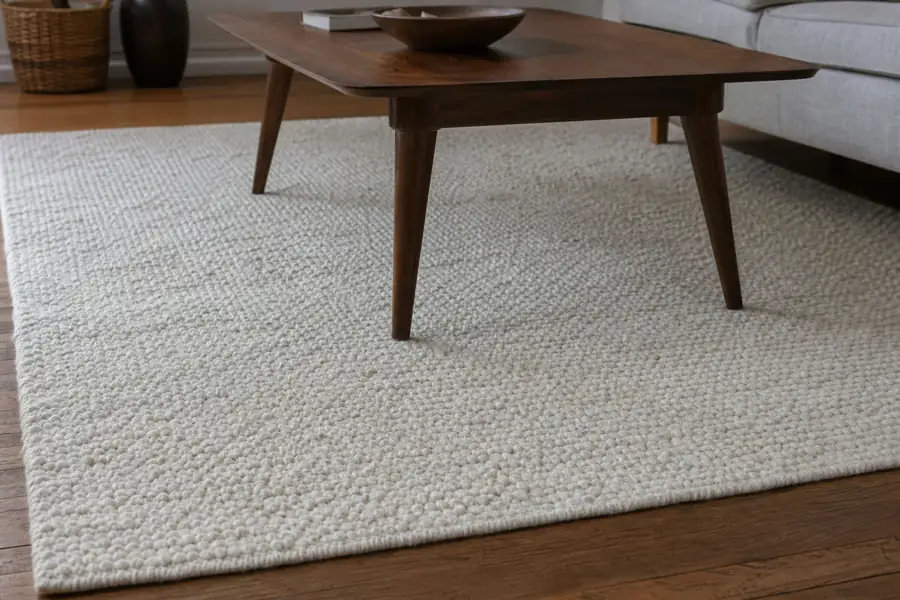
Why wool rugs need different rules
Wool fibers have microscopic scales, similar to human hair, that lock together and shrink when exposed to heat, moisture, and friction at the same time. That locking process is called felting, and once it happens it cannot be reversed. Synthetic carpet fiber does not have this structure, which is why our guide on how to clean a carpet recommends steps that would actually damage a wool rug.
Wool also takes dye differently than synthetic fibers, especially in hand-knotted oriental wool rug care, where natural or semi-natural dyes sit closer to the fiber surface. Alkaline cleaners, bleach, and hot water all loosen that dye and cause bleeding or fading. Wool rug cleaning is really a discipline of avoiding heat, agitation, and harsh chemistry, not a discipline of scrubbing harder.
Routine care: suction-only vacuuming
Suction-only vacuuming, meaning a vacuum with the beater bar or rotating brush turned off or removed, is the single most important habit for a wool area rug. The spinning brush that works fine on synthetic carpet will pull, fuzz, and eventually felt wool pile over time.
Vacuum a wool rug once or twice a week, running slowly in the direction of the pile rather than back and forth aggressively. Skip the fringe with the vacuum head; use a soft brush attachment or your hand to lift dust from knotted ends instead, since fringe fibers snag and fray easily. Rotate the rug every few months so foot traffic and sunlight wear evenly across the whole piece.
Spot-cleaning wool safely (cold water, wool-safe detergent, blot only)
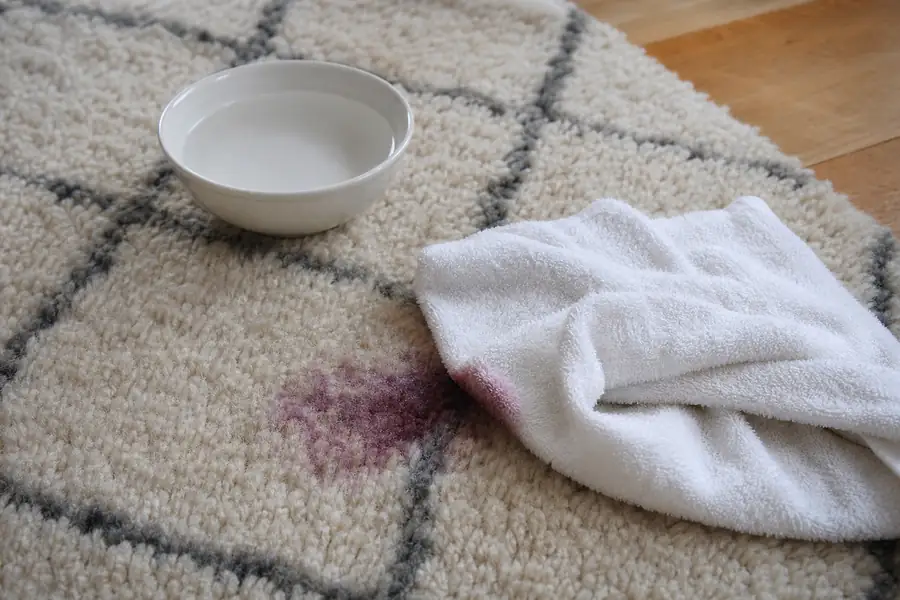
Spot-clean a wool rug with cold water, a small amount of wool-safe, pH-neutral detergent, and a blotting motion, never rubbing or scrubbing. Rubbing pushes the spill deeper into the pile and roughs up the fiber scales that lead to felting.
Blot from the outside of the spill toward the center so you don't spread it wider. Work a small amount of diluted, wool-safe cleaner into a clean cloth rather than pouring it directly onto the rug, and blot again with plain cold water afterward to rinse out any residue. The Shiny Rhino Spot Remover is formulated at a pH wool tolerates well and is a good tool to keep on hand between professional cleanings.
Test any product on a hidden corner first and watch for ten minutes. If the color shifts at all, stop and call a rug specialist instead of continuing.
The forbidden list: what never to use on a wool rug
Five things reliably damage wool: oxygen bleach, chlorine bleach, ammonia, hot water, and steam. Each one attacks either the fiber structure or the dye, and none of them belong anywhere near a wool area rug.
Not sure when your carpets were last deep cleaned?
Get an exact price online in about two minutes. No phone tag, no surprise fees.
Get My Instant Quote- Oxygen bleach can yellow wool and strip its natural luster.
- Chlorine bleach breaks down the protein bonds that give wool its strength, leaving fibers brittle.
- Ammonia strips the lanolin coating that helps wool resist stains naturally.
- Hot water is the fastest route to felting and permanent shrinkage.
- Steam combines heat and moisture, the exact conditions that set stains and mat the pile instead of lifting them.
If a spot is stubborn enough that cold water and a wool-safe detergent aren't touching it, that's the signal to stop and bring in a professional rather than reaching for something stronger.
Drying a wool rug flat
A wool rug should dry flat and out of direct sunlight, not hung, folded, or left damp on a hard floor. Folding traps moisture in the fold line and can cause mildew or permanent creasing; sunlight fades dye unevenly.
Raise the rug slightly with a rack or a couple of clean towels underneath so air moves on both sides, and point a fan across the surface to speed things along. Humid climates slow this down considerably; homes in Florida often need a full day or more of fan drying before a wool rug is fully dry through the backing. Never put a wool rug back down on the floor, or under furniture, while it still feels cool or damp to the touch.
Signs your wool rug is being damaged
Matting, color bleeding, a musty smell, and fraying fringe are the clearest signs a wool rug is being damaged by the wrong cleaning method. Catching these early usually means the damage is cosmetic rather than permanent.
- Pile that feels stiff, flattened, or clumped together (felting)
- Color running or fading unevenly, especially near edges
- A sour or musty odor that lingers after drying
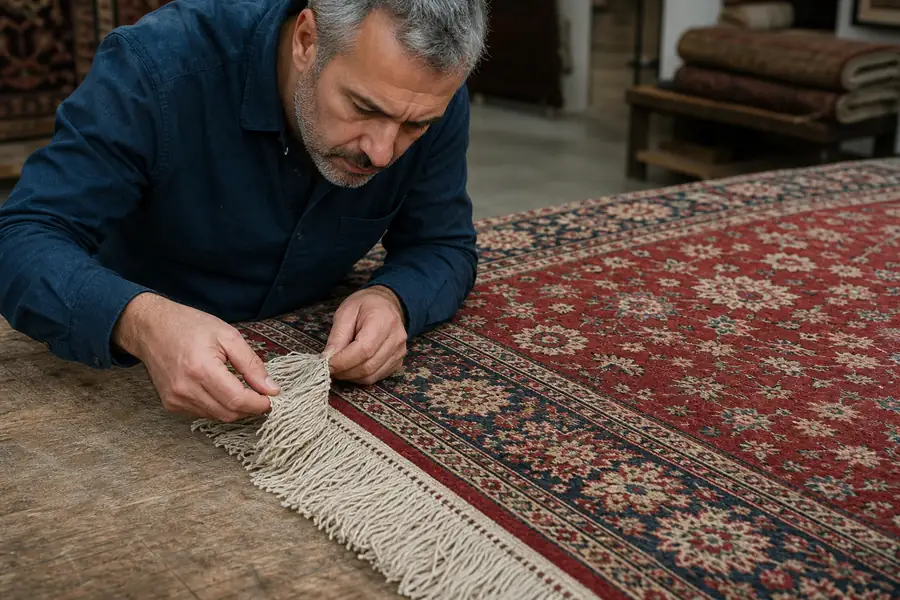
- Fringe that looks frayed, yellowed, or brittle
- A rug that takes noticeably longer to dry than it used to
Any one of these is a reason to pause home cleaning and get the rug evaluated by a specialist before the next spill or vacuum session.
Why immersion washing belongs with rug specialists
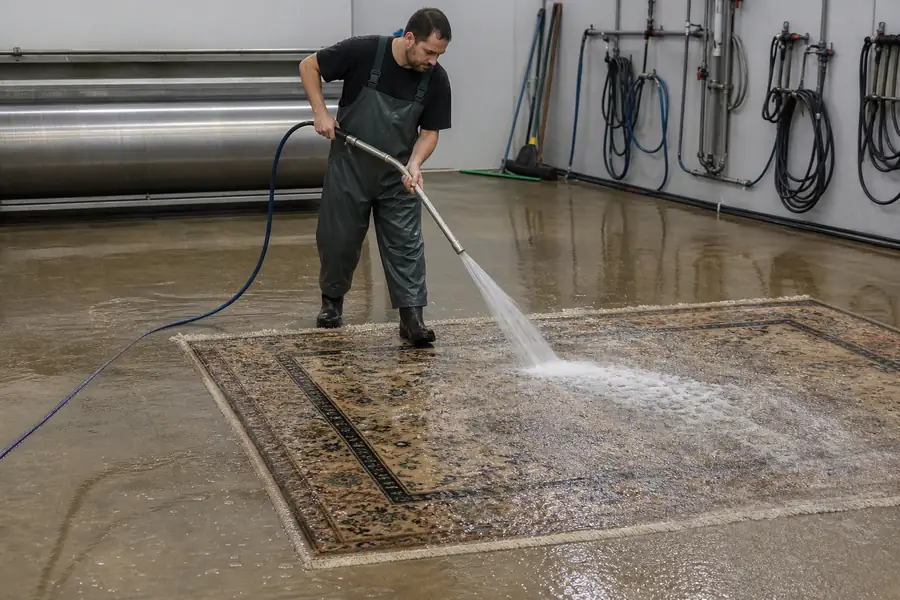
Immersion washing, where a rug is fully submerged and flushed with controlled water and cleaning agents, removes the ground-in soil and allergens that surface cleaning can't touch, but it has to be done with the right water temperature, pH, and drying setup or it causes the exact felting and bleeding this guide warns against. That's a job for trained rug specialists, not a home project.
Shiny Rhino technicians test dye stability, identify wool type, and use dedicated wash and controlled-drying stations built for oriental wool rug care, rather than the truck-mounted hot water extraction used on wall-to-wall carpet. Booking Area Rug Cleaning gets a wool rug properly rinsed, balanced, and dried flat under climate control, which is the safest way to reset a rug that's overdue for a deep clean.