
The letter on your couch's care tag decides everything before you touch a sponge to it. An S code means solvent only, no water; a W code means a water-based cleaner is safe, and mixing the two up can leave permanent rings, stiff patches, or a nap that never lays flat again.
Microfiber sofa cleaning is manageable at home once you know which code you're working with. The wrong liquid on the wrong fabric is the most common reason a stain gets worse instead of better. This guide covers decoding the tag, the two safe cleaning methods, fixing water stains on microfiber couch cushions, and when the job is better handed to a pro.
Find and decode your care tag (W, S, S-W, X)
Flip the cushion over or check the tag sewn under the seat; the single letter printed there tells you exactly which cleaner is safe for that couch.
Furniture makers use a standardized code so any cleaner, professional or DIY, knows what the fabric can handle before a drop of liquid touches it.
| Code | What it means | Safe cleaner |
|---|---|---|
| W | Water-safe fabric | Water-based cleaner or mild soap and water |
| S | Solvent only, no water | Rubbing alcohol or a dry-clean solvent |
| S-W | Safe with either | Water-based cleaner or solvent |
| X | Vacuum only | No liquid; brush or vacuum only |
If the tag is missing or the print has worn off, test a hidden spot on the back or underside with a drop of water first. If it darkens, spots, or stiffens, treat the whole couch as an S code and stick to solvent.
The rubbing alcohol method for S-code microfiber
Rubbing alcohol lifts oil-based dirt and body oils from solvent-only microfiber without leaving the watermarks that plain water causes.
- Vacuum the cushions and crevices first to remove loose crumbs and dust so you're not grinding grit into the fibers.
- Fill a spray bottle with 90%+ isopropyl alcohol and test it on a hidden patch, letting it dry fully to confirm no discoloration.
- Spray a small section lightly, working one cushion panel at a time rather than soaking the whole couch at once.
- Scrub gently with a white, non-dyed sponge in small circles; the alcohol evaporates fast, so keep sections small.
- Let each panel air dry, then brush the nap back into place with a soft-bristle brush before moving to the next section.
The suds-only method for W-code microfiber
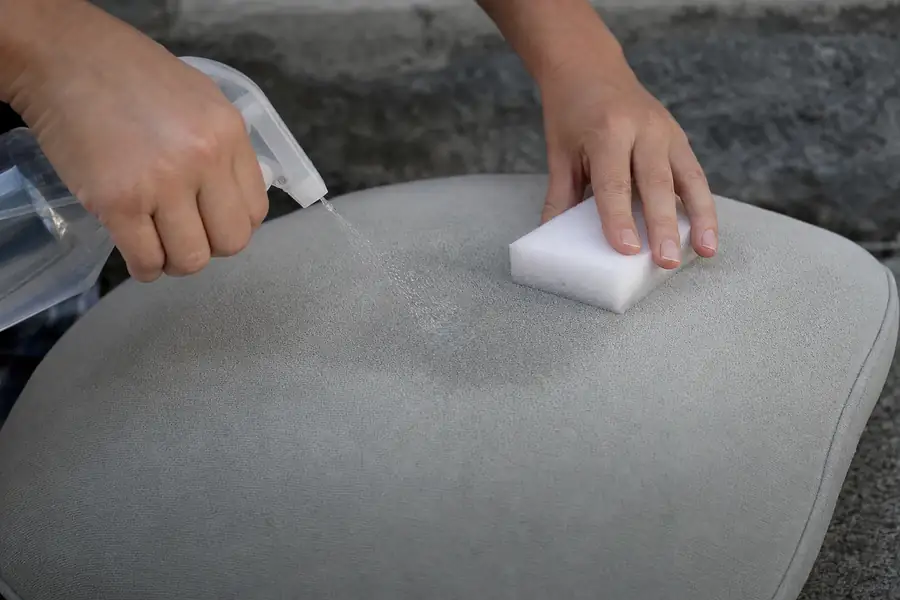
For W-code microfiber, the safe move is foam, not liquid water; suds clean the surface without soaking into the fill and warping the cushion shape.
- Mix a few drops of mild dish soap with warm water and whip it with a hand mixer or whisk until it's mostly foam, not liquid.
- Load a sponge with just the foam, skimming off the standing water underneath, and wipe the cushion in circular motions.
- Wipe away residue with a barely damp microfiber cloth, using as little moisture as possible.
- Point a fan at the cushion or open a window to speed drying; damp cushions left closed up can start to smell musty within a day.
How to fix existing water stains and rings
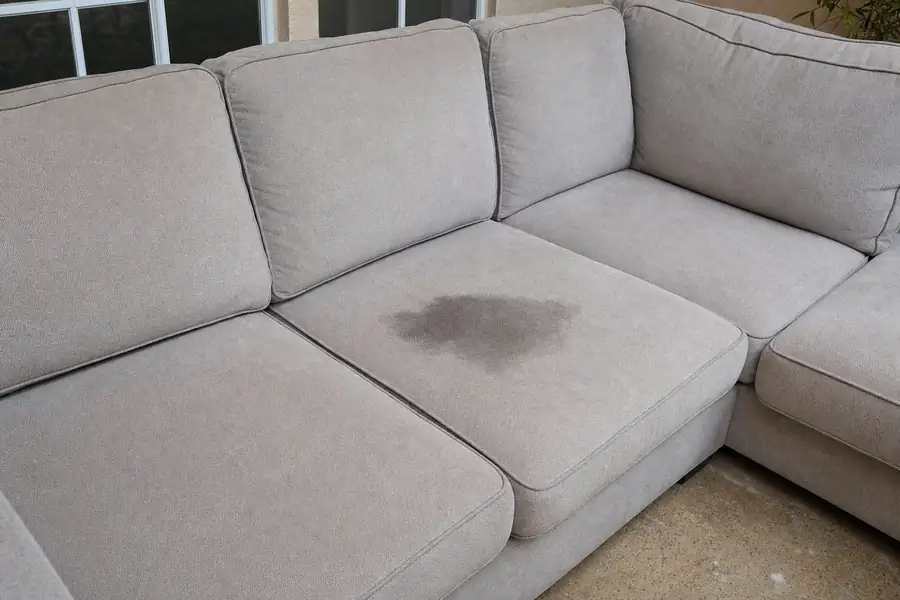
Water stains on microfiber couch fabric happen when liquid soaks in unevenly and dries with a hard, visible edge where wet met dry.
The fix is to re-wet the entire cushion evenly, using the method that matches its care code, so the whole surface dries at the same rate instead of leaving a new ring around the old one. For S-code fabric, mist the full panel with rubbing alcohol rather than just the stained patch. For W-code fabric, wipe the whole cushion with foam the same way. Brush the nap while it's still slightly damp to blend the texture, then let it dry completely before sitting on it. In humid regions like Florida, drying can take noticeably longer, so run a fan and give it extra time before judging the result. A dab of Shiny Rhino Spot Remover between full cleanings can also catch fresh spills before they set into a ring, and following a year-round deep clean schedule helps keep stains from building up in the first place.
Not sure when your carpets were last deep cleaned?
Get an exact price online in about two minutes. No phone tag, no surprise fees.
Get My Instant QuoteBring back the softness: brushing the nap
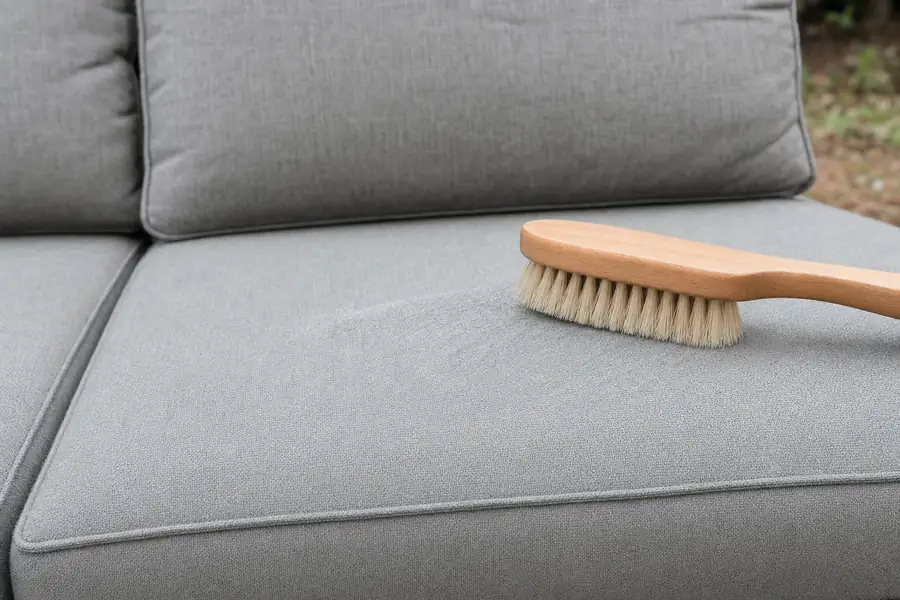
Brushing the nap, the short raised fibers that give microfiber its velvety feel, is what keeps a couch from drying stiff or matted after cleaning.
Use a soft-bristle brush or a dry, clean sponge and stroke in one consistent direction while the cushion is still slightly damp. Going in circles or back-and-forth flattens the nap unevenly and leaves streaky patches once it dries. Repeat once the cushion is fully dry to fluff it back up, and brush high-traffic seat cushions every few weeks even without a full cleaning to keep them from packing down.
Deodorizing microfiber (baking soda)
Baking soda pulls odors out of microfiber by absorbing them into the powder rather than masking them with fragrance.
Sprinkle a generous, even layer over the cushions and let it sit for 15 to 20 minutes, longer for stronger odors like pet smell. Vacuum it up thoroughly with an upholstery attachment, going over each spot twice to get the powder out of the fibers. Dirty upholstery does more than smell bad; it traps allergens and skin oils that affect indoor air quality, which is worth keeping in mind if anyone in the house deals with allergies.
When to call a professional
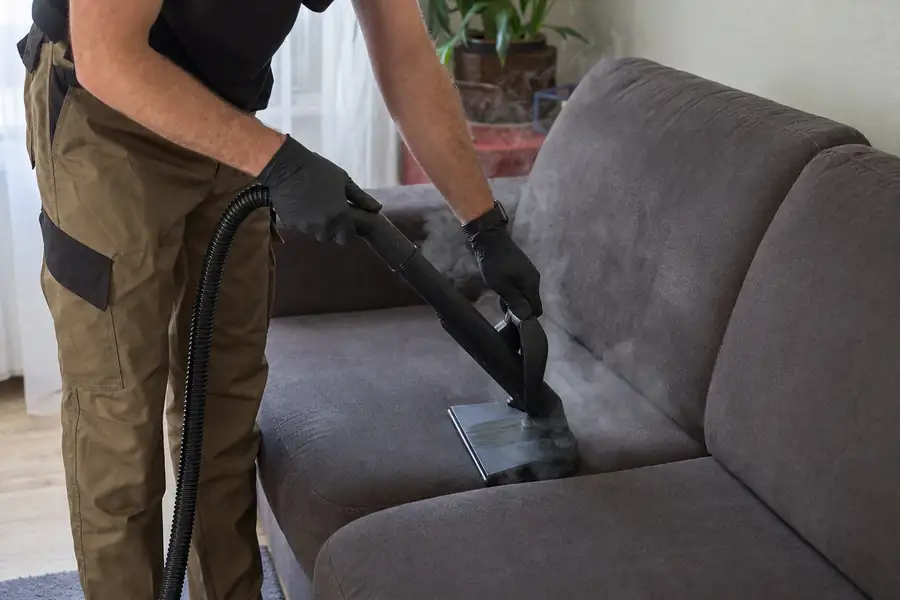
Call a professional when a stain won't lift after the alcohol or suds method, when the couch is an X code that can't take any liquid, or when odor persists after a full baking soda treatment.
Shiny Rhino technicians are trained to identify fabric type before treating anything, and they carry solvents and extraction equipment suited to solvent-only microfiber that most households don't have on hand. Professional upholstery cleaning also gets deep into seams and cushion crevices that a sponge never reaches, pulling out years of oils and dust a home method leaves behind. Booking online applies an automatic discount, and most jobs are finished the same day.