
Quick answer: Getting rid of carpet beetles takes three things done together: vacuum every carpet, rug, closet, and vent daily for at least two weeks to pull up larvae and eggs, apply steam heat to kill what the vacuum misses, and hot-wash or dry-clean any infested clothing or linens. Most homes see a carpet beetle infestation clear in two to four weeks when all three steps happen at once, longer if the food source, like an old bird nest or a forgotten wool sweater, never gets found and removed.
Carpet beetles don't bite or spread disease, but their larvae chew through wool, fur, feathers, silk, and pet hair, so a slow response means more damaged fabric.
What Are Carpet Beetles?
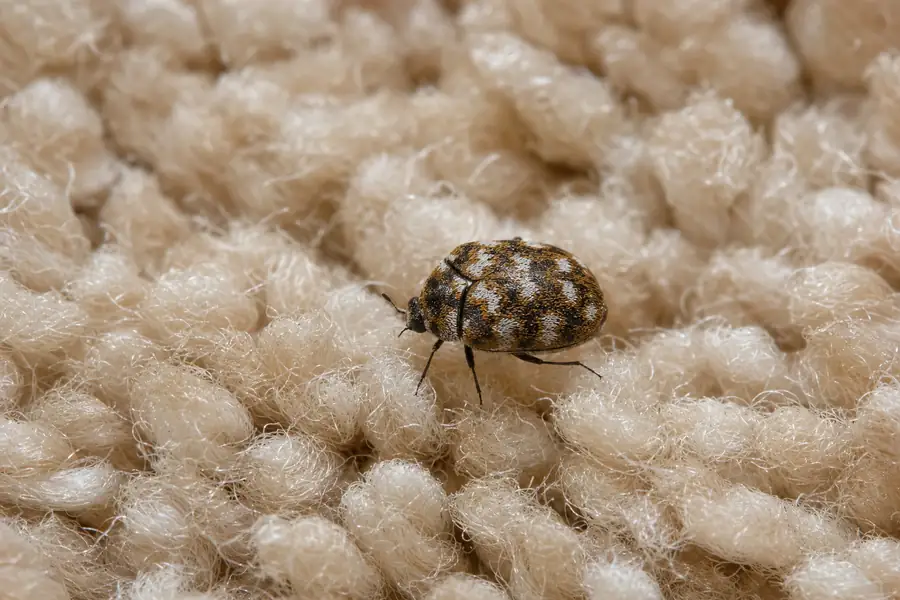
Carpet beetles are small household pests that feed on animal-based fibers like wool, silk, feathers, and pet hair, with the larval stage doing nearly all the damage. Adults are harmless to fabric and mainly feed on pollen outdoors, but they lay eggs indoors near lint and hair, and those eggs hatch into the fabric-eating carpet beetle larvae homeowners actually need to worry about.
Identifying Adult Carpet Beetles
Adults are round, about 1/16 to 1/8 inch long, with mottled black, white, brown, or orange scale patterns. Look for them on windowsills or near light fixtures, since they mainly wander indoors to lay eggs.
Identifying Carpet Beetle Larvae
Larvae look nothing like the adults: fuzzy, bristly, brownish grubs about 1/4 to 5/16 inch long that avoid light and hide along baseboards, under furniture, and inside closets. That hiding habit is why an infestation can go unnoticed for weeks while larvae chew through a wool rug or stored sweater.
Where Do Carpet Beetles Come From?
Most carpet beetle infestations start outdoors and move in through open windows, door gaps, and dryer vents, drawn by pollen, pet hair, or a dead animal in a wall. Common answers to where do carpet beetles come from include bird or rodent nests near the roofline, secondhand rugs brought in without inspection, and cut flowers carrying eggs on their petals.
Once inside, they settle wherever lint and hair collect: under area rugs, inside ducts, behind baseboards, and in rarely disturbed closets full of wool items.
Signs of a Carpet Beetle Infestation
The clearest sign is finding shed larval skins, tiny bristly husks, along baseboards, in closet corners, or inside vents. Bare or thinned patches in wool rugs, ragged holes in sweaters, and small fecal pellets that look like grains of sand are the other giveaways, and people often mistake this damage for clothing moths.
| Clue | Carpet Beetles | Clothing Moths |
|---|---|---|
| Damage shape | Irregular bare patches, grazed surface | Clean round holes |
| Evidence left | Shed skins, bristly larvae, fecal pellets | Silk webbing, cocoons |
| Where found | Rugs, baseboards, vents, closets | Dark closets, folded fabric |
| Adult behavior | Flies to windows, feeds on pollen | Avoids light |
Larvae hide in corners a routine vacuum pass skips, so check the areas covered in Shiny Rhino's guide to hidden spots most deep cleans miss.
Step-by-Step Carpet Beetle Elimination Plan
Clearing carpet beetles means starving the larvae and killing the eggs, not just the adults you happen to see.
Not sure when your carpets were last deep cleaned?
Get an exact price online in about two minutes. No phone tag, no surprise fees.
Get My Instant QuoteVacuum Aggressively and on a Schedule
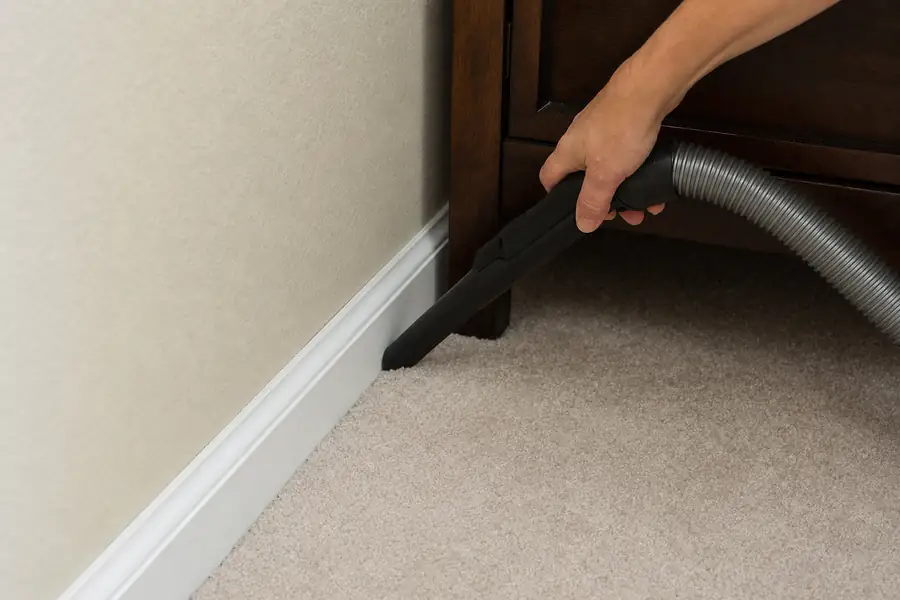
Vacuum every carpet, rug edge, baseboard, closet floor, and vent daily for the first two weeks, then two to three times a week for another month. Strong suction pulls up larvae, shed skins, and eggs before they mature; empty the canister outside each time.
Use Steam Heat on Carpets and Upholstery
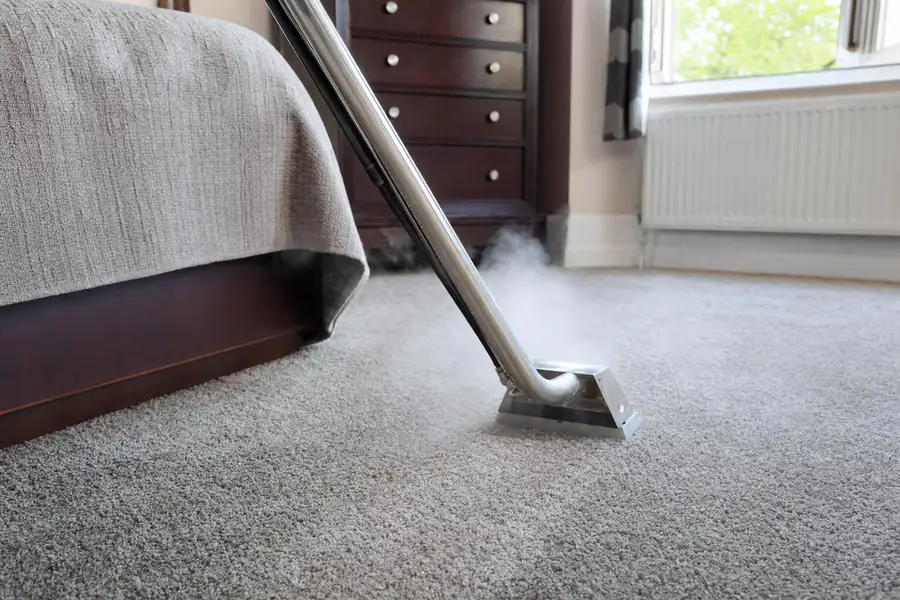
Steam heat kills larvae and eggs that vacuuming leaves behind, since sustained heat above 120°F destroys them at every life stage. A professional deep clean, like Shiny Rhino's Carpet Cleaning service, uses truck-mounted hot water extraction running near 200°F and 400+ PSI, reaching deep into pile and pad where rental machines can't match the temperature.
Hot-Wash Infested Textiles
Wash wool, silk, or fur-trimmed clothing and blankets in the hottest water the fabric allows, or dry-clean items that can't handle heat. Upholstered furniture harboring pet hair is a common overlooked source, so a Furniture & Upholstery Cleaning pass helps clear larvae hiding in cushion seams.
Insecticide and Borax: Use With Caution
Insecticide sprays labeled for carpet beetles help in cracks and baseboards but only kill on contact, missing larvae buried in carpet pile. Borax dries out eggs and larvae but is abrasive to some fibers and unsafe left where kids or pets can reach it, so treat it as a spot tool for closets, not a whole-room fix.
How Long Does It Take to Get Rid of Carpet Beetles?
Most infestations clear within two to four weeks when vacuuming, heat, and laundering all happen together. Infestations tied to a hidden source, like a bird nest in the attic, can drag on for months if that source isn't found, since new eggs keep arriving even after visible larvae are gone. Plan on a follow-up vacuuming schedule for a month after the first treatment to catch late-hatching eggs.
How to Keep Carpet Beetles From Coming Back
Preventing a repeat infestation means cutting off what carpet beetles eat and where they hide. Seal gaps around windows, doors, and dryer vents, and check the attic and roofline each season for nests. Store wool and fur items in sealed bins rather than open closets, and vacuum under furniture and along baseboards weekly. In dry climates like Colorado, dust and pet hair build up fast indoors, so frequent vacuuming matters even without visible moths around.
Are Carpet Beetles Dangerous?
Carpet beetles aren't dangerous in any serious way; they don't bite, sting, or spread disease. The real risk is to allergy-prone household members, since bristly hairs on shed larval skins can trigger skin irritation, and to fabric, since larvae keep chewing wool and silk as long as they have access to it. Shiny Rhino technicians are trained and background checked, and they've handled pest-damage cleanups in homes for years, so they know which fibers need gentle handling and which areas need the most heat.