
Quick answer: Most dull hardwood floors aren't actually dirty, they're coated in cleaning product residue, worn-off polish, or a finish that's breaking down. Which fix works, a cleaner, a restorer, or a full screen-and-recoat, depends entirely on which of those is causing the dullness.
Grabbing a new bottle of floor cleaner and scrubbing harder rarely helps, and sometimes makes the haze worse. Before you buy anything, figure out what's actually sitting on top of your floor.
- Dull floors trace back to one of four causes: residue, worn polish, tired finish, or scratches.
- A pH-balanced hardwood floor cleaning solution lifts residue without streaking or clouding the finish.
- Polish and restorer are not the same product: one hides dullness, the other rebuilds a protective layer.
- Screen-and-recoat revives a worn finish without sanding down to bare wood.
- Oil soaps and all-purpose sprays are the most common cause of cloudy, filmy hardwood.
- A simple weekly and quarterly routine keeps the shine from fading again.
Diagnose Why Your Hardwood Floors Look Dull
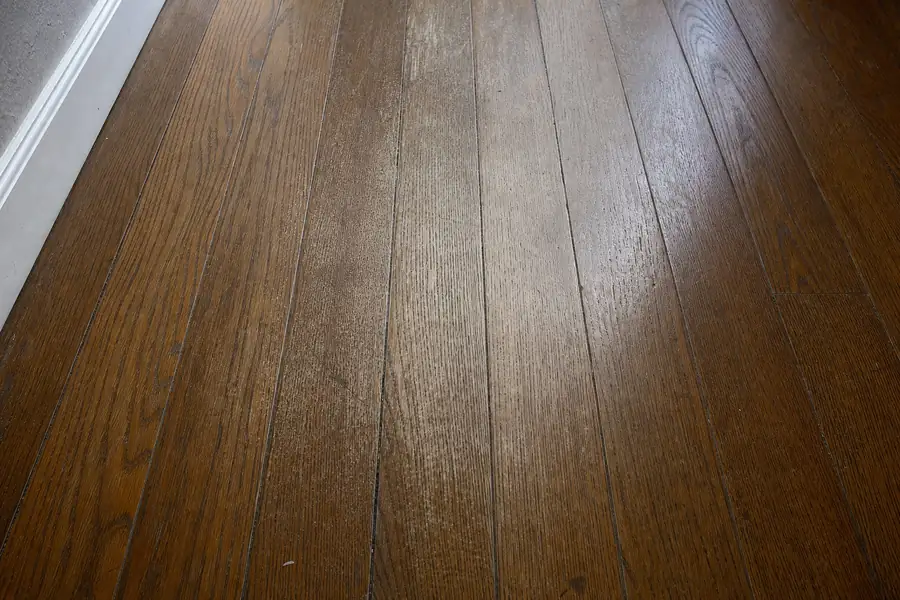
A dull hardwood floor almost always comes down to one of four problems: cleaner residue sitting on the finish, worn-through polish, a finish that's reached the end of its life, or scratches scattering light across the surface. Each needs a different fix, so skip the diagnosis and you'll likely waste a product, or your time, on the wrong one.
Cleaner Residue Buildup
Residue buildup happens when oil soaps, wax-based sprays, or all-purpose cleaners leave a waxy film on top of the finish instead of rinsing clean. The floor looks cloudy or streaky, especially under direct light, and often feels slightly tacky underfoot.
Worn Polish
Worn polish shows up as dull, patchy lanes exactly where foot traffic is heaviest, because the thin acrylic shine coat wears away faster there than on the rest of the floor. The wood underneath is usually fine, the polish layer just isn't.
Tired Finish
A tired finish means the polyurethane or urethane topcoat itself is breaking down from UV exposure and years of wear, and no cleaning product will bring that back. The surface looks flat and gray rather than cloudy, often with fine scuffing you can feel with a fingernail.
Scratches
Scratches scatter light unevenly across the surface, which reads as dullness even right after cleaning. Pet nails, dragged furniture, and grit tracked in on shoes are the usual causes, and enough of them across a room will dull the whole floor's appearance.
Fix 1: Strip Residue with a Proper Hardwood Floor Cleaning Solution
Stripping residue requires a pH-balanced hardwood floor cleaning solution made for sealed wood, not an all-purpose spray, vinegar, or an oil soap. Oil soaps in particular leave the exact filmy buildup they're marketed to prevent, and ammonia-based cleaners can dull or discolor polyurethane over repeated use.
Mop with a well-wrung microfiber head rather than a soaking one. Excess water that sits on seams can cause wicking, where moisture seeps between boards and the edges start to cup or darken. A product like the Shiny Rhino Hardwood Floor Cleaner is formulated to lift residue in one pass without leaving a new film behind, which is the whole point of switching cleaners in the first place.
If residue is heavy, you may need two passes: one to break down the buildup, a second with clean water on the mop head to rinse it fully. For a refresher on daily and weekly technique, our guide on how to clean hardwood floors covers the basics in more depth.
Fix 2: Polish vs. Restorer, What Each One Actually Does
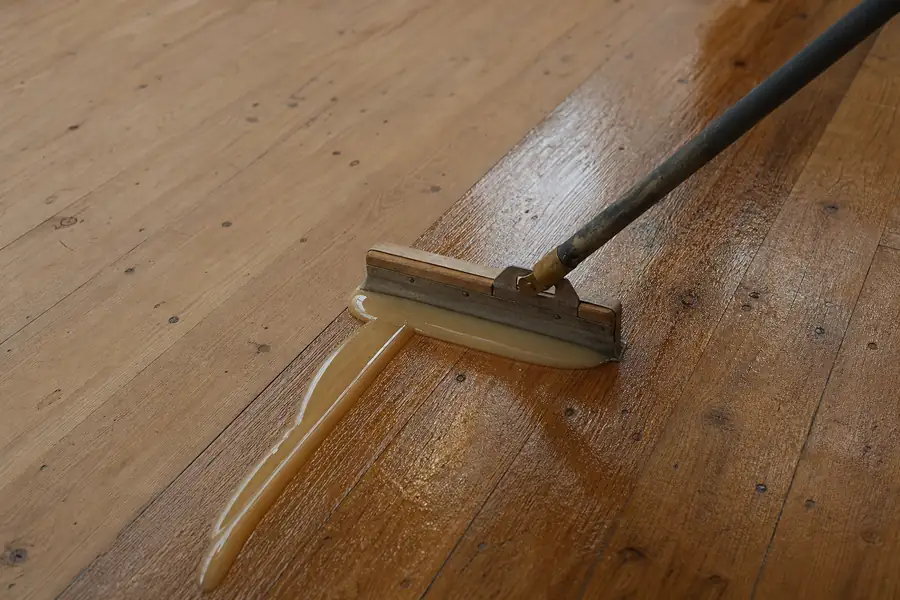
Floor polish and floor restorer solve different problems, and mixing them up is the most common reason people say nothing seems to work. Polish is a thin acrylic topcoat that fills light scratches and adds temporary shine, usually lasting a few weeks before it wears through again. Restorer is a thicker formula designed to rebuild a more durable protective layer and bring back deeper gloss on a finish that's genuinely aging, not just scuffed.
| Option | What it does | Best for |
|---|---|---|
| Polish | Thin acrylic coat, temporary shine | Minor dullness, light traffic wear |
| Restorer | Thicker layer, deeper gloss, longer lasting | Moderately worn finish, visible traffic lanes |
| Screen-and-recoat | Abrades and reseals the existing finish | Finish that's cloudy or failing all over |
Applying polish over residue is why some floors look worse, not better, after a DIY shine attempt. The polish bonds to the film instead of the wood, and the cloudiness just gets sealed in. Clean thoroughly first, then decide whether polish or restorer fits the amount of wear you're seeing.
Not sure when your carpets were last deep cleaned?
Get an exact price online in about two minutes. No phone tag, no surprise fees.
Get My Instant QuoteFix 3: Screen-and-Recoat When the Finish Is Done
Screen-and-recoat revives a worn finish by lightly abrading the existing topcoat and applying a fresh layer of polyurethane, without sanding down to bare wood. It's the right call when the finish looks dull and cloudy across the whole room rather than in a few traffic lanes, or when polish and restorer stop making a visible difference.
This process only works if the finish hasn't worn through to raw wood anywhere. If you can see bare wood, water staining, or gray patches that feel rough, the floor likely needs a full sand and refinish instead, which goes beyond a surface fix. A technician can tell the difference in minutes, which is where a professional hardwood floor cleaning assessment is worth the call before you spend money on the wrong product.
Products That Cause the Problem
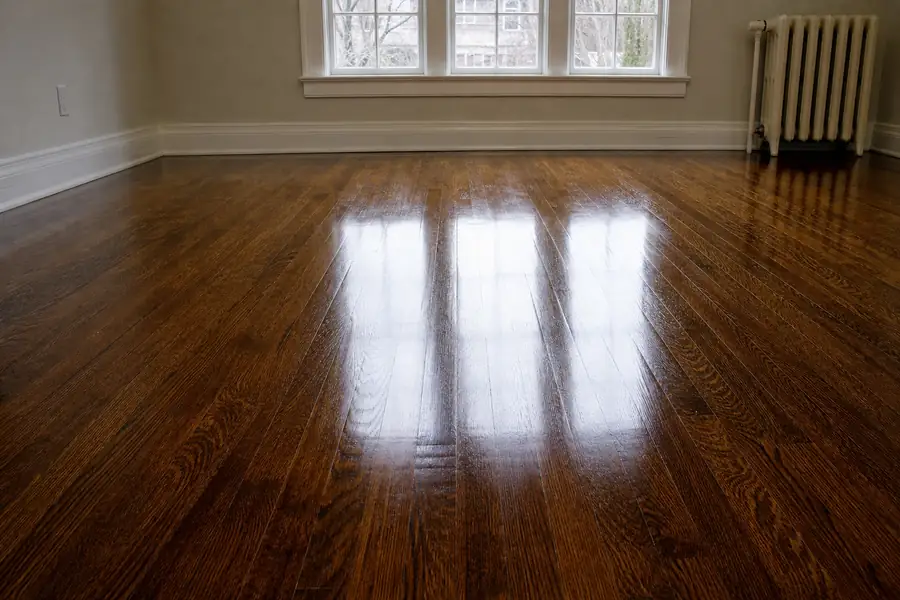
Mop-and-shine products are the single biggest cause of cloudy, filmy hardwood, because many are wax-based and build up with every use instead of rinsing away. Each application adds another thin layer on top of the last, until the floor looks hazy no matter how often you clean it.
Oil-based soaps and furniture oils cause a similar problem on polyurethane floors specifically. Polyurethane is a sealed, plastic-like topcoat, not bare wood, so oils sit on the surface rather than absorbing, creating a greasy film that attracts dust. Acidic cleaners like straight vinegar carry their own risk, which we cover in detail in is vinegar safe on hardwood floors: diluted use is generally fine, but regular use can etch and dull a polyurethane finish over time.
A Safe DIY Shine Routine to Restore Hardwood Floor Shine
A safe routine to restore hardwood floor shine starts with removing grit, then cleaning, then deciding if polish or restorer is needed.
- Vacuum or dust-mop the full floor to remove grit that scratches the finish during mopping.
- Mop with a pH-balanced hardwood floor cleaning solution and a damp, well-wrung microfiber head.
- Let the floor air-dry fully, usually 20 to 30 minutes, before walking on it.
- If traffic lanes still look dull, apply a floor polish in thin, even coats following the label directions.
- If the whole floor looks flat rather than just high-traffic areas, consider a restorer or a professional screen-and-recoat instead.
A product like the Shiny Rhino Hardwood Floor Cleaner Kit covers the cleaning step without needing to guess at dilution ratios or risk an incompatible chemical mix.
Keep the Shine: A Maintenance Schedule to Make Wood Floors Shine Longer
Keeping hardwood floors shiny long-term comes down to consistent light cleaning rather than occasional heavy scrubbing.
| Frequency | Task |
|---|---|
| Daily to weekly | Dust-mop or vacuum to remove grit before it scratches the finish |
| Weekly | Damp-mop with a pH-balanced hardwood floor cleaning solution |
| Monthly | Check felt pads on furniture feet and entry mats for grit tracked in |
| Every 1 to 2 years | Professional deep clean and finish check for high-traffic homes |
Homes in drier climates, like Denver, tend to see finish crack faster from low humidity, while humid cities such as Miami deal more with surface film from slower-drying mop water. Either way, routine care matters more than any single product. Shiny Rhino technicians are trained and background-checked to assess which stage your finish is in before recommending a fix, and booking a hardwood floor cleaning visit gets the floor properly diagnosed instead of guessed at.