
Quick answer: The safest way to clean a hardwood floor is with a barely damp microfiber mop and a pH-neutral, wood-safe cleaner, followed by a quick dry pass to remove any leftover moisture. Skip the steam mop, the vinegar, and the all-purpose spray under your sink, since each one strips or dulls a wood floor's finish over time.
Hardwood takes years to build a good finish and only a few bad habits to wreck one. Damage shows up slowly: a hazy film after mopping, scratch trails near a doorway, a plank that cups after a spill sits too long. Get the routine right and the finish protecting your floor can outlast the flooring itself.
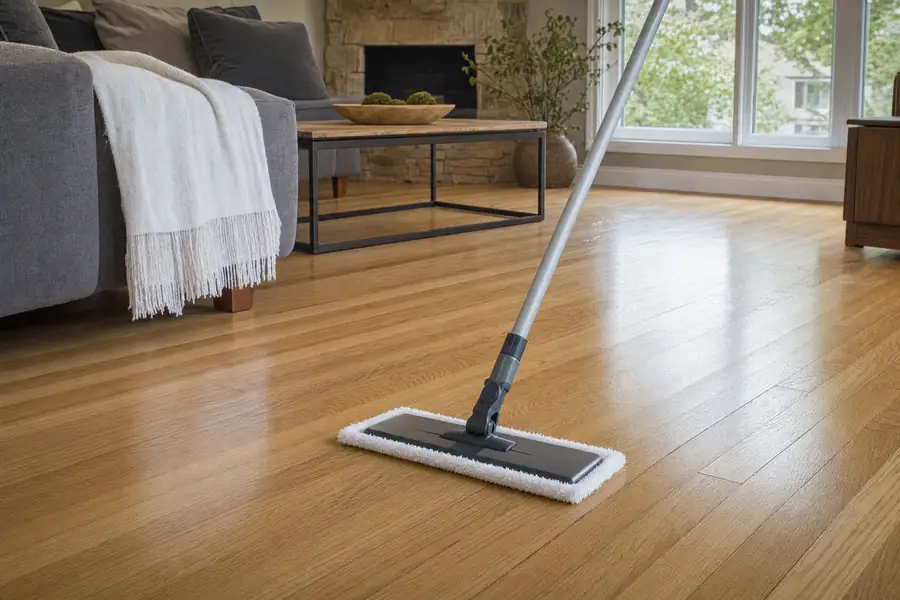
Your finish decides the method
The finish on your hardwood, not the wood species, determines how to clean hardwood floor surfaces without ruining them. Polyurethane, oil, and wax all react differently to water, soap, and abrasion, so the wrong product on the wrong finish is the fastest way to cloud or strip it.
Polyurethane finish
Most hardwood installed in the last 20 years has a polyurethane topcoat, a clear plastic-like seal that beads water rather than absorbing it. A pH-neutral hardwood cleaner and a damp microfiber mop are all it needs; oil soaps and wax-based products leave a dull, sticky film on top of it.
Oil-finished wood
Oil-finished floors soak moisture into the wood grain instead of sealing it on top, which is why water sinks in rather than beading like it does on polyurethane. These floors need a cleaner made for oil finishes and periodic reoiling, usually once a year, to prevent scratching and drying out.
Waxed floors
Waxed hardwood has a soft, low-gloss sheen, and light buffing fixes small scratches. Never use a polyurethane or water-based cleaner on it; that breaks down the wax layer and leaves streaky patches that show when light hits the room at an angle.
Daily and weekly routine
A short daily habit prevents most hardwood damage: sweep or dry dust mop to lift grit before it grinds into the finish. Weekly, vacuum with the hard-floor setting or a soft brush attachment, since a beater bar can scratch the surface.
The best way to clean hardwood floors day to day is dry-first, wet-second: clear loose dirt before any liquid touches the floor. A regular seasonal deep-clean schedule keeps grit and allergens from building up between weekly passes.
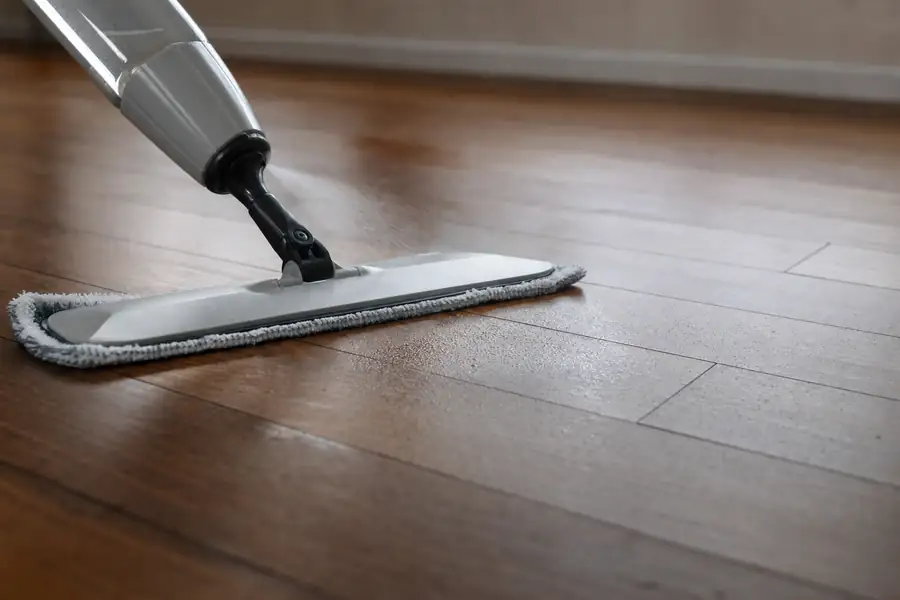
How to deep clean hardwood step by step
A proper deep clean happens every one to two months for most households, more often in high-traffic entryways.
- Sweep or dry vacuum the entire floor to remove grit and pet hair.
- Mix a pH-neutral hardwood cleaner with water per the label, or use a ready-to-use wood spray.
- Mist a small section and wipe with a microfiber mop wrung out until it's barely damp, never dripping.
- Work with the grain of the wood, not against it, in small sections.
- Dry the section immediately with a clean, dry microfiber cloth so no moisture sits on the finish.
Shiny Rhino technicians carry the Hardwood Floor Cleaner Kit for this exact routine between professional visits, formulated to clean without the residue an all-purpose spray leaves behind.
Not sure when your carpets were last deep cleaned?
Get an exact price online in about two minutes. No phone tag, no surprise fees.
Get My Instant QuoteThe two floor killers: standing water and steam mops
Standing water and steam mops damage hardwood faster than almost anything else a homeowner does. Water sitting on wood for more than a few minutes seeps between the boards, swells the fibers, and causes cupping, the wavy warp along plank edges that doesn't flatten back out on its own.
Steam mops make this worse, forcing hot moisture into the wood under pressure, past the finish and into the seams. Humid cities like Miami already push moisture into wood floors through the air, so adding a steam mop's vapor in Florida speeds up warping that dry-climate homes rarely see.
Vinegar has its own reputation as a gentle, homemade wood-floor cleaner, and that reputation deserves closer scrutiny than most people give it. We cover exactly why in a dedicated guide to the vinegar myth.
Products to avoid on wood floors
Ammonia, bleach, and all-purpose sprays all break down a hardwood finish faster than normal foot traffic ever would. Each one strips the protective topcoat, exposing the wood underneath to moisture and scratches.
- Ammonia-based glass or all-purpose cleaners, which dull and eventually cloud the finish
- Oil soaps on polyurethane floors, which leave a greasy film that attracts more dirt
- Wax products on polyurethane or oil finishes, which build up and streak
- Undiluted vinegar or citrus cleaners, acidic enough to etch some finishes over repeated use
- Steam mops or excessive water of any kind
Preventing scratches and dullness (felt pads, rugs, grit control)
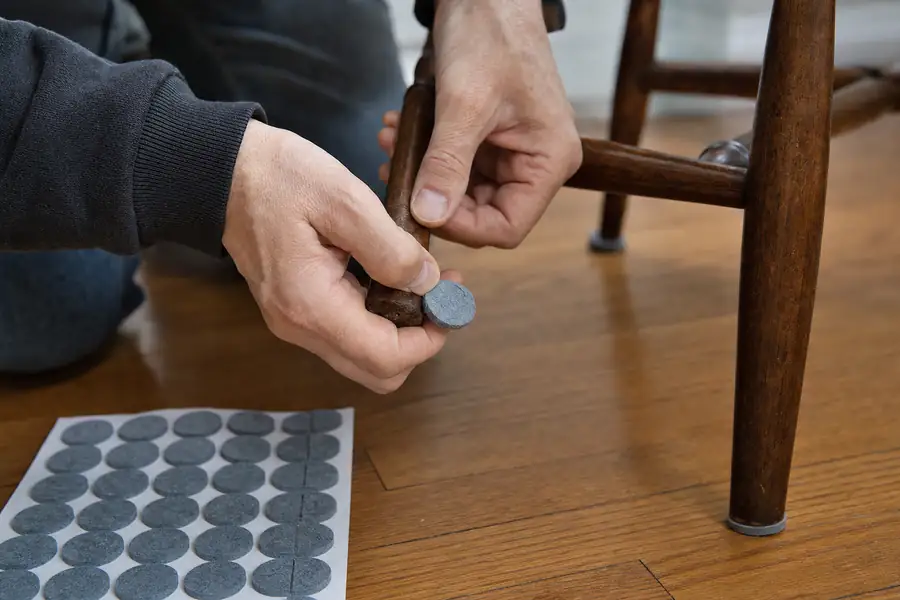
Most surface scratches on hardwood come from grit dragged underfoot, not from cleaning itself. Felt pads on chair and table legs, a mat at every entry point, and removing shoes at the door stop most of the damage before it starts.
Dry climates make grit control even more important. Homes in Denver deal with dust that rides in on dry air year-round, so a walk-off mat at the front door earns its keep. An area rug over high-traffic zones cuts down on both scratches and sun fading.
When to call a professional
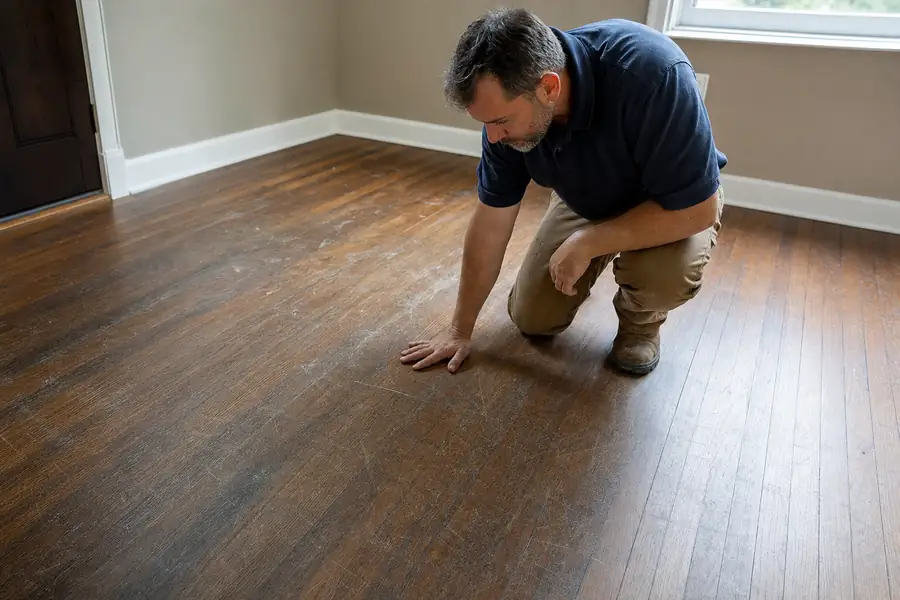
Call a professional when a hardwood floor stays dull after cleaning, shows gray or black staining, or has boards that feel soft, spongy, or cupped. Those signs usually mean moisture got past the finish, and mopping won't fix it once that happens.
Shiny Rhino's hardwood floor cleaning technicians are trained to identify the finish first, then match the equipment and cleaner to it instead of using one method on every floor. With years of experience behind them, the same background-checked, trained technicians who clean carpet and tile handle hardwood with equal care. Booking online applies an automatic discount to the visit.