
Cleaning tile floors well comes down to two things: getting the grit off before you mop, and using a solution that will not dull the glaze or eat into the grout. Ceramic and porcelain both hold up fine to regular mopping, as long as you skip anything acidic that etches finishes or leaves a hazy film behind. This guide covers the daily and weekly routine that keeps tile looking freshly cleaned between deeper services.
- Sweep or vacuum before mopping; trapped grit scratches the glaze.
- Use a microfiber flat mop and a pH-neutral tile floor cleaner, never straight vinegar or bleach as a default.
- Change mop water often and use less water to avoid streaks and grout wicking.
- Vinegar is fine on ceramic and porcelain but will etch natural stone lookalikes.
- Matte tile hides mop streaks but shows footprints; glossy tile does the opposite.
- Grout that stays dark after mopping usually needs professional restoration, not more soap.
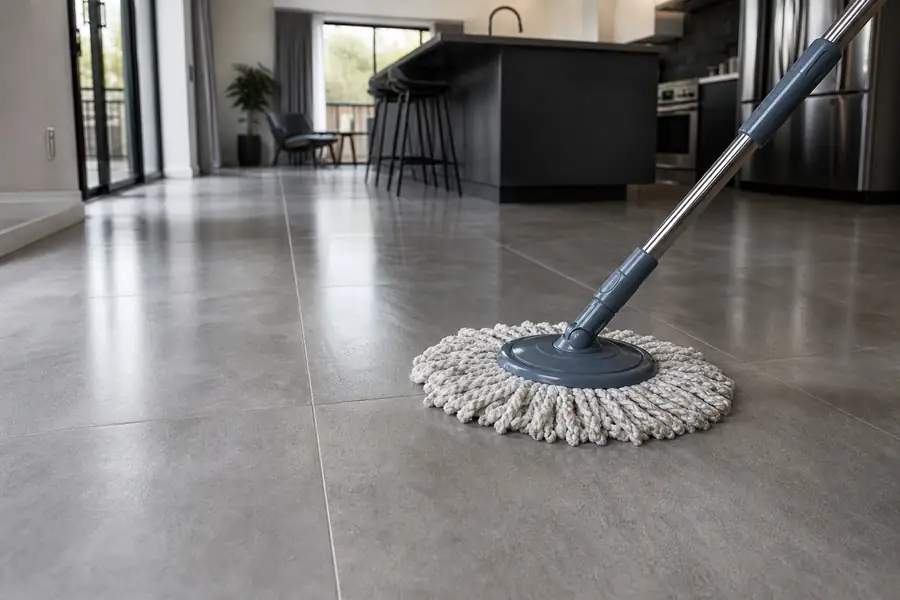
Sweep or vacuum grit first (why grit scratches glaze)
Grit left on tile before you mop acts like sandpaper under the mop head and slowly dulls the glaze. That glaze is the thin, glass-like coating fired onto ceramic and porcelain that gives it shine and stain resistance. Sand and dirt tracked in on shoes contains tiny silica particles that scratch the glaze surface with every pass of a wet mop, leaving a cloudy, worn look even though the tile itself is fine underneath.
Run a vacuum on the hard-floor setting or a dry microfiber dust mop over the whole floor before you add any water. Entryways and areas near sliding doors need it most, since that is where outdoor grit lands first. A sturdy doormat at each entrance cuts down on how much grit gets tracked in between cleanings, especially in dry, dusty climates like Denver, Colorado, where windblown dust settles on floors fast.
The right mop and pH-neutral tile floor cleaner
A microfiber flat mop paired with a pH-neutral tile floor cleaner is the best combination for mopping tile floors without damaging the finish. String mops push dirty water into grout lines and just move soil around; a flat microfiber pad lifts dirt off the surface instead of smearing it. pH-neutral means the solution sits close to 7 on the pH scale, mild enough not to strip sealant off grout or leave the dulling residue that stronger alkaline cleaners can.
Shiny Rhino technicians recommend a dedicated Neutral Tile & Grout Cleaner for exactly this reason. Skip all-purpose sprays with added dyes or fragrance additives, since buildup from those products is one of the more common reasons tile looks streaky again within a day or two.
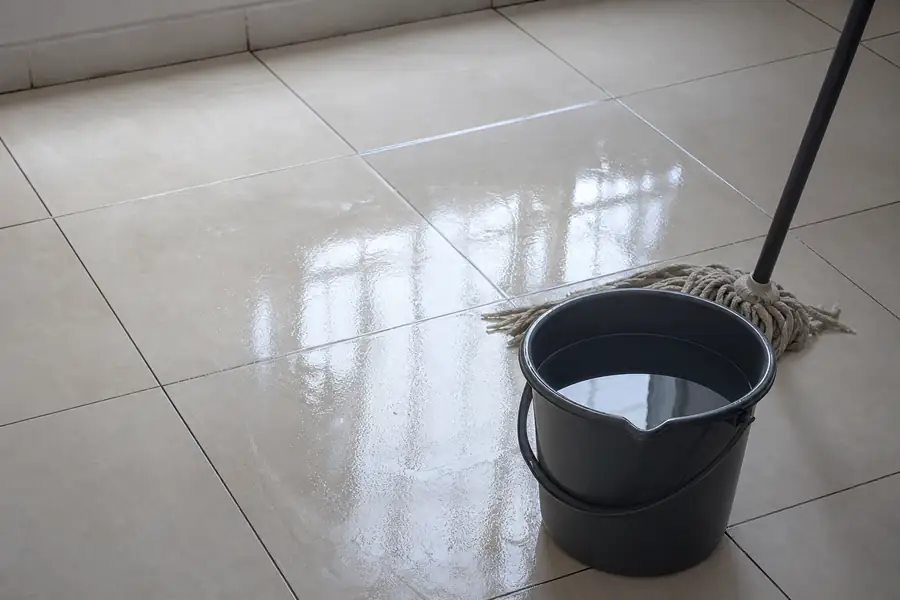
How to mop tile floors without streaks (numbered steps)
Streak-free tile comes down to using less water, changing it often, and drying the floor rather than letting it air dry on its own. Follow these steps in order:
- Sweep or vacuum the whole floor to remove loose grit.
- Fill a bucket with warm water and add tile floor cleaner at the label's dilution rate.
- Dip the mop and wring it until it is damp, not dripping.
- Mop in sections, working from the far corner toward the exit, overlapping each stroke slightly.
- Swap the water for a fresh batch once it turns cloudy, roughly every 150 to 200 square feet.
- Dry the floor with a clean towel or a dry microfiber pad instead of leaving pooled water to evaporate.
Humidity slows that last step down. In humid coastal cities like Miami, Florida, tile can stay damp long enough to trap streaks in the surface, so running a fan or box open a window while it dries helps.
Ceramic vs porcelain vs stone lookalikes (why vinegar is fine on ceramic but dangerous on stone)
Diluted white vinegar is safe on true ceramic and porcelain tile because both are glazed, kiln-fired clay that resists mild acids. A quarter cup of vinegar per gallon of warm water cuts grease and hard-water film without harming the glaze on either material. The problem shows up on tile that only looks like stone.
Porcelain planks printed to mimic marble, travertine, or slate sometimes carry a honed or matte sealant that behaves more like natural stone than glazed tile, and any actual natural stone floor reacts to acid by etching, meaning the surface turns dull and pitted where the vinegar sat. If your floor is genuine marble, travertine, limestone, or slate, use a stone-safe, pH-neutral cleaner instead, and consider Natural Stone Cleaning for periodic deep care that will not strip the sealant.
Not sure when your carpets were last deep cleaned?
Get an exact price online in about two minutes. No phone tag, no surprise fees.
Get My Instant Quote
Matte vs glossy finish notes
Matte tile hides mop streaks well but shows dust, hair, and footprints faster, while glossy tile shows every streak and water spot but hides dust between cleanings. That trade-off changes how you should finish the job. On glossy floors, buff dry with a towel right after mopping so water spots do not set into the shine.
Matte and textured slip-resistant tile, common in bathrooms and entryways, has tiny grooves that trap grit a flat mop can miss. A stiff-bristle brush run over those spots once a week clears out what regular mopping leaves behind.
A maintenance schedule that keeps tile spotless
A short, consistent routine keeps ceramic and porcelain floors looking freshly cleaned without much extra effort. Spot cleaning as messes happen matters more than any single deep clean.
| Frequency | Task | Why it matters |
|---|---|---|
| Daily | Dry dust mop or quick sweep of entryways | Traps grit before it scratches the glaze |
| 2 to 3x weekly | Damp mop with tile floor cleaner | Removes tracked-in soil and food spills |
| Weekly | Wipe baseboards and corners | Dust and pet hair collect where a mop misses |
| Monthly | Check grout for dark spots or missing sealant | Catches staining before it sets in |
| Every few months | Deep clean or professional service | Lifts ground-in soil mopping alone can't reach |
For that deeper seasonal step, our complete guide to cleaning tile and grout walks through the stain-lifting methods regular mopping does not cover.
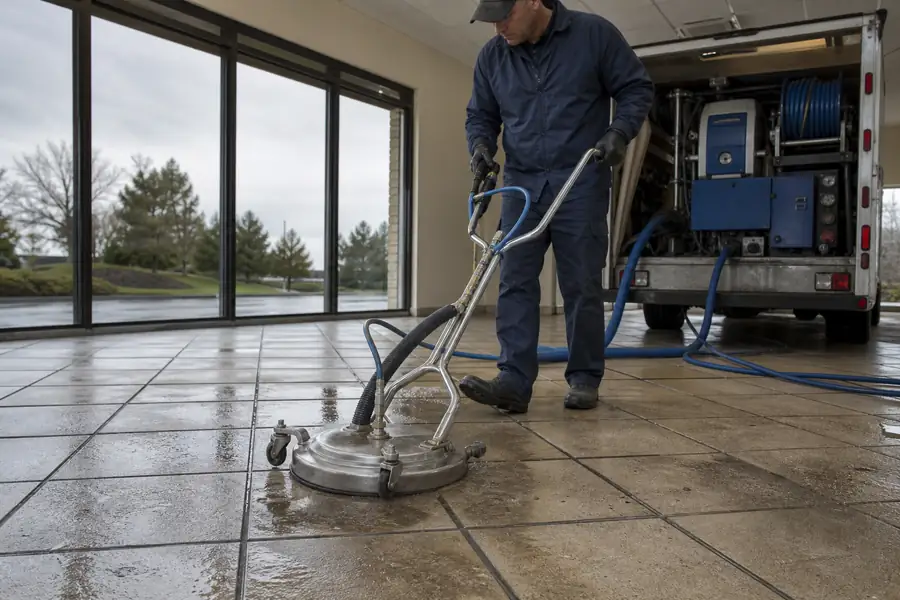
When grout lines need professional restoration
Grout that stays gray, spotted, or musty-smelling after mopping usually needs restoration, not more soap, because grout is porous and soaks up soil the same way a sponge does. Once soil sits inside that porous surface, no amount of surface mopping pulls it back out.
Shiny Rhino technicians use truck-mounted hot water extraction and rotary grout tools to flush embedded soil out of the joints and reseal them, restoring grout close to its original color. Technicians are trained by a master technician, background checked, and use biodegradable solutions safe around kids and pets. If your grout lines have not lightened up in years, it is worth booking tile & grout cleaning rather than adding another cleaner to the rotation.