
Quick answer: A vacuum only picks up hair resting on the carpet's surface. Hair that's twisted into the pile needs a rubber broom, squeegee, or carpet rake to physically pull it free before you vacuum it up.
If you've vacuumed the same spot three times and pet hair keeps reappearing, the vacuum isn't the problem. Static electricity and the mechanics of a spinning brush roll actually work hair deeper into carpet fibers instead of lifting it out. The fix isn't a stronger vacuum, it's a different tool first. For a broader look at keeping pet hair under control across every floor in the house, Shiny Rhino's pet owners guide to clean floors covers hardwood and tile too.
Why Your Vacuum Leaves Pet Hair Behind
Most vacuums miss embedded pet hair in carpet because static electricity welds each strand to the fiber, and a spinning brush roll can twist hair further into the pile instead of lifting it out.
Dog and cat hair carries a thin layer of natural oil that grabs a static charge the moment it separates from the animal. That charge pulls the hair sideways into carpet fibers rather than letting it sit loose on top, where suction alone can grab it. Once several strands wrap around a tuft of carpet fiber, they behave less like debris and more like part of the carpet itself. Dander collects in the same spots, which is why heavy shedding often brings both stray hair and lingering odor. If odor is part of the problem too, the fixes overlap with the ones in Shiny Rhino's guide on how to get rid of pet odor in carpet.
The Rubber Broom and Squeegee Method for Embedded Pet Hair
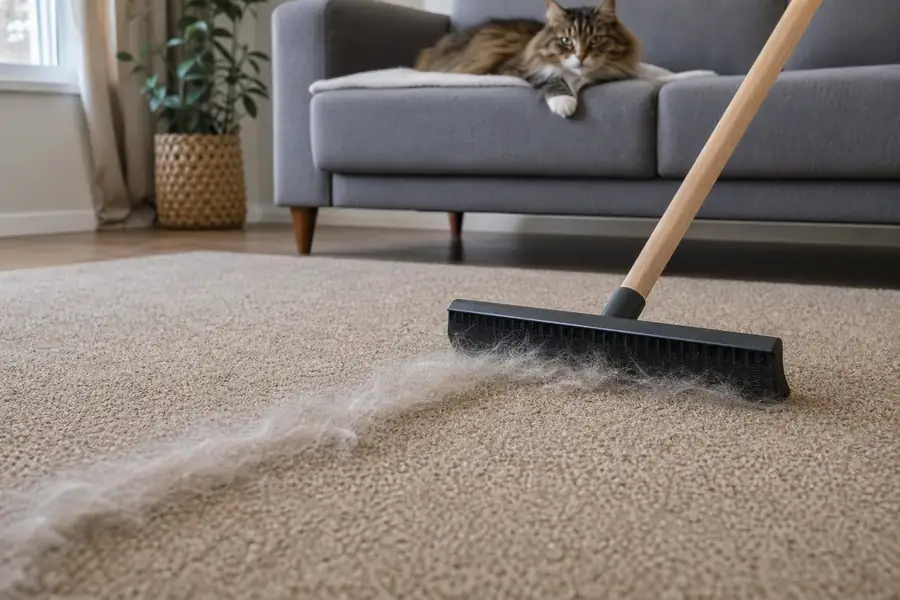
A rubber broom or a window squeegee dragged across the carpet in short strokes pulls embedded pet hair to the surface faster than any vacuum attachment.
Rubber generates its own static charge and grips hair strands on contact, rolling them loose from the fibers instead of pushing them deeper. Work in one direction across a small section, about 3 feet by 3 feet, then switch to the opposite direction over the same spot. Hair gathers into visible clumps or a loose, felt-like mat you can lift by hand. Vacuum the section right after so the loosened hair doesn't resettle into the pile.
The Carpet Rake for Deep Pile Carpet
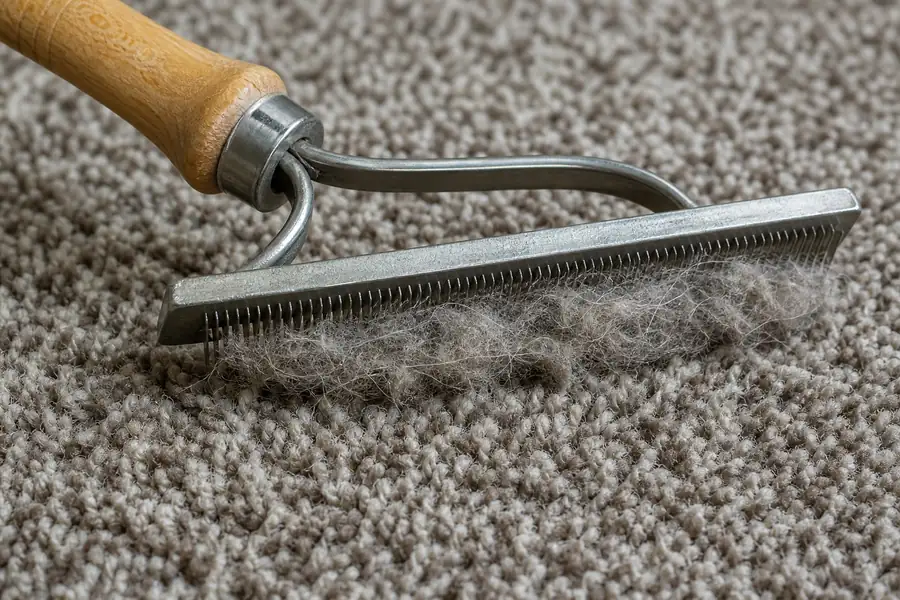
Carpet rakes, sold as pet hair rakes or grooming rakes, work best on plush and deep pile carpet where a rubber broom can't reach hair wrapped around the base of taller fibers.
A carpet rake has short, stiff plastic or metal tines that comb down to the carpet backing, similar to raking a lawn. Pull it toward you in overlapping rows, then rotate 90 degrees and rake again across the same area. Two directions catch hair lying at different angles inside the pile. This method also fluffs pile that's gone flat from foot traffic, so carpet looks refreshed as a side effect.
Damp Rubber Gloves and Anti-Static Tricks
A pair of damp rubber gloves rubbed in circles over carpet lifts embedded hair the same way a rubber broom does, just on a smaller scale for corners, stair edges, and spots under furniture.
Not sure when your carpets were last deep cleaned?
Get an exact price online in about two minutes. No phone tag, no surprise fees.
Get My Instant QuoteWet the gloves lightly, wring them out so they're damp rather than soaked, and rub in small circular motions. Hair balls up under your palm and can be pulled off by hand. A fabric softener sheet wiped across the carpet before vacuuming cuts static too, which stops loosened hair from re-bonding to fibers while you work. Keep the carpet from getting soaked; too much water can wick into the backing and slow drying time.
Vacuum Technique That Actually Works
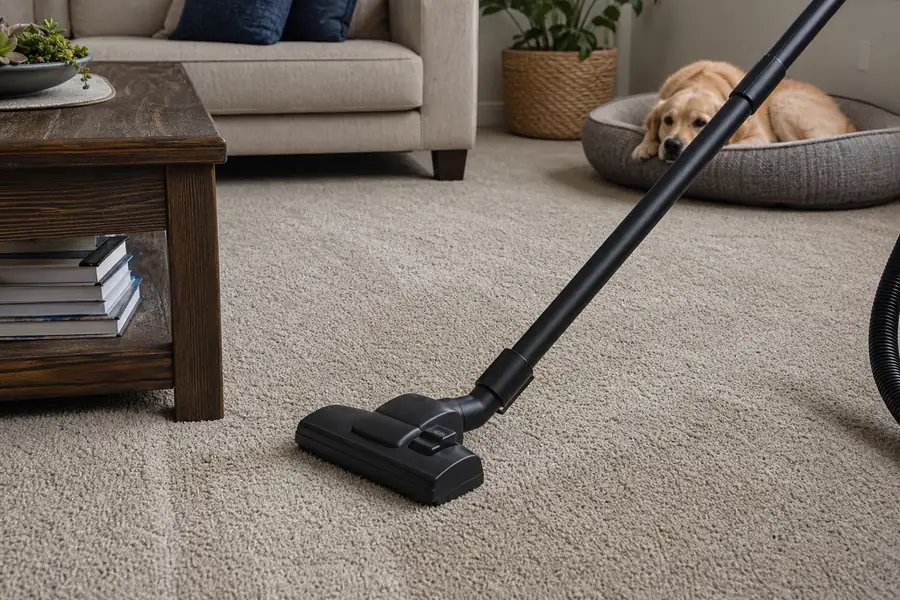
Slow, overlapping passes in two directions with a clean brush roll remove far more embedded pet hair than one quick pass in a single direction.
Set the vacuum to a bare-floor or low pile height setting for shorter carpets, and a higher setting for plush or deep pile, so the brush roll makes full contact with the fibers without stalling. Run each pass slowly, at about half normal walking speed, then repeat the same area moving side to side instead of forward and back. Check the brush roll every few uses; one wound tight with old hair loses suction and just pushes new hair around instead of lifting it. A pet hair attachment or a vacuum with a motorized mini brush handles rugs, stairs, and upholstery edges the main roller can't reach.
Cut the Source: Managing Shedding
Regular brushing outside the carpeted rooms removes loose hair before it ever lands in the fibers, which is the single biggest lever for keeping carpet clear between cleanings.
Brush shedding breeds several times a week during spring and fall coat changes, and daily during heavy shedding. A washable throw or pad on your pet's favorite resting spot catches hair before it spreads across the room. Between deeper cleanings, a dedicated tool like the Shiny Rhino Pet Hair Lifter handles quick touch-ups on rugs and upholstery without dragging out a full vacuum.
Even with a solid routine, hair and dander work into carpet backing over months of normal use, past where any home tool can reach. Shiny Rhino technicians are trained on truck-mounted hot water extraction that pulls embedded hair, dander, and other allergens out of the pile and the backing underneath, the same equipment we have relied on for years. The Carpet Cleaning service handles that reset a few times a year, so daily brooming and vacuuming have less to fight against.