
Grout is the cement or resin-based filler that locks tile in place and seals the joints between pieces so water and debris can't get underneath. It cures into a hard, rigid material, which is exactly why it can't do the job caulk does in corners and seams that flex.
Homeowners often use the two interchangeably when regrouting a bathroom or patching a kitchen backsplash, and that mix-up is where cracked joints and leaks start. Knowing what grout is, where it belongs, and how it differs from caulk saves a redo down the road.
- Grout fills and seals rigid joints between tiles; caulk seals flexible joints where two surfaces meet.
- The three main types of grout are sanded, unsanded, and epoxy.
- Grout is rigid and will crack under movement; caulk stays flexible by design.
- Grout's porous surface soaks up soap film and soil faster than the tile around it.
- Resealing grout every 1 to 2 years is what actually keeps it stain resistant.
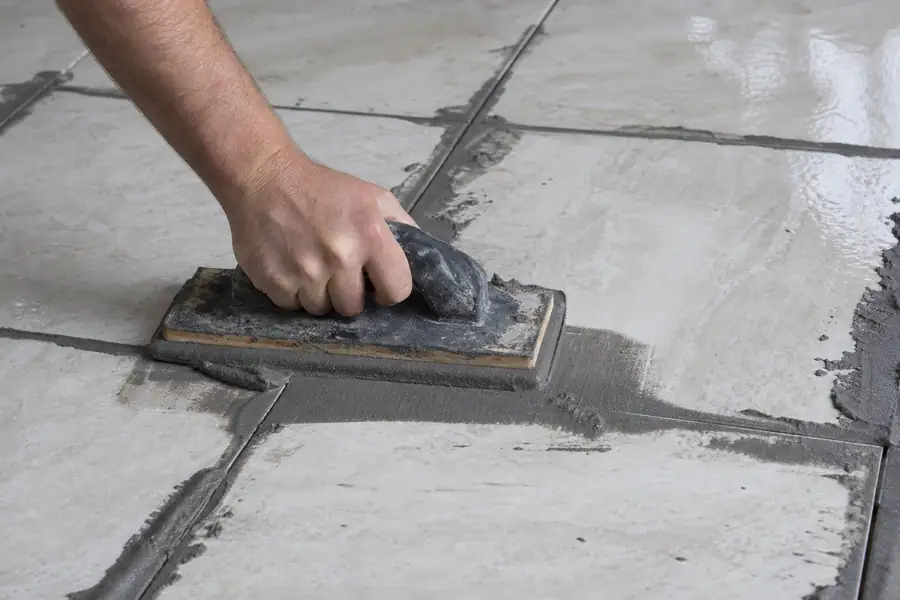
What Grout Is and What It Does
Grout is the filler material that sits between tiles, locking them together and sealing the joint against water and dirt. Most grout is a blend of cement, sand or fine polymers, and water that cures into a hard, stone-like surface within 24 to 72 hours.
Once cured, grout does two jobs. It keeps individual tiles from shifting against each other, and it blocks moisture from reaching the subfloor or wall backing underneath. That second job matters most in bathrooms and kitchens, where standing water and steam are a daily reality.
Grout is rigid by design. It doesn't stretch or compress, so it only works in joints that stay put.
Types of Grout: Sanded, Unsanded, and Epoxy
The three main types of grout are sanded, unsanded, and epoxy, and the right choice depends on joint width and how much moisture the area sees.
Sanded Grout
Sanded grout contains fine sand that adds bulk and keeps the mix from shrinking or cracking in wider joints, generally 1/8 inch or more. It's the standard choice for floor tile and most natural stone installations with generous grout lines.
Unsanded Grout
Unsanded grout skips the sand and works best in narrow joints under 1/8 inch, including wall tile, glass tile, and polished stone that sand could scratch during installation.
Epoxy Grout
Epoxy grout uses resins instead of cement, which makes it almost impervious to water and stains without any sealing at all. Epoxy costs more and installs less forgivingly, but showers, backsplashes, and commercial kitchens increasingly use it because it resists mildew and chemical damage.
| Type | Typical Joint Width | Water Resistance | Best For |
|---|---|---|---|
| Sanded | 1/8 inch or wider | Moderate (needs sealing) | Floors, stone |
| Unsanded | Under 1/8 inch | Moderate (needs sealing) | Walls, glass, polished stone |
| Epoxy | Any width | High (no sealing needed) | Showers, commercial kitchens |
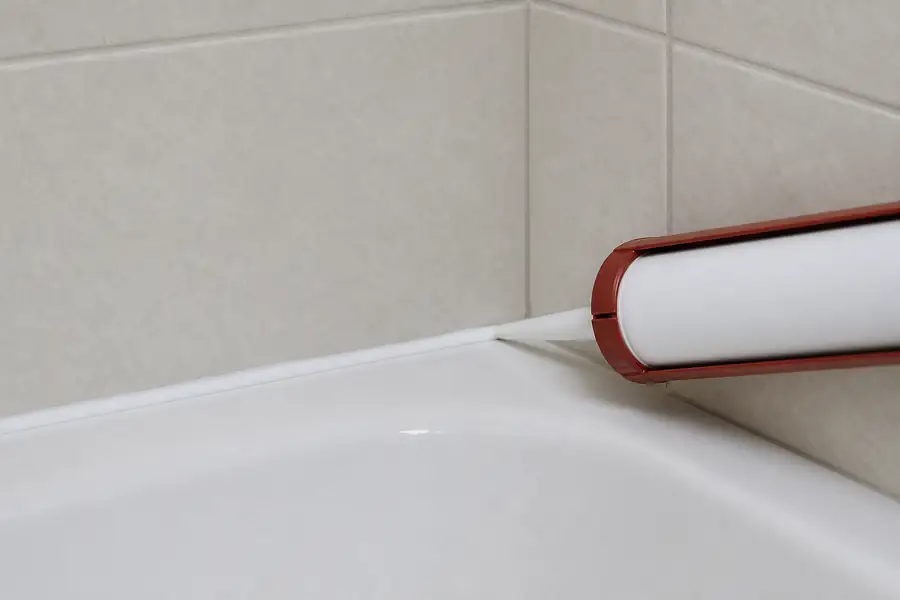
Grout vs Caulk: The Real Difference
Grout vs caulk comes down to one property: flexibility. Grout is rigid and cures hard, while caulk is a silicone or acrylic sealant that stays flexible for the life of the joint.
Grout works where tile meets tile in a joint that never moves. Caulk works where two different materials, or two different planes, meet and shift slightly with temperature changes, settling, or everyday vibration.
Not sure when your carpets were last deep cleaned?
Get an exact price online in about two minutes. No phone tag, no surprise fees.
Get My Instant QuotePut grout in a joint that flexes and it cracks. Put caulk across a flat tile field and it looks fine at first, but it won't hold tile edges the way grout does, and dirt tends to work into the softer surface over time.
Where Grout Belongs and Where Caulk Belongs
Grout belongs in the flat, rigid joints between tiles on a floor or wall. Caulk belongs in the corners and transitions where movement is normal, such as where the tub meets the tile, where two walls meet, or where tile meets a countertop or fixture.
Inside corners and the seam where a shower floor meets the wall see constant, tiny movement from temperature swings and building settling. Grout in those spots pulls away and cracks within months, opening a path for water to reach the wall behind the tile. Caulk flexes with that movement and keeps the seal intact.
The reverse mistake happens too. Caulking an entire tiled floor instead of grouting it leaves a soft, dirt-trapping surface that was never meant to bear foot traffic.
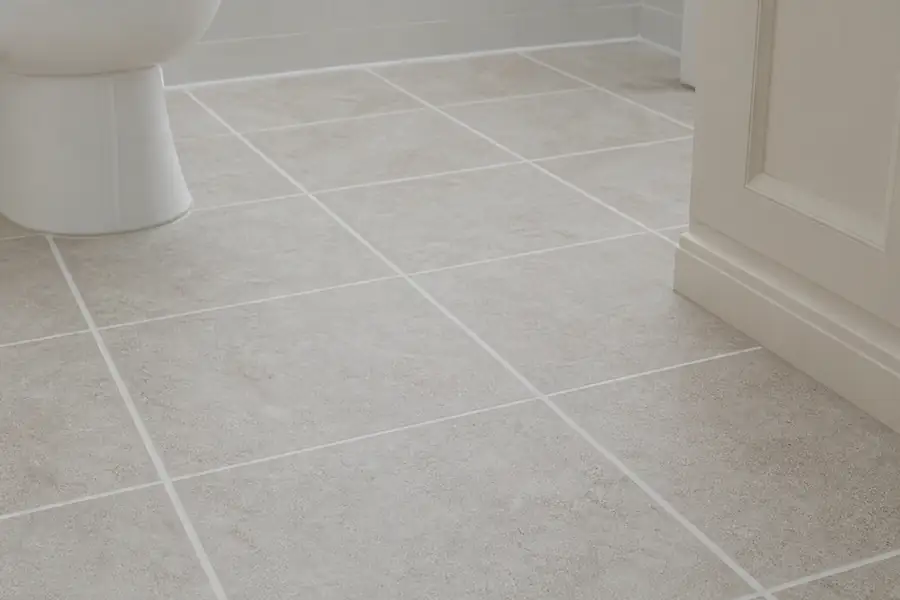
Why Grout Gets Dirty So Fast (Porosity)
Grout gets dirty faster than the tile around it because it's porous. Cement-based grout is full of microscopic pores that soak up soap residue, cooking oils, and everyday soil the way a sponge does.
A sealant coat blocks those pores for a while, but it wears down with foot traffic and cleaning chemicals. Once it's gone, grime settles in and mildew gets a foothold, especially in showers and kitchen floors that stay damp. The complete guide to cleaning tile and grout covers the cleaning routine that slows this down room by room.
Grout Maintenance Basics
Grout stays cleanest with regular sweeping, a pH-balanced cleaner, and a fresh sealant coat every 1 to 2 years. Between deep cleans, the Neutral Tile & Grout Cleaner lifts everyday soil without stripping the sealant the way harsh acidic cleaners can.
For grime that's worked in too deep for home scrubbing, Shiny Rhino's Tile & Grout Cleaning service uses truck-mounted hot water extraction at high temperature and pressure to lift embedded soil and reseal the grout lines afterward, without harsh chemicals around kids or pets.