
Quick answer: Stop the water first if it's safe to do so, then call in this order: a plumber for an active leak, a water damage restoration company once there's standing water or soaked flooring, and your insurance company after the damage is documented. For water damage emergency help any hour of the day or night, Shiny Rhino's line is (855) 507-8955.
Water damage rarely waits for business hours, and the wrong first call can cost you time you don't have. Every extra hour that carpet, drywall, or subfloor stays wet raises the odds of warping, mold, and a bigger repair bill. The right sequence depends on what's actually happening in your home, so treat it as a quick decision tree rather than a single phone number.
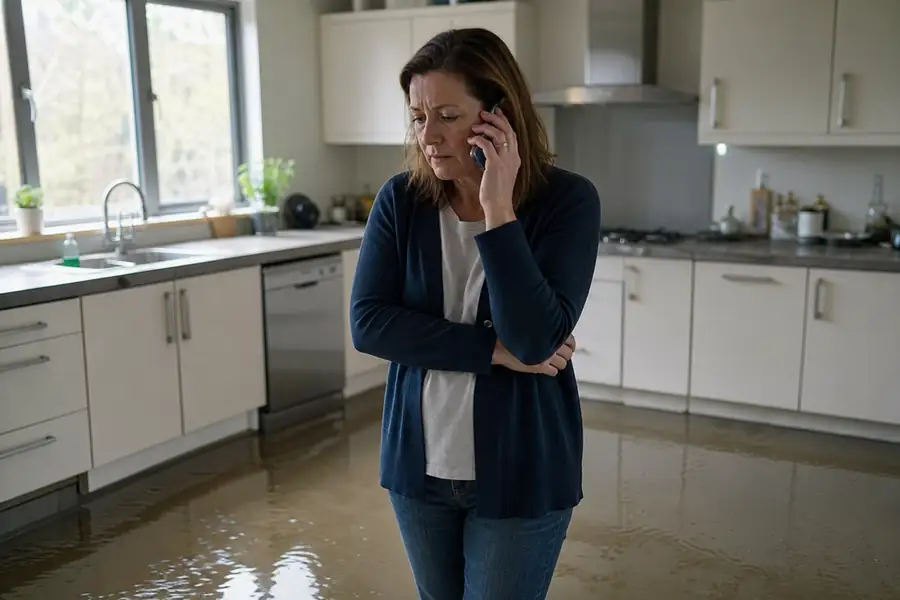
First: Stop the Source
Before you call anyone, find and stop the water if you can do it safely. Shut off the main water valve or the fixture's local shutoff, turn off the water heater if it's involved, and unplug nearby electronics or appliances only if you can reach the outlet without stepping in water.
In freezing climates, a pipe that bursts overnight is often the culprit, and homeowners in places like Colorado deal with this every winter when a cold snap catches an uninsulated line. If you're not sure where your shutoff valve is, that's worth learning now, before an emergency, not during one. Homeowners in colder Colorado markets especially benefit from knowing this ahead of a hard freeze.
Once the source is stopped, the next call depends on why the water showed up in the first place.
Call a Plumber When...
Call a plumber when the water is still coming from a fixture, pipe, or appliance connection that needs a physical repair. A plumber fixes the cause, not the water already on your floor.
- A supply line, joint, or pipe is actively leaking or burst
- A water heater tank has failed or is leaking from the bottom
- A washing machine hose or dishwasher line has come loose
- A toilet supply valve won't shut off completely
If the leak is small, contained, and you've already stopped it, a plumber alone may be all you need. If water has spread across flooring, soaked baseboards, or run into a lower level, you're now dealing with two separate problems: the leak and the damage it left behind.
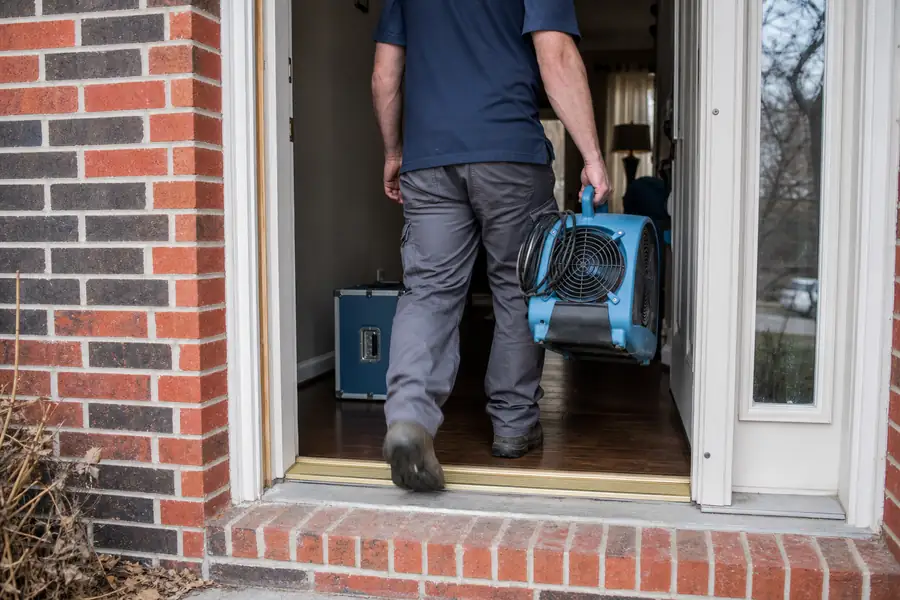
Call a Water Damage Restoration Company When... (and What They Actually Do on Arrival)
Call a water damage restoration company as soon as you see standing water, soaked carpet or padding, or damp drywall, even if the leak itself is already fixed. Standing water left untreated for more than 24 to 48 hours creates real mold risk, so speed matters as much as the repair.
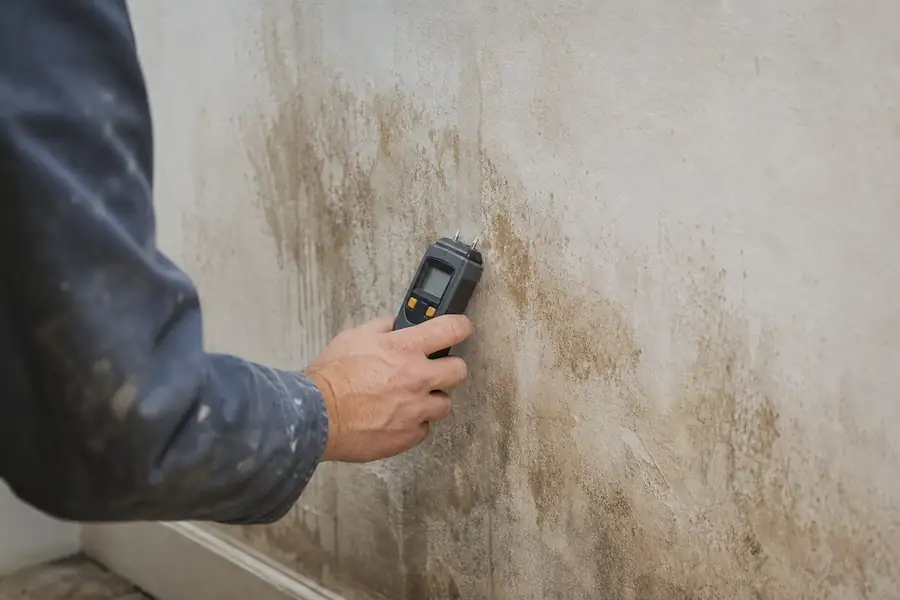
On arrival, a water damage restoration crew extracts standing water with truck-mounted pumps, maps moisture in walls and subflooring with meters, and sets industrial air movers and dehumidifiers to dry the space over several days. Shiny Rhino technicians are trained and background checked, and they document every step for your insurance file as they go.
This is the call people mean when they search for water damage emergency help at 2 a.m., and it's a genuinely 24/7 service for a reason: water doesn't wait for morning. You can reach a crew any time through Shiny Rhino's contact page or by phone at (855) 507-8955.
Not sure when your carpets were last deep cleaned?
Get an exact price online in about two minutes. No phone tag, no surprise fees.
Get My Instant QuoteOnce flooring and carpet have fully dried, a deeper clean often follows to lift residue and any lingering odor. Our guide on how to clean a carpet covers what that follow-up step should look like.
Call Your Insurance Company When...
Call your insurance company once the water is stopped and you've taken photos of the damage, not before. Insurers want documentation of the source and the extent of damage, and starting repairs too early can complicate a claim.
Most homeowner and renter policies cover sudden, accidental water damage like a burst pipe or appliance failure, but not slow leaks caused by neglect. Your insurer will typically ask for photos, the plumber's or restoration company's report, and a timeline of what happened. They usually don't send their own drying crew; that's the restoration company's job, and the insurer reimburses based on the invoice and documentation.
Call an Electrician or Your Landlord When...
Call an electrician immediately if water has reached an outlet, light fixture, or the electrical panel, or if you smell burning near a wet area. Water and live electricity are a genuine safety hazard, and it's not worth guessing.
If you rent, call your landlord or property manager as soon as the leak starts, alongside a plumber if the situation is urgent. Most leases make the landlord responsible for structural repairs and the restoration company they hire, even if you're the one who found the leak.
Cheat Sheet: Who to Call First in 5 Common Emergencies
The table below shows the fastest path to a dry, safe home for the most common water emergencies. Humid regions like Florida see slower natural drying times, which makes a quick restoration call even more important there.
| Emergency | Call First | Then Call |
|---|---|---|
| Burst pipe | Plumber (stop the leak) | Restoration company |
| Appliance leak (washer, dishwasher, water heater) | Shut off the appliance, then plumber | Restoration company if flooring is wet |
| Roof leak | Restoration company (contain damage) | Roofer for the repair |
| Sewage backup | Restoration company (health hazard) | Plumber for the clog or line issue |
| Flooding (storm or groundwater) | Restoration company | Insurance company |
Homes in humid, storm-prone areas like Florida often need faster restoration response simply because ambient moisture slows natural drying and speeds up mold growth.