
Quick summary: Car upholstery cleaning works best when you match the method to the material. Cloth seats need shampoo, agitation, and hot water extraction. Leather needs a pH-balanced cleaner and a conditioner, never the same steam-and-scrub routine. Skip the material-specific steps and you risk soaked padding, discolored leather, or a headliner that sags for good. Follow the process below in order and most seats look close to new within a few hours.
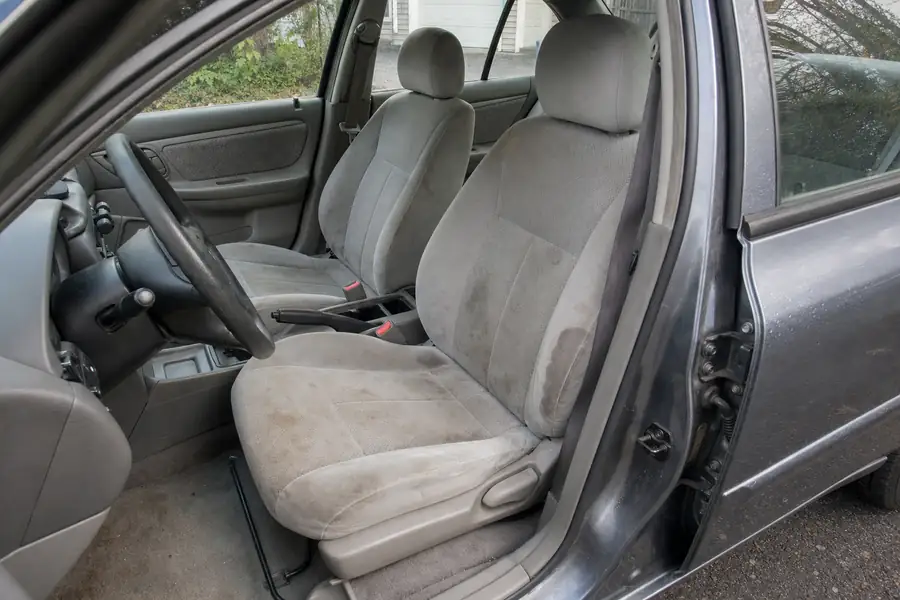
What You Need for Car Upholstery Cleaning
Car upholstery cleaning calls for different gear than cleaning carpet at home, mainly because seat foam traps moisture and dries slowly inside a closed cabin. Gather these before you start:
- A stiff upholstery brush or drill-mounted brush attachment
- pH-balanced upholstery shampoo for cloth, or a dedicated leather cleaner and conditioner
- A wet/dry shop vac with an upholstery attachment
- Several microfiber towels
- A soft brush for leather seams and stitching
- Open windows or a fan for drying time
Skip household all-purpose cleaners and rental carpet machines. They push more water into the seat foam than they pull back out, leaving seats damp for days and smelling musty.
How to Clean Car Seats: Cloth Upholstery Step by Step
Upholstery Shampoo
Vacuum the seat thoroughly, then apply a pH-balanced upholstery shampoo in a light, even layer across the fabric. The Shiny Rhino Spot Remover works well for fresh spots between full cleanings. Let the shampoo sit two to three minutes so the surfactants can break down oil and ground-in dirt before you agitate.
Drill Brush Agitation
A drill-mounted brush attachment agitates cloth fibers more evenly than scrubbing by hand, working shampoo into the weave without flattening it. Work in small, overlapping circles and keep the brush moving so you don't wear a bald patch into one spot of fabric.
Wet-Vac Extraction
Wet-vac extraction pulls shampoo, dirt, and rinse water back out of the seat instead of letting it soak into the foam underneath. Run the upholstery attachment slowly over every section, going back over damp spots until the fabric feels only lightly moist. This step is what separates real car upholstery cleaning from a quick surface wipe, and it's the main reason professional results last longer.
How to Clean Leather Car Seats Step by Step
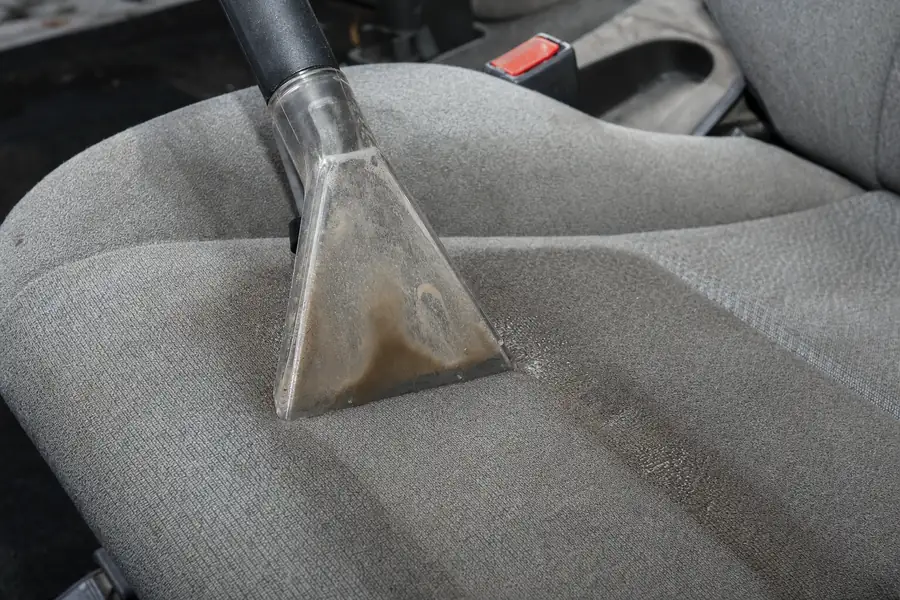
Leather seats need a pH-balanced cleaner, never the shampoo-and-brush routine used on cloth, because harsh alkaline cleaners strip the finish and dry out the hide. Wipe the leather down with a microfiber towel dampened in the cleaner, working in sections and rinsing the towel often. Use a soft brush only in seams and stitching, where dirt collects but a cloth can't reach. Once the leather is clean and dry to the touch, apply a leather conditioner to replace the oils the cleaning step removed. Skipping conditioner is the most common mistake: seats look clean at first, then crack within a year.
Stain Playbook for Car Upholstery Cleaning
Coffee Stains
Blot coffee spills immediately with a dry towel before liquid soaks past the fabric into the padding. Treat the spot with a small amount of upholstery shampoo, working from the outside of the stain inward so it doesn't spread. Our guide on how to remove carpet stains covers the same blot-then-treat approach that works on cloth seats.
Not sure when your carpets were last deep cleaned?
Get an exact price online in about two minutes. No phone tag, no surprise fees.
Get My Instant QuoteKids' Messes
Juice, crayon, and snack grease respond to the same blot, shampoo, and extract sequence, though crayon wax needs a warm iron over a paper towel first to lift the wax before shampooing. Treat spills the same day when possible. The longer sugar and dye sit in the fibers, the more they set.
Pet Accidents
Pet accidents need an enzyme-based cleaner, not just soap and water, because enzymes break down the uric acid crystals that make the smell return once the seat warms in the sun. The Shiny Rhino Pet-Mess Solution Kit is built for exactly this: enzyme treatment first, extraction second.
Getting Odors Out of Car Upholstery
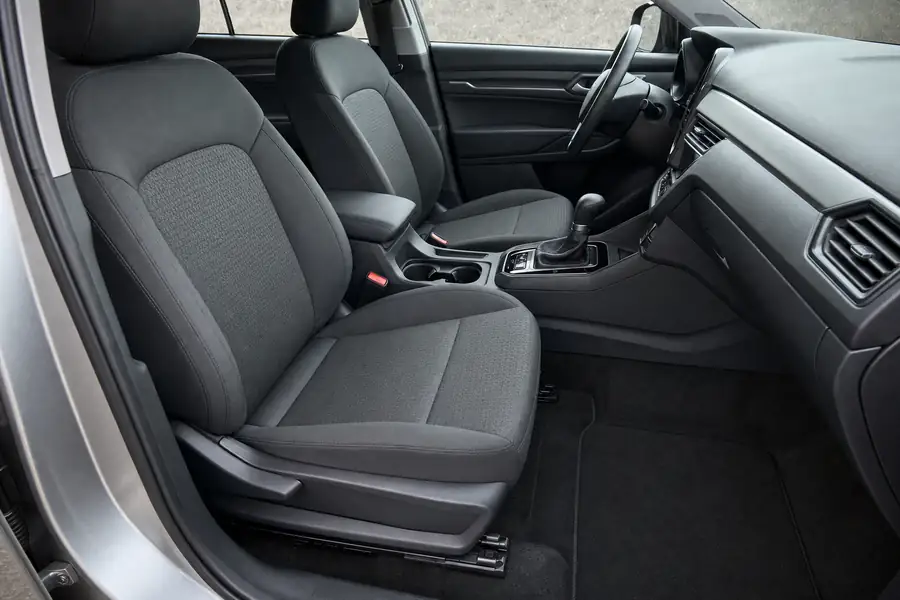
Getting odors out of car upholstery means treating the source, not masking it with air fresheners that fade within a day. Smoke, pet dander, and mildew odors sit down in the foam padding, not just on the fabric surface, so a spray-and-wipe only covers them temporarily. An enzyme-based odor neutralizer like Shiny Rhino Odor Out Plus breaks down odor-causing bacteria at the source, and it's biodegradable enough to use safely around kids and pets. Run the fans or crack the windows for several hours after any wet treatment. A car cabin traps humidity worse than an open room, and lingering dampness turns a treated odor into a mildew problem.
The Headliner Warning: Why Soaking It Fails
The headliner fails when it gets soaked because the fabric is glued to a foam-backed board, and water breaks down that adhesive from behind. Once the glue lets go, the headliner sags and there's no home fix that reattaches it properly. Spot-clean the headliner with a barely damp microfiber towel and a small amount of upholstery shampoo, never a soaked sponge or a full spray-down. If the headliner looks stained well beyond the surface, that's a job for a professional who can control moisture with the right technique.
DIY vs Mobile Detailing: What the Pros Do Differently
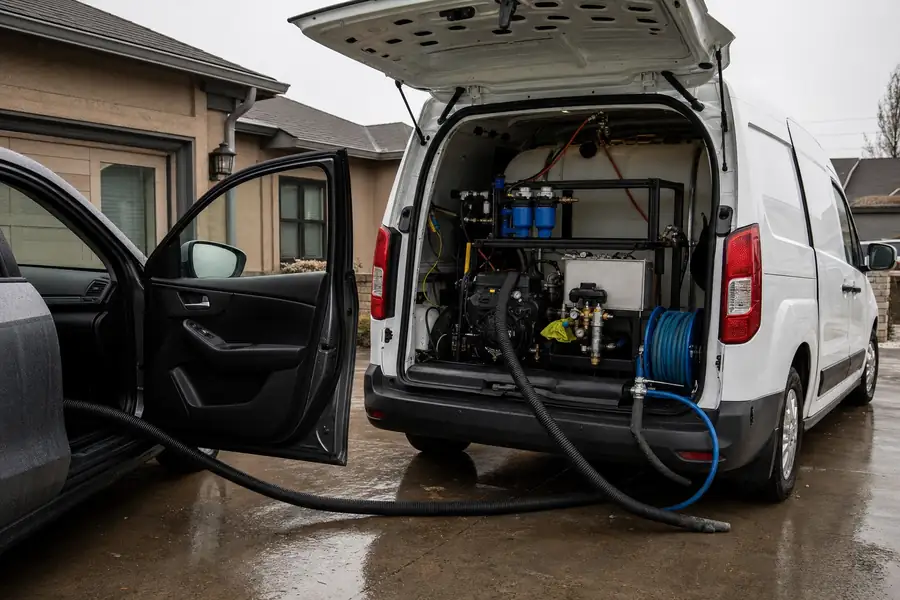
DIY car upholstery cleaning gets seats visibly cleaner, but mobile detailing gets them fully clean, because pros extract far more water and shampoo than a spray bottle and shop vac can pull out. Professional car interior detailing uses high-capacity extraction equipment that runs hotter water at higher pressure, lifting more soil out of the foam padding and cutting drying time from a full day down to a couple of hours. Technicians also carry pH-balanced products matched to specific leather finishes and fabric types, so they're not guessing between a cleaner made for cloth and one safe for leather. If odor and stains keep coming back after trying the steps above, booking mobile detailing through Shiny Rhino's Car, Boat & RV Cleaning service gets the extraction and drying time right the first time.