
A leather couch stays soft and crack-free with one simple habit: dust it weekly with a dry microfiber cloth, vacuum the seams for grit, and wipe up spills the moment they happen with a barely damp cloth, never a soaking one. That routine handles most day-to-day leather sofa care on its own.
The trouble starts when owners reach for whatever cleaner is under the sink, or let a stain dry in, and end up with a couch that looks worse than before. Here is how to clean a leather couch the right way, from identifying your leather to keeping it conditioned so it never cracks.
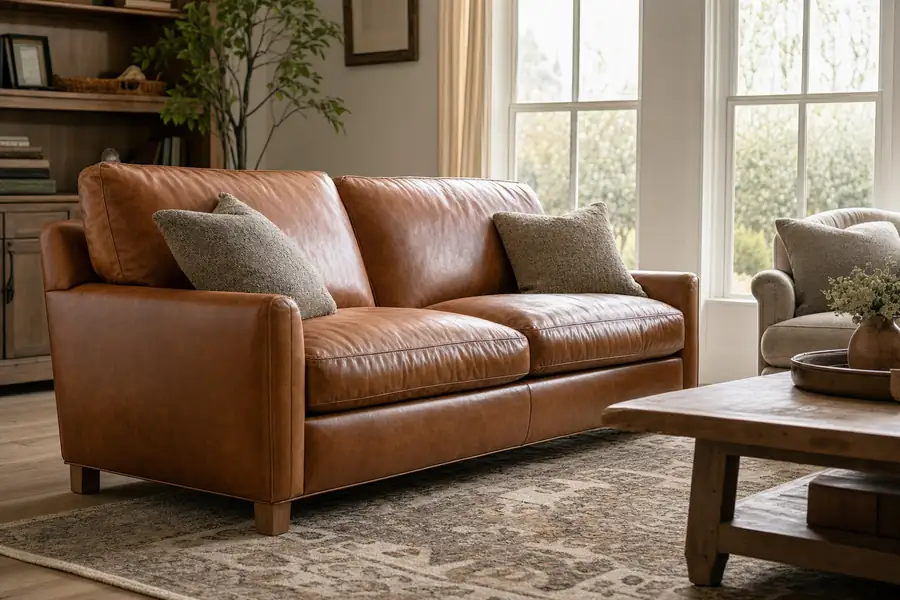
Know Your Leather First
Not every leather couch cleans the same way, and using the wrong method on the wrong type is how sofas get ruined. Full aniline leather is the most delicate, semi-aniline splits the difference, and protected (pigmented) leather is the toughest and most common in furniture stores.
Aniline leather
Full aniline leather has no protective coating, so it absorbs liquid almost like fabric. Water and ink soak in fast, which is why it needs the gentlest cleaning of the three.
Semi-aniline leather
Semi-aniline leather has a thin protective topcoat over the dye, so it resists spills better than full aniline while keeping a soft, natural feel.
Protected or pigmented leather
Protected leather has a polymer coating that makes it the most stain and fade resistant of the three, and the easiest to wipe clean. Most leather couches sold today are protected leather.
How to tell which one you have
Drip a few drops of water on a hidden spot. If it beads on the surface, the leather is protected. If it soaks in and darkens, treat it as aniline or semi-aniline.
| Leather Type | Reaction to Water | Cleaning Approach |
|---|---|---|
| Full aniline | Absorbs, darkens fast | Dry cloth, minimal moisture |
| Semi-aniline | Slight resistance | Damp cloth, mild leather cleaner |
| Protected/pigmented | Beads on surface | Damp cloth, mild soap safe |
The Gentle Weekly Routine for Leather Sofa Care
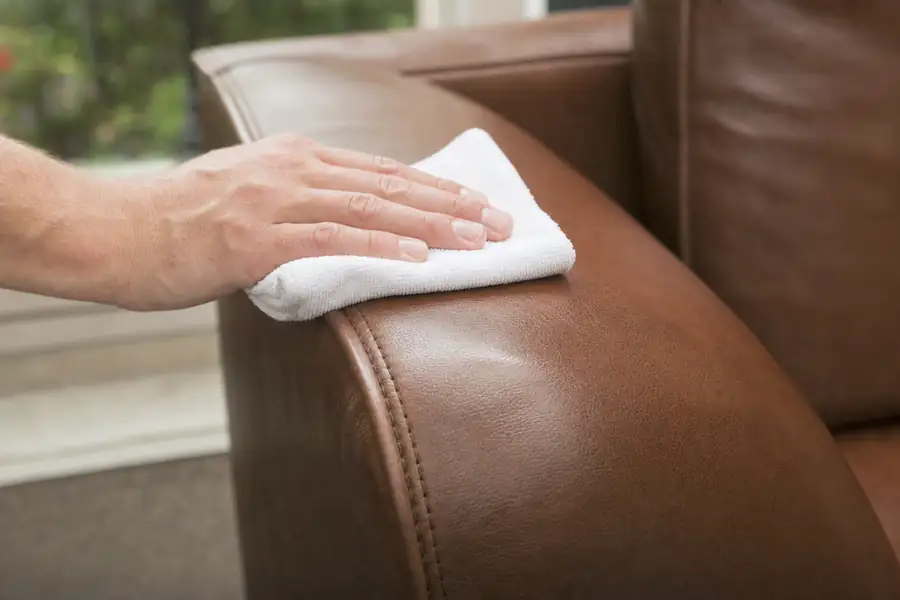
Weekly leather sofa care is mostly prevention: dust with a dry microfiber cloth, vacuum the seams for grit, and blot spills immediately rather than letting them set.
Leather does not trap dust mites the way fabric upholstery does, but grime still builds up in the seams and can affect indoor air quality over time. Keep the couch out of direct sun and away from heating vents, since dry heat pulls natural oils out of the hide and speeds up cracking. In dry climates like Denver, leather loses moisture faster, so the weekly wipe-down matters even more.
How to Deep Clean a Leather Couch Step by Step
A full leather couch cleaning takes about 30 minutes and follows a strict order: vacuum first, clean second, dry third.
- Vacuum the entire couch, including seams and under the cushions.
- Mix a few drops of pH-balanced, leather-safe soap into lukewarm water.
- Wring a microfiber cloth nearly dry and wipe in small circles, one cushion at a time.
- Follow immediately with a dry cloth to lift residue before it dries into the hide.
- Air dry away from sun or heating vents, usually 1 to 2 hours before sitting on it.
Never soak leather or machine-wash cushion covers. Excess water works into the seams and backing, causing stiffness or mildew that no conditioner can fix.
Removing Stains From a Leather Couch
Different stains need different fixes, and treating them all the same way is a common way to spread the damage instead of removing it.
Not sure when your carpets were last deep cleaned?
Get an exact price online in about two minutes. No phone tag, no surprise fees.
Get My Instant QuoteInk
Dab a cotton swab lightly with isopropyl alcohol on the stain only, then condition the spot right after to replace the oils the alcohol strips out.
Grease
Blot fresh grease with a dry cloth, never rub it, then dust with cornstarch or baking soda to pull the oil out overnight. Brush away in the morning.
Water spots
Wipe the whole cushion, not just the spot, with a lightly damp cloth so it all dries evenly. Spot-cleaning alone usually leaves a visible ring.
How to Condition a Leather Couch So It Never Cracks
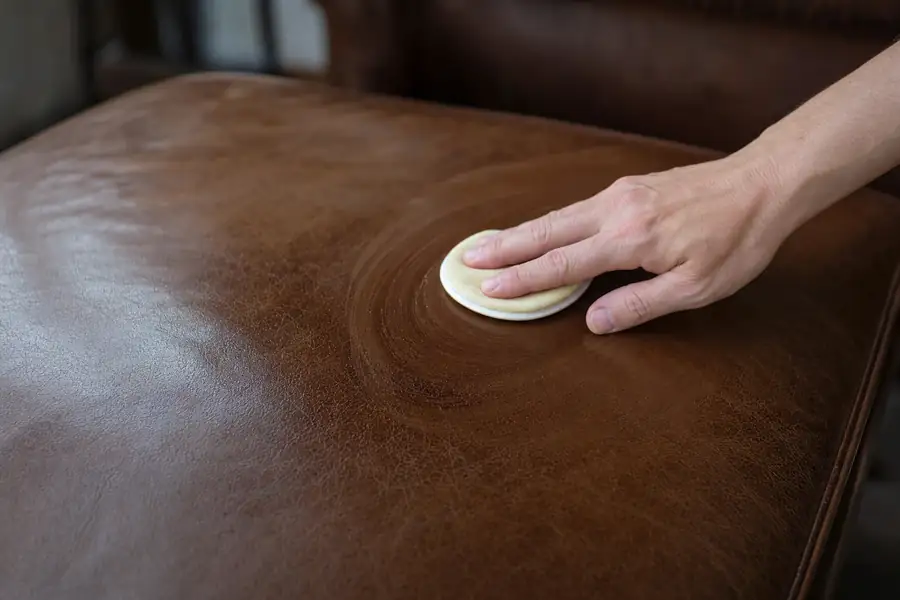
Conditioning replaces the natural oils leather loses to sun, heat, and everyday use, keeping it supple instead of stiff and prone to cracking. Protected leather needs conditioning every 6 to 12 months, while full aniline leather, with no protective topcoat, needs it every 3 to 4 months.
Test any new conditioner on a hidden spot first. Apply a thin coat with a soft cloth, let it sit 15 to 20 minutes, then buff off the excess. In humid cities like Miami, leather faces more mildew risk than cracking, so airflow and quick drying matter as much as the conditioner itself.
What Never to Use on a Leather Couch
Several common household products damage leather permanently, and none are worth the risk for a stain that a gentler method can handle.
- Ammonia-based cleaners: strip natural oils and dyes, leaving dull, faded patches.
- Bleach: discolors leather and breaks down the finish for good.
- Baby wipes: alcohol and fragrance dry out leather with repeated use.
- Harsh vinegar mixes: acidic enough to dull the surface and pull out moisture.
- Heat drying: hair dryers and direct sun pull moisture out fast, causing cracking.
When to Bring in a Professional Upholstery Cleaner
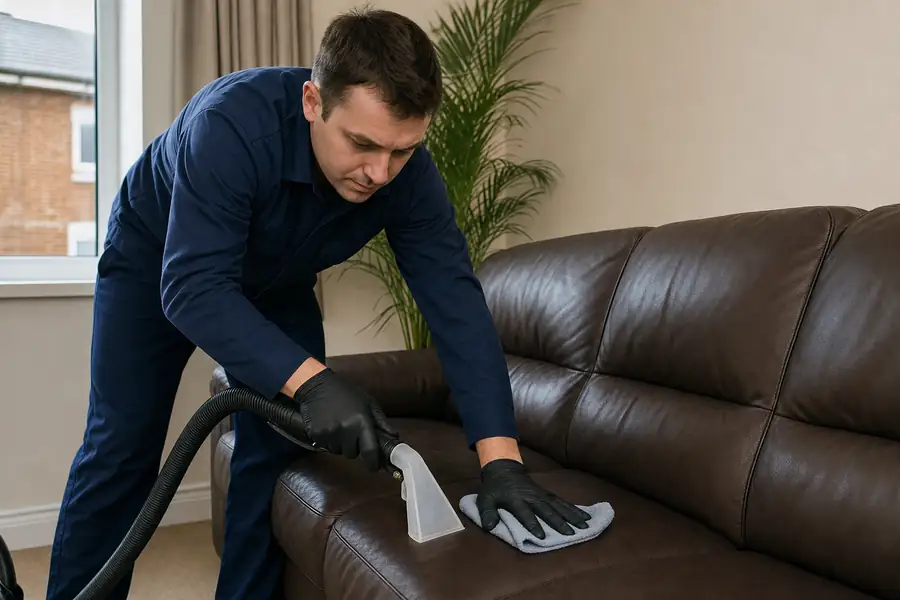
A leather couch with deep-set stains, mildew, cracking, or a lingering odor needs more than a home routine, and that is where professional upholstery cleaning earns its cost.
Shiny Rhino technicians identify the leather type before choosing a cleaner, use pH-balanced solutions matched to the material, and avoid the over-wetting that causes most DIY damage. Professional cleaning typically costs far less than refinishing or replacing a couch, and current cleaning pricing is listed online before you book.
Shiny Rhino has cleaned upholstery of every material for years, and technicians are trained, IICRC certified, and background checked before they ever step into a customer's home.