
Real suede and microsuede need opposite cleaning approaches, so check which one covers your sofa before you touch it. Genuine suede is napped leather that stays dry and gets brushed or erased; microsuede is a synthetic microfiber that usually tolerates a damp cloth and mild soap.
Mixing up the two is the fastest way to ruin a couch. Water that microsuede shrugs off can leave a permanent dark ring on real suede, and cleaners meant for leather can flatten or discolor a microfiber weave. The steps below sort out how to clean suede couch fabric of both types, from weekly upkeep to stubborn grease and water marks.
Real suede vs microsuede: how to tell
Real suede is the soft, napped underside of animal hide; microsuede is a synthetic polyester microfiber woven to mimic that texture. Press a slightly damp fingertip to a hidden spot: real suede darkens and feels cool to the touch, while microsuede beads the water and stays the same color. Real suede also has a faint leather smell and slight texture variation across the hide; microsuede feels uniformly soft and smells like nothing at all.
This one check decides everything that follows. A method that's routine suede sofa cleaning on microsuede can be the wrong move entirely on real suede.

Everyday care: the suede brush
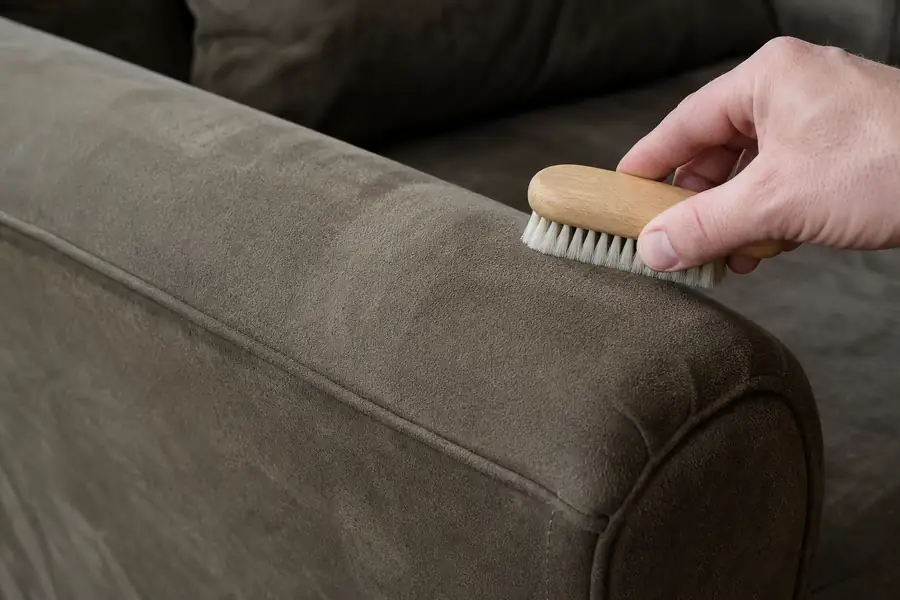
A dedicated suede brush, either brass-bristled or a rubber block, keeps real suede looking fresh with a two-minute pass once a week.
Brush in the direction of the nap first to lift dust, then brush against it to restore the couch's texture and even out flattened spots where people sit. Vacuum loose dirt with a soft upholstery attachment before brushing, never a stiff brush head, and never soak the brush in water. This weekly habit is most of what real suede needs between deeper cleanings, and it's far gentler than scrubbing with cleaners not made for leather. If pet hair is part of the weekly mess, our guide on how to remove pet hair from a couch covers lint rollers and brush techniques that won't scuff the nap.
Marks and scuffs: the suede eraser
A suede eraser (a firm rubber block sold specifically for this) lifts light scuffs, scratches, and dark smudges without water or chemicals.
Rub the mark gently in one direction, checking often, then brush the area to blend it back into the surrounding nap. For deeper scuffs, a fine-grit suede stone or a clean pencil eraser works in a pinch, though the dedicated tool is gentler on the hide. This step handles the majority of everyday marks that don't call for moisture at all.
Water marks on real suede: the white vinegar edge technique
Water marks on real suede come out by re-wetting the stain's edge with white vinegar so it dries evenly instead of leaving a hard ring.
Dab a clean cloth with white vinegar, then trace just the outer edge of the water mark, feathering it outward rather than soaking the whole spot. Let the area air dry fully, away from direct heat, then brush the nap once it's dry. Trying to dry a wet stain faster with a hairdryer or heater almost always sets a permanent ring, so patience matters more than speed here.
Not sure when your carpets were last deep cleaned?
Get an exact price online in about two minutes. No phone tag, no surprise fees.
Get My Instant QuoteGrease spots: cornstarch overnight
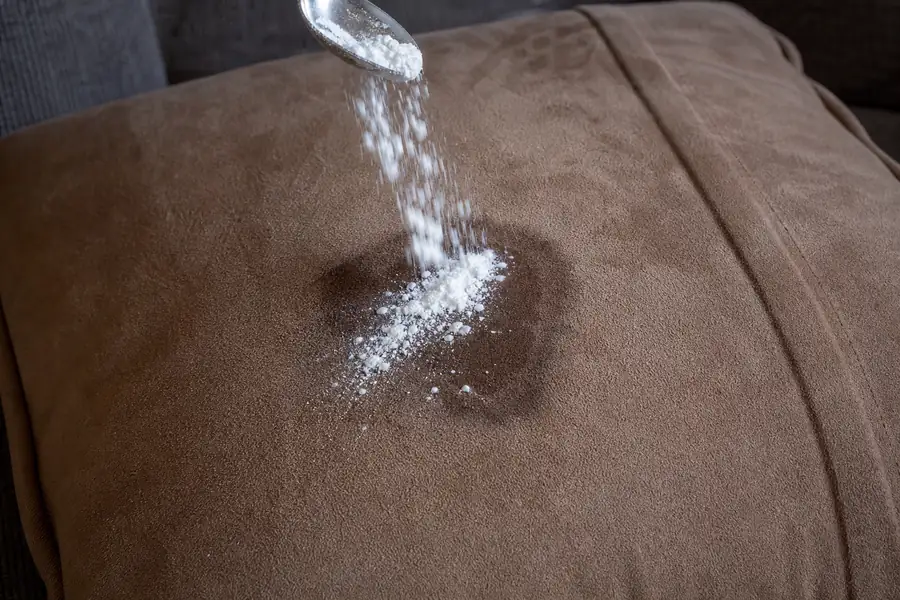
Cornstarch pulls grease out of real suede if you cover the spot heavily and let it sit overnight.
Blot any excess oil first with a dry cloth, don't rub it in. Pile on plain cornstarch (or talc-free baby powder) until the spot is fully covered, then leave it undisturbed for at least eight hours so the powder has time to absorb the oil. Brush the dried powder away in the morning; repeat once more if a faint shadow remains. This is the same principle Shiny Rhino technicians rely on for grease on upholstery generally: draw the oil out with an absorbent powder rather than pushing solvent into the fibers.
Microsuede: follow the microfiber rules instead
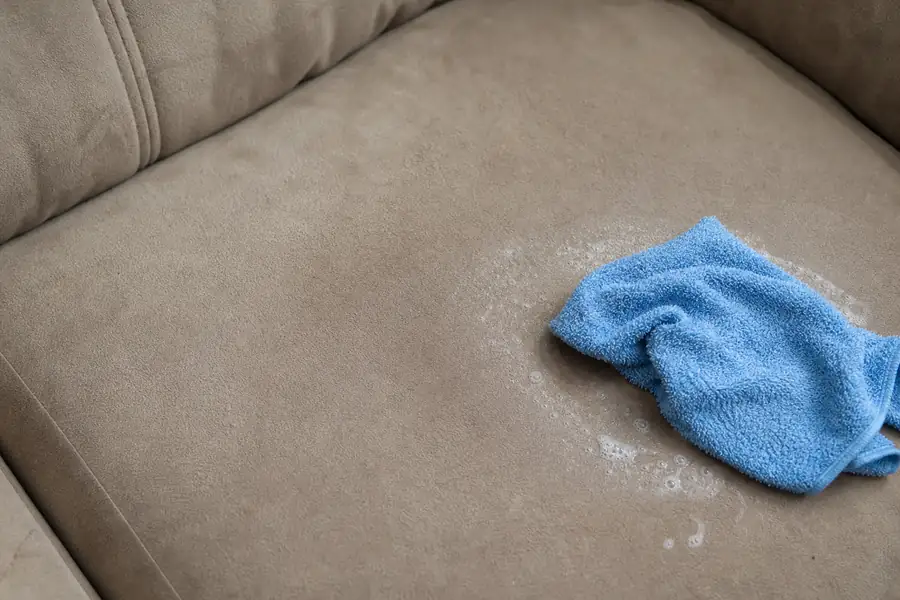
Microsuede cleans more like microfiber than like leather, so damp cloths, mild dish soap, and even a soft-bristle scrub are usually safe.
Mix a few drops of clear dish soap into warm water, work it into the stain with a soft brush or sponge, then blot dry with a clean towel and let the cushion air dry fully before sitting on it. Rubbing alcohol on a cloth also lifts oily marks on most microsuede without leaving a ring, since the fabric won't stain the way animal-hide suede does. Skip the vinegar and cornstarch methods above; they're built for real suede's oil-absorbing nap, not a woven synthetic.
Protector sprays and sun-fade care
A silicone-free suede protector spray, reapplied every few months, blocks new spills and slows the fading that sunlight causes on both real suede and microsuede.
Apply a light, even coat to a clean, dry couch and let it cure for a full day before use. Rotate cushions periodically and keep the sofa out of direct afternoon sun where you can, since UV exposure lightens suede unevenly over time. In dry, high-altitude climates like those around Denver, sun and low humidity dry out the nap faster and make protector spray more of a routine step than an occasional one. In humid cities like Miami, the opposite problem shows up: damp suede takes longer to dry fully, which raises the odds of a water mark setting before it airs out.
Stains that won't lift with brushing, an eraser, vinegar, or cornstarch usually need professional attention rather than a stronger home remedy. Shiny Rhino's Furniture & Upholstery Cleaning technicians identify the fiber first and match the method to real suede or microsuede, so deep-set stains and odors come out without stiffening or discoloring the fabric.