
Quick answer: The fastest, most effective way to clean grout in a shower is a baking soda and hydrogen peroxide paste worked into the lines with a stiff nylon brush, left to sit for 10 minutes, then rinsed with hot water. For heavier shower grout mold that keeps coming back, an oxygen bleach soak clears it just as well without weakening the grout the way repeated chlorine bleach use can.
Grout lines are the first place mildew shows up in a shower because the material is porous and stays damp longer than the tile around it. The good news: most stains sit on the surface, not inside the grout body, so the right household method usually brings the color back without regrouting. For a deeper look at what's happening chemically, our complete guide to cleaning tile and grout breaks down the science behind grout staining across the whole house, not just showers.
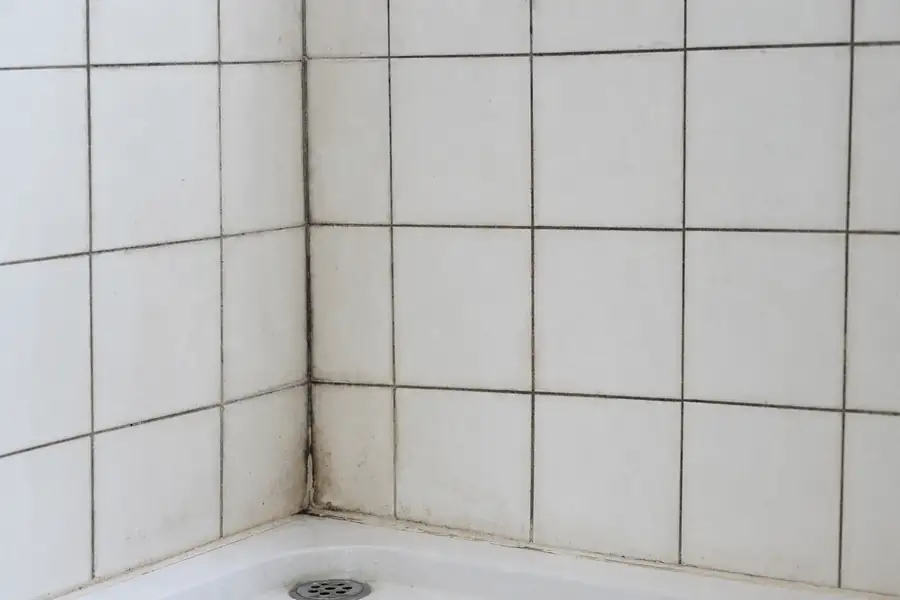
Why Shower Grout Grows Mildew So Fast
Shower grout grows mildew fast because it's a porous, often under-sealed surface that stays wet for hours after every shower, and mold only needs moisture, warmth, and a food source, like soap film or skin oils, to take hold within 48 to 72 hours.
Humidity makes it worse. In a humid market like Florida, bathroom mold can reappear within days of a deep clean if the fan doesn't run long enough after each shower. Shower grout mold spreads along the grout lines first because that's where the surface texture holds standing water the longest, while the smooth tile face dries and sheds moisture quickly.
What You Need: Safe Tools That Won't Gouge Grout
The best way to clean shower grout without damaging it starts with soft tools, not stronger ones. Grout is softer than the tile around it, so anything abrasive enough to scratch that tile will also carve grooves into the grout over time.
- Soft nylon grout brush or an old soft toothbrush, never wire or metal bristles
- Baking soda and hydrogen peroxide (3%)
- Oxygen bleach powder for stubborn shower grout mold
- Microfiber cloths and a spray bottle
- Rubber gloves, with the bathroom fan running
Skip anything sold as a grout eraser pad or a metal scraper. Both wear grooves into the grout that trap even more dirt and moisture next time around.
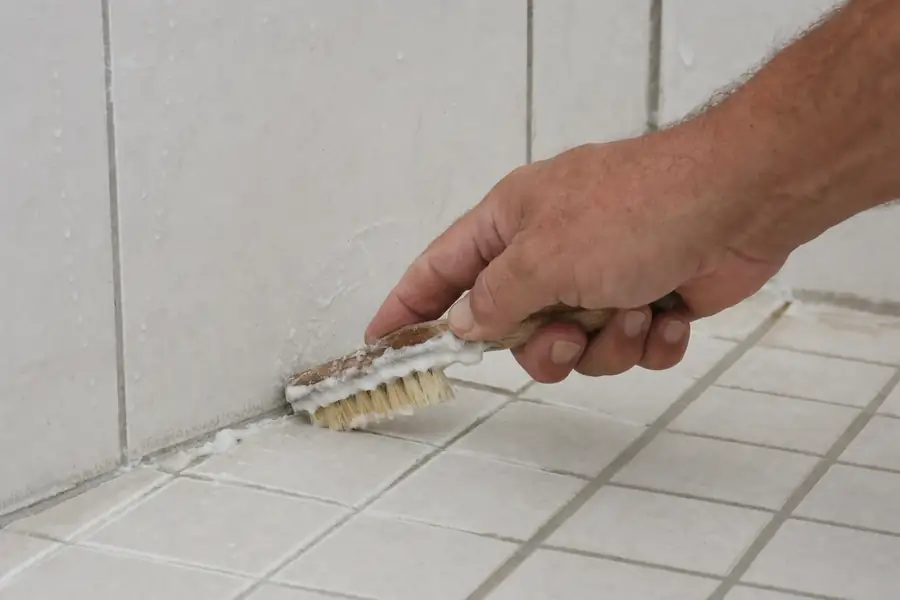
Method 1: Baking Soda Paste
Baking soda paste is the best way to clean shower grout for everyday mildew and soap scum because it's mildly abrasive without scratching, and it's safe to use around kids and pets.
- Mix baking soda with hydrogen peroxide, or water, until it forms a thick paste.
- Spread the paste directly onto the grout lines with a spoon or old brush.
- Let it sit for 10 to 15 minutes so it can break down the staining.
- Scrub with a soft nylon brush, working in small circles along the lines.
- Rinse thoroughly with hot water and wipe dry.
Most light to moderate grout mold lifts on the first pass. Darker, older staining may need a second application before the color fully clears.
Method 2: Oxygen Bleach vs Chlorine Bleach (Honest Trade-Offs)
Oxygen bleach clears shower grout mold just as effectively as chlorine bleach for most stains, and it does so without breaking down the grout's binder over repeated use, which is the real trade-off between the two.
| Factor | Oxygen Bleach | Chlorine Bleach |
|---|---|---|
| Mold/mildew removal | Strong, needs longer contact time | Strong, works fast |
| Grout impact | Gentle, low breakdown risk | Can weaken and discolor grout over time |
| Fumes/safety | Low odor, safer near pets and kids | Strong fumes, needs ventilation |
| Best use | Routine and preventive cleaning | Severe, set-in black mold, occasional use |
Use chlorine bleach sparingly and never mix it with any ammonia-based cleaner. For most bathrooms, an oxygen bleach soak, the powder dissolved in warm water and poured over the grout for 15 to 20 minutes, handles the job without the harsh smell.
Not sure when your carpets were last deep cleaned?
Get an exact price online in about two minutes. No phone tag, no surprise fees.
Get My Instant Quote
Method 3: Steam Cleaning
Steam cleaning kills shower grout mold with heat alone, no chemicals required, because sustained temperatures above 175°F destroy mold spores and loosen soap scum from the grout's surface.
A handheld steam cleaner with a narrow nozzle attachment works the lines directly. Hold the nozzle a couple inches from the grout, move slowly, and follow with a dry microfiber wipe to lift the loosened residue. It's a good option for households that want to skip bleach altogether, though it takes more time than the paste or soak methods on heavily stained grout.
Keep It Clean: Ventilation, Squeegee Habit and Resealing
The single biggest factor in how fast shower grout mold comes back is how long the grout stays wet after each shower, so cutting that drying time is the real fix.
Run the bathroom fan for at least 20 minutes after every shower, or crack a window if there's no fan. Squeegee the walls and floor right after you turn the water off. It takes 30 seconds and removes most of the standing moisture mold needs to grow. Between deep cleans, a pH-balanced product like Neutral Tile & Grout Cleaner keeps soap film from building back up without stripping any sealant.
Reseal the grout once it's fully clean and dry. A fresh sealant coat keeps water and soap from soaking into the grout in the first place, which is most of the battle.
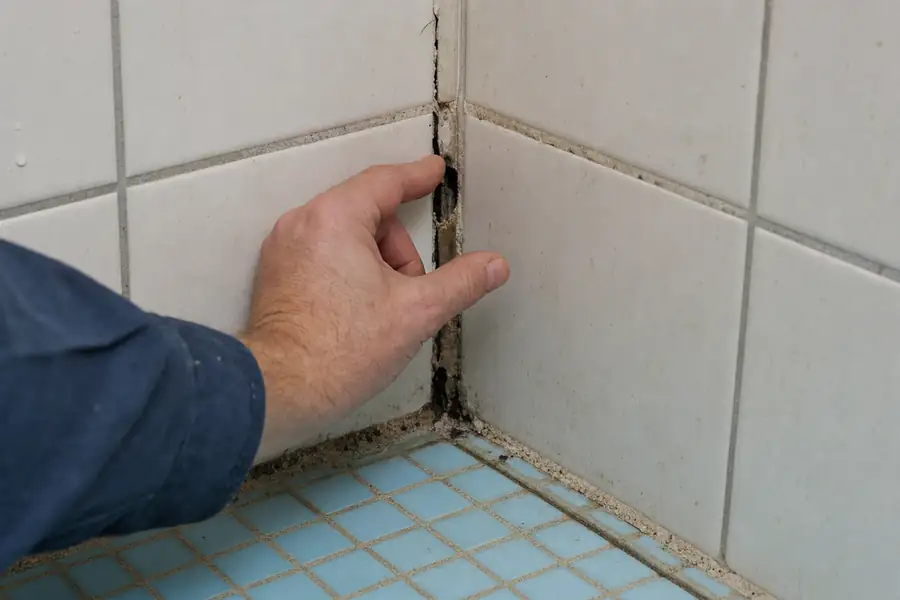
When Grout Is Beyond DIY: Permanent Staining and Crumbling Lines
Grout is beyond DIY cleaning when the staining has soaked into the grout itself rather than sitting on top of it, or when the lines are crumbling, pitting, or pulling away from the tile.
Permanent gray or black staining that doesn't lighten after a full oxygen bleach soak usually means mold has worked into the grout's pores, not just its surface. Crumbling or missing grout is a moisture problem, not just a cleaning one, and it often signals water getting behind the tile. If you suspect a hidden leak behind the shower wall, that points to water damage rather than surface mildew, and it's worth having a Water Damage Restoration assessment before doing any more scrubbing.
For grout that's simply dirty and worn rather than damaged, professional Tile & Grout Cleaning uses hot water extraction and pH-balanced solutions at pressure a household brush can't match, restoring color to grout that looks permanently gray. Shiny Rhino technicians are trained and background checked, and booking online applies an automatic discount to the visit.