
Quick answer: Use cold water only, never hot or warm, because heat sets the protein in blood into carpet fibers and makes the stain permanent.
Nosebleeds, kitchen cuts, and period stains all respond to the same removal process, and there's no need to feel embarrassed about any of it. This guide covers fresh blood removal and how to get dried blood out of carpet, plus wool and delicate rugs that need gentler care.
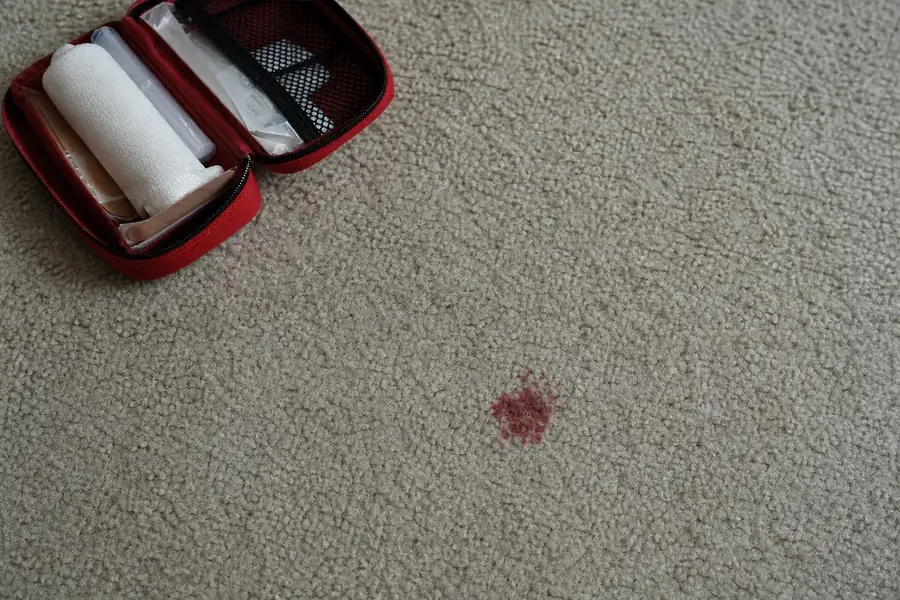
Why Cold Water Is Non-Negotiable
Cold water dissolves blood without cooking the proteins into the carpet backing, which is why every step below starts and ends with it. Blood is largely protein (hemoglobin), and like an egg white in a hot pan, protein firms up and binds to fibers once it hits heat. Once that happens, the stain locks into the pile and often the backing underneath, and scrubbing won't pull it back out.
Warm water feels like it should work faster. It doesn't. Stick to cold tap water or ice water for every rinse, dab, and solution in the steps below.
Fresh Blood: Step-by-Step Removal
Fresh blood comes out of carpet in minutes if you act before it dries, using nothing but cold water and light pressure.
- Blot, don't rub. Press a clean white cloth or paper towel straight down onto the stain to lift as much blood as possible before it spreads.
- Rinse the spot with cold water from a spray bottle or damp cloth, then blot again.
- Mix a teaspoon of dish soap into a cup of cold water and dab it onto the stain with a clean cloth, working from the outside edge in.
- Blot with plain cold water to rinse the soap, then press with dry towels and let the area air dry.
- Repeat the soap and rinse steps if any color remains.
For a light pretreatment kept on hand between professional cleanings, a bottle of Shiny Rhino Spot Remover handles fresh blood the same way: spray, blot, done. For other spills and spots, general carpet stain removal steps follow the same blot-and-rinse logic.
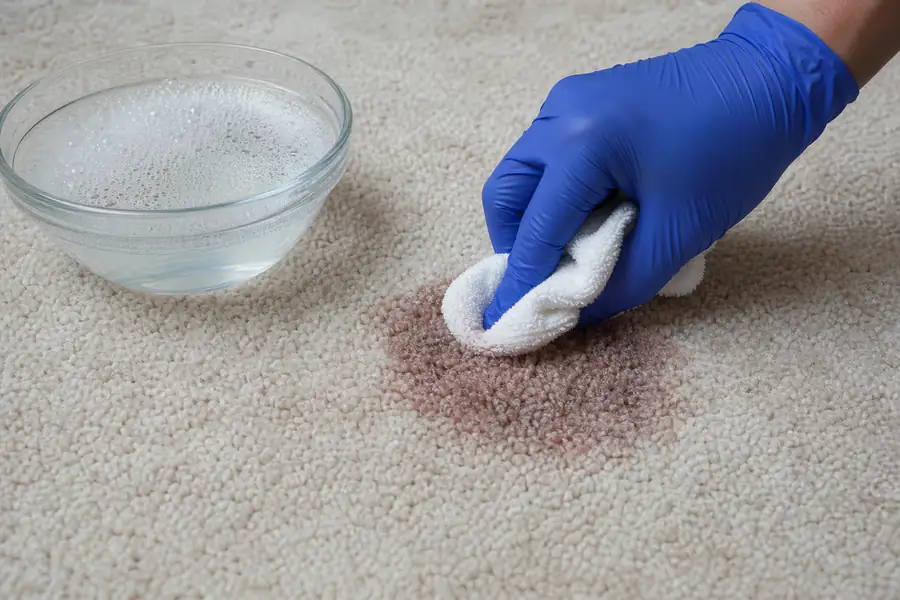
Dried Blood: Step-by-Step Removal
Getting dried blood out of carpet takes more effort than a fresh stain because the blood has already bonded to the fibers, but it still lifts with the right combination of soaking and cold rinsing.
Salt Paste
Mix cold water and table salt into a thick paste, work it into the dried spot with a soft brush or your fingers, and let it sit for 30 minutes before scraping it off and rinsing with cold water. Salt draws moisture and pigment out of the fibers as it dries, which loosens the stain enough to lift with a damp cloth.
Not sure when your carpets were last deep cleaned?
Get an exact price online in about two minutes. No phone tag, no surprise fees.
Get My Instant QuoteDish Soap Solution
Soak the stain with cold water for a few minutes to rehydrate it, then work in the same dish soap and cold water mix used on fresh stains, blotting in short strokes toward the center of the spot.
Hydrogen Peroxide (With a Color Test First)
Test 3% hydrogen peroxide on a hidden corner of carpet first, since it can lighten some dyes. If the color holds after a few minutes, dab peroxide directly onto the dried blood; it will bubble as it breaks the stain down, then blot and rinse with cold water once the fizzing stops.
Enzyme Cleaner
An enzyme-based cleaner breaks down the proteins in old blood at a molecular level, which makes it the most reliable option for stains that have been sitting for days or weeks. Apply it, let it dwell for the time listed on the label, then blot and rinse with cold water.
Blood on Wool or Delicate Carpet
Wool and other delicate natural fibers need a lighter touch because salt and hydrogen peroxide can strip natural luster or weaken the fiber. Skip both on wool. Instead, blot with cold water and a small amount of pH-neutral dish soap only, testing on a hidden section first, and avoid scrubbing since wool fibers distort and fray under pressure. If a stain sets into wool or an antique rug, a professional evaluation beats risking the fiber with stronger home treatments.

What Not to Do
The fastest way to make a blood stain permanent is reaching for hot water, a stiff scrub brush, or bleach, so avoid all three.
- Never use hot or warm water; it sets the protein into the carpet.
- Don't scrub hard or rub in circles; that pushes blood deeper into the pile and backing.
- Skip chlorine bleach; it can discolor carpet and doesn't lift protein stains effectively.
- Don't speed drying with a hair dryer or iron; heat is the enemy at every stage.
- Avoid rental steam machines on a blood stain; the hot water they use can set the very stain you're trying to remove.
When to Call a Pro
Call a professional when the stain has soaked through to the carpet backing or pad, covers a large area, or hasn't budged after salt, dish soap, and peroxide. Shiny Rhino technicians use truck-mounted hot water extraction with controlled temperature and pressure, along with pH-balanced solutions matched to the carpet fiber, to lift stains home treatments can't reach. Booking carpet cleaning online also applies an automatic discount, and there's no judgment involved: technicians see blood, wine, and pet stains every week.