
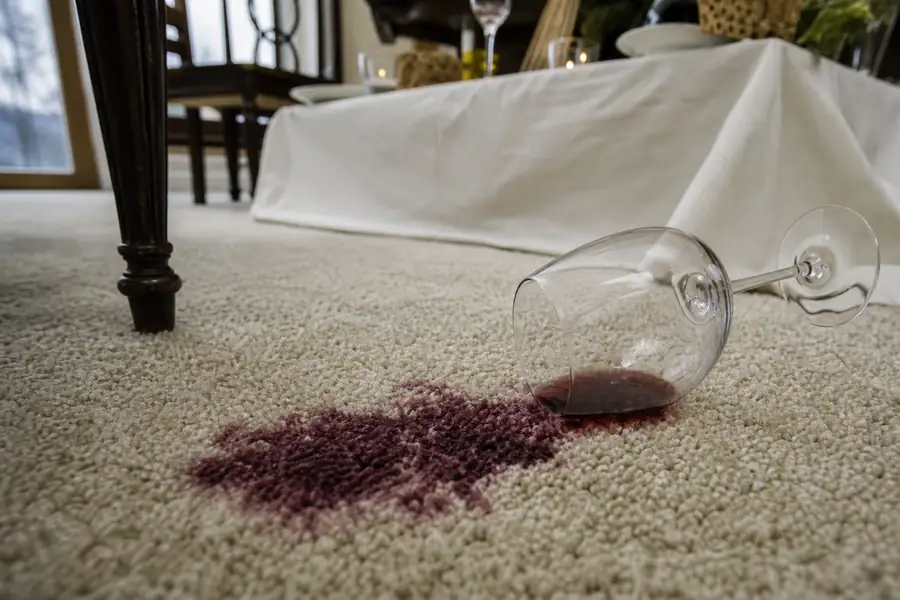
Red wine on a pale carpet is one of the few household accidents where your response time changes the outcome.
In the first ten minutes, almost all of it will come out with cold water and patience. After an hour, you are working harder for a slightly worse result. Once it has dried, the tannins and pigments have bonded with the fiber and you are into stronger chemistry with real risk to the carpet.
So this guide is organized by how long ago it happened. Find your situation and start there.
Key Takeaways
- Cold water only. Warm or hot water sets the pigment, and so do steam cleaners and hair dryers. This is the one unforgivable mistake.
- Blot, never rub. Rubbing spreads the stain and frays the fiber tips, which leaves the spot looking dull even after the color is gone.
- Dilute heavily. Red wine responds extremely well to repeated cold water and blotting - more than most stains.
- Salt and baking soda work by absorption, and need to be left to dry before vacuuming.
- Hydrogen peroxide is a last resort, and it can fade dyes - especially on wool, silk and dark carpet. Test it.
- Never use peroxide or oxygen bleach on wool. It will spot-bleach permanently.
- White wine does not neutralize red wine. It is dilution, and cold water does it better.
The first 10 minutes - act now, read later
If the spill just happened, do this immediately.
- Blot up the liquid. White cloths or paper towels, pressed straight down and lifted. Do not wipe, do not rub, do not push it outward. Keep swapping to dry towels until no more transfers.
- Pour a small amount of cold water directly on the stain. This feels wrong and it is correct - you are diluting the pigment so it can be lifted rather than concentrated.
- Blot again, hard. Stand on a thick pad of towels to drive pressure into the pile and carpet pad.
- Repeat. Cold water, blot, cold water, blot. Six or eight cycles is normal. The stain should visibly lighten each time.
- Work from the outside in so you do not spread the edges.
- Keep going until the towel comes up clean. This alone resolves most fresh spills completely.
That is it. Most of what follows is only needed if the stain was not caught fresh.
What not to do, even under social pressure: do not reach for warm water, do not use a hair dryer to speed things up, and do not put a steam cleaner on it. Heat sets the pigment, and a set wine stain is a different and much harder problem.
The first hour - add absorption and a mild solution
If there is still color after the dilute-and-blot cycle, escalate gently.
Salt or baking soda. While the area is still damp, cover the stain generously with table salt or baking soda. It draws the remaining wine up out of the fiber as it dries, and you will see it turn pink. Leave it to dry completely - several hours, or overnight - then vacuum it up thoroughly. This is slow and effective, and the most common error is vacuuming too early.
Dish soap solution. A teaspoon of clear, dye-free dish soap in a cup of cold water. Apply with a cloth rather than pouring, let it sit a couple of minutes, blot from the outside in, then rinse by blotting with cold water only and blot dry. The rinse matters - detergent residue left in the pile attracts dirt and will create a dark patch within two weeks.
Dish soap and hydrogen peroxide, the widely shared combination: a few drops of dish soap with 3% hydrogen peroxide. It is effective, and it carries a real risk - see the warning below. Test first, every time.
A dedicated wine stain remover. Products made for this work well and are formulated to be fiber-safe. Worth keeping in the house if you own pale carpet.
If it has already dried
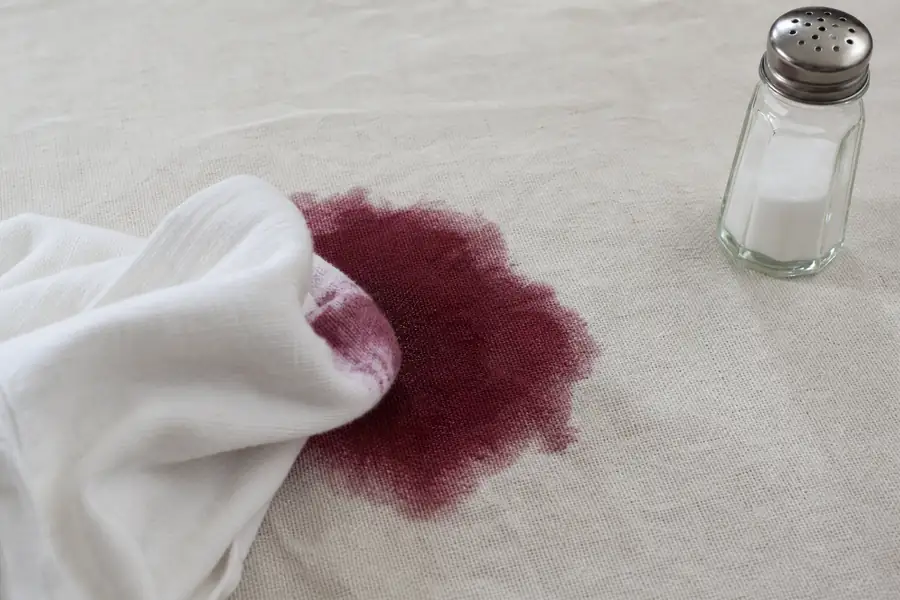
Harder, often still recoverable. The approach is to rehydrate the stain and then work it.
- Vacuum the area to remove dry debris.
- Rehydrate with cold water. Apply, let it sit several minutes to soften the dried residue, and blot. Repeat a few times - you are converting a dried stain back into a wet one.
- Apply your chosen solution - detergent in cold water, or a wine stain remover.
- Dwell time, several minutes, keeping it damp.
- Blot from the outside in, changing cloth faces.
- Repeat the cycle. Several patient rounds beat one aggressive attempt.
- Salt or baking soda on the damp area afterward, left to dry, then vacuumed.
- Hydrogen peroxide as a last resort, tested first.
- Rinse with cold water, blot dry hard, dry with a fan, vacuum when dry.
Old stains sometimes leave a faint shadow even after everything. At that point it is a question of whether professional extraction can lift the remainder, which it frequently can, because the limiting factor at home is usually extraction rather than chemistry.
The hydrogen peroxide warning
Peroxide appears in nearly every red wine article, usually without a caveat. It deserves one.
Three-percent hydrogen peroxide and oxygen bleach can fade dyes, especially on wool, silk, dark cotton and any carpet not manufactured to be bleached. On a white or near-white synthetic carpet it is usually safe and very effective. On a colored carpet it can leave a pale patch that is worse and more permanent than the wine stain was.
Never use peroxide or any oxygen bleach on wool. Wool is a protein fiber and oxygen bleaches spot-bleach and discolor it permanently. If your carpet or rug is wool, stop at cold water, absorption and a wool-safe product - see how to clean a wool rug.
How to test, properly: apply a small amount to a hidden area - inside a closet, under a sofa, or a scrap - and let it dry completely before judging. Some fading only appears on drying, which is how people discover the problem after treating the visible stain.
Fiber by fiber
| Carpet | Approach |
|---|---|
| Nylon, polyester, polypropylene | The full method above, peroxide included after a test. Synthetics are resilient and polypropylene is notably stain-resistant |
| Wool | Cold water, blotting, salt or baking soda, and a WoolSafe-certified or neutral product. No peroxide, no oxygen bleach, no hot water, no vigorous agitation - alkalinity and heat cause felting and dye bleed |
| Stain-resistant treated carpet | Usually excellent results with cold water alone. Avoid harsh chemistry, which strips the treatment |
| Viscose, silk, "art silk" | Blot and stop. These lose strength when wet and yellow with water. Professional only |
The myths
White wine neutralizes red wine. It does not neutralize anything - it dilutes. Cold water dilutes better, costs nothing and does not add sugar and its own pigment to the carpet.
Club soda is better than water. The carbonation makes no real difference. Plain cold water does the same job, and club soda with added sodium can leave a residue.
Shaving cream removes wine stains. It is foaming soap. No better than diluted dish soap.
Milk lifts red wine. It adds protein and fat to the stain. Avoid.
Not sure when your carpets were last deep cleaned?
Get an exact price online in about two minutes. No phone tag, no surprise fees.
Get My Instant QuoteLeave it and treat it tomorrow. The most expensive piece of advice on the list.
Why the stain came back
If a wine stain reappears a couple of days after you successfully removed it, one of two things happened - and the timing tells you which.
Wicking, within 24 to 72 hours: wine soaked through to the backing or carpet pad, and as the carpet dried, capillary action pulled that contamination back up to the surface. The mark returns in the original stain's shape. The fix is to re-treat with minimal moisture and extract thoroughly, because the contamination is in a layer you have not reached.
Resoiling, over one to two weeks: detergent residue left in the fiber is attracting dirt. It appears as general darkening without a distinct outline. The fix is a clear cold water rinse and thorough extraction.
Full explanation in how to remove carpet stains.
Frequently Asked Questions
How do you get red wine out of carpet?
Blot up the liquid with white cloths, pour on a little cold water to dilute, and blot hard - repeating six to eight times. If color remains, cover the damp area with salt or baking soda, let it dry fully, and vacuum. Escalate to a cold detergent solution or a wine stain remover if needed.
Does red wine come out of carpet?
Fresh, almost always. Dried, usually with patience. Very old stains on pale carpet sometimes leave a faint shadow that needs professional extraction.
Should I use hot or cold water on red wine?
Cold, always. Heat sets the pigment and makes the stain permanent. That includes steam cleaners and hair dryers.
Does white wine remove red wine stains?
No. It dilutes, which cold water does better without adding sugar and pigment of its own.
Does salt work on red wine?
Yes, by absorption. Cover the damp stain generously, let it dry completely, then vacuum. Vacuuming too early is the usual mistake.
Can I use hydrogen peroxide on red wine in carpet?
On white or light synthetic carpet, usually, after testing a hidden area and letting the test dry. Never on wool, silk or dark carpet - it fades dyes permanently.
How do I get dried red wine out of carpet?
Rehydrate with cold water over several cycles to soften it, then treat with a detergent solution or wine stain remover with proper dwell time, blotting from the outside in. Finish with absorption and a cold rinse.
Why did the stain come back after I cleaned it?
Within 24 to 72 hours it is wicking from the backing. Over one to two weeks it is detergent residue attracting dirt.
When it is worth a professional pass
Three cases: a large spill, a wool or natural-fiber carpet, or a pale carpet where you would rather not experiment with bleach chemistry.
The reason a professional pass gets further on an old stain is extraction, not cleverness. Our truck-mounts run above 200°F at 400+ PSI, which flushes residual pigment out of the backing - the layer a rental machine and a cloth cannot reach, and the layer wicking comes from.
$60 a standard room, $35 a hall or landing, $60 a staircase, with 10% off when you book online. 25+ years, 50,000+ customers, biodegradable solutions, no upsells at the door, come-back guarantee.
See carpet cleaning, call (855) 507-8955, or get a free quote.