
Quick answer: Blot wet nail polish right away with a dry cloth, working from the outside of the spill inward, then treat the area with a non-acetone nail polish remover after testing it on a hidden patch of carpet. Acetone-based remover dissolves polish fast but can melt synthetic fibers and strip carpet dye, so save it as a last resort.
Nail polish sets into a hard, plastic-like film once it dries, which is why it behaves differently than most spills. For general spill and stain basics, our guide to removing carpet stains covers the fundamentals, but polish needs its own approach because the wrong solvent can do more damage than the stain itself.
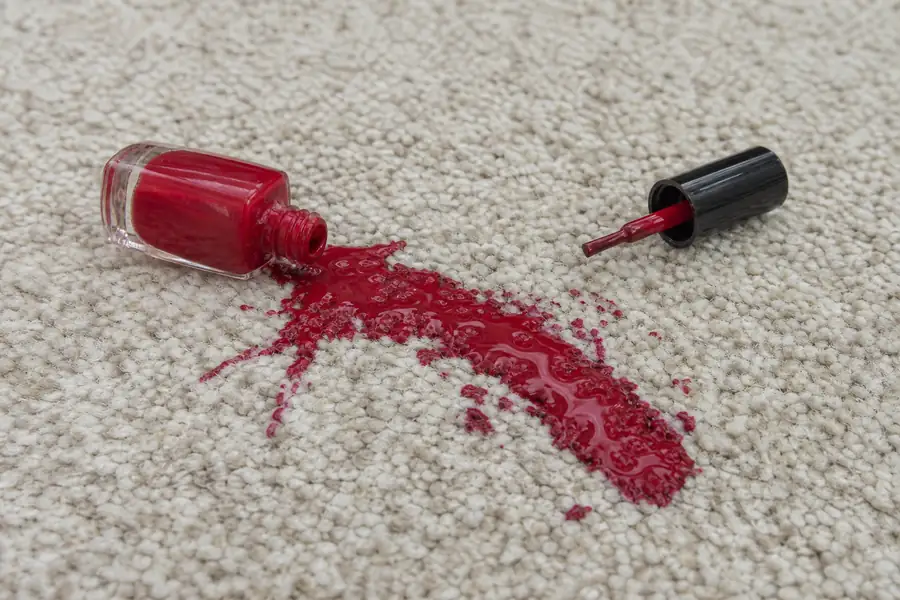
Wet Polish: What to Do in the First Minute
Act within the first minute and most nail polish blots away before it soaks into the carpet fibers. Grab a dry white cloth or paper towel and press straight down on the spill, never rub, working from the outer edge toward the center so you don't spread it wider.
If there's a puddle, scrape up the excess with the edge of a spoon or dull knife before you blot. Switch to a clean section of cloth every few dabs so you're not just pushing wet polish back into the pile. Speed matters more than technique here: the longer the polish sits, the more it bonds to the fiber.
Why Acetone Is Risky on Carpet
Acetone-based nail polish remover can melt the backing on nylon and other synthetic carpet fibers and pull the dye right out of the yarn, leaving a bleached, damaged spot that's harder to fix than the original stain. It dissolves nail polish effectively, but that same solvent power attacks the carpet material underneath.
Wool and some nylon blends are especially vulnerable. If you're going to use anything acetone-based at all, test it first on a hidden patch of carpet, like inside a closet or under a piece of furniture, and watch for at least a minute to see if the fibers change color or texture.
The Non-Acetone Remover Method, Step by Step
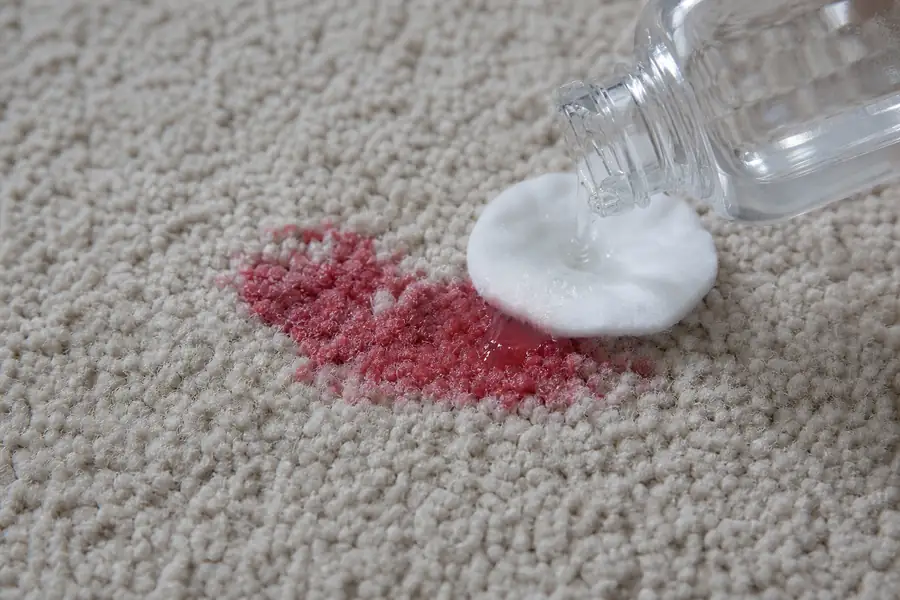
The safest way to get nail polish out of carpet is with a non-acetone remover, applied sparingly and blotted rather than rubbed. Non-acetone formulas use gentler solvents that break down polish without attacking most carpet fibers or dyes.
- Test the remover on a hidden spot of carpet and check after a minute for color change.
- Apply a small amount to a clean white cloth, not directly onto the carpet.
- Dab the stain gently, letting the remover dissolve the polish rather than scrubbing it in.
- Blot with a fresh section of cloth to lift the dissolved polish.
- Rinse the spot with a little cool water on a clean cloth, then blot dry.
Alternatives: Rubbing Alcohol and Hairspray
Rubbing alcohol and aerosol hairspray both contain enough alcohol to break down fresh nail polish when remover isn't on hand. Dab either one onto a cloth, not the carpet directly, and blot the stain the same way you would with remover, testing a hidden spot first.
Not sure when your carpets were last deep cleaned?
Get an exact price online in about two minutes. No phone tag, no surprise fees.
Get My Instant QuoteBoth are flammable, so work in a ventilated room and keep them away from open flame or a hot iron. They tend to work better on wet polish than on polish that's already dried into a film.
Dried Nail Polish on Carpet: Scrape Flakes, Then Dissolve
Dried nail polish on carpet has to be broken up mechanically before any solvent can reach it. Once polish cures, it forms a hard shell over the fibers that liquid remover can't penetrate on its own.
Scrape at the flakes with the dull edge of a spoon or a butter knife, working gently so you don't shred the carpet fibers, then vacuum up the loose bits. After that, apply non-acetone remover to a cloth and work it into the remaining residue in small circular motions with a soft brush or old toothbrush, blotting frequently. Repeat the scrape-and-dissolve cycle if a thick spot remains; one pass rarely lifts dried nail polish on carpet completely.
Light vs. Dark Carpet Cautions
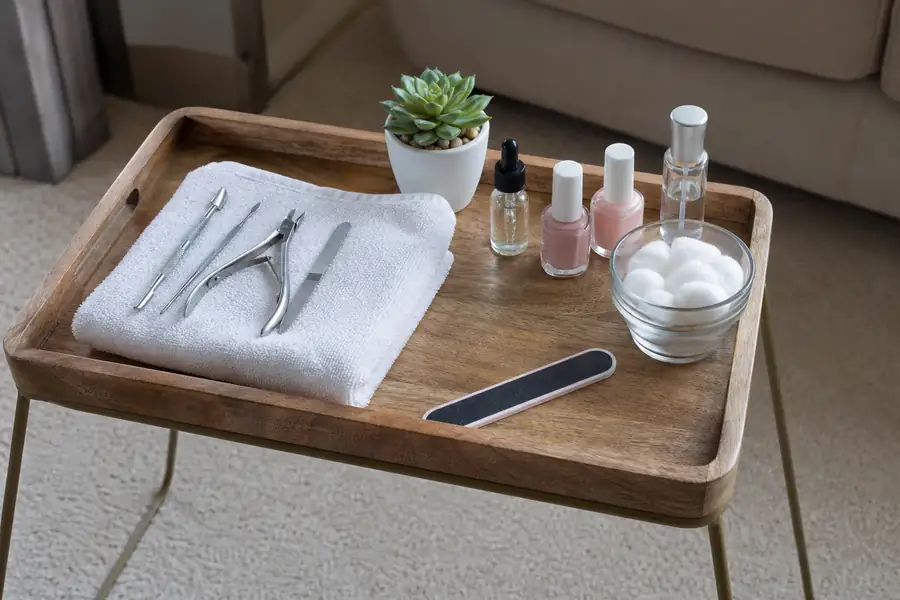
Hydrogen peroxide can lift leftover nail polish shadowing, but only on light colored carpet. On dark carpet, peroxide bleaches a lighter spot into the fiber that's often more noticeable than the stain it removed.
If you're working on light carpet and remover alone hasn't cleared a faint mark, dab a little 3% hydrogen peroxide on a cloth, test a hidden area first, and blot the spot before rinsing with water. Skip this step entirely on dark or dyed carpet, and skip it altogether on wool, which peroxide can also discolor.
If the stain leaves a dull patch, a stiff texture, or a shadow that won't lift no matter what you try, the fibers may need a deeper treatment than a spot fix can give. A professional carpet cleaning uses hot water extraction to flush out residue and restore texture that home methods can't reach, and it's worth booking if the spill happened on a carpet you care about keeping looking new.