
Quick answer: Identify the paint type before you reach for any solvent, because what lifts latex paint can set acrylic paint and do almost nothing to oil-based paint. Water-based and latex paint respond to dish soap and cool water, acrylic paint needs rubbing alcohol, and oil-based paint requires mineral spirits with the windows open.
Most household paint spills are latex, since that's what covers walls and trim in nearly every home. Check the can or the project you were working on. If you're not sure, treat it as latex first since that method is gentlest on carpet fibers, then step up to rubbing alcohol or mineral spirits only if the stain doesn't budge.
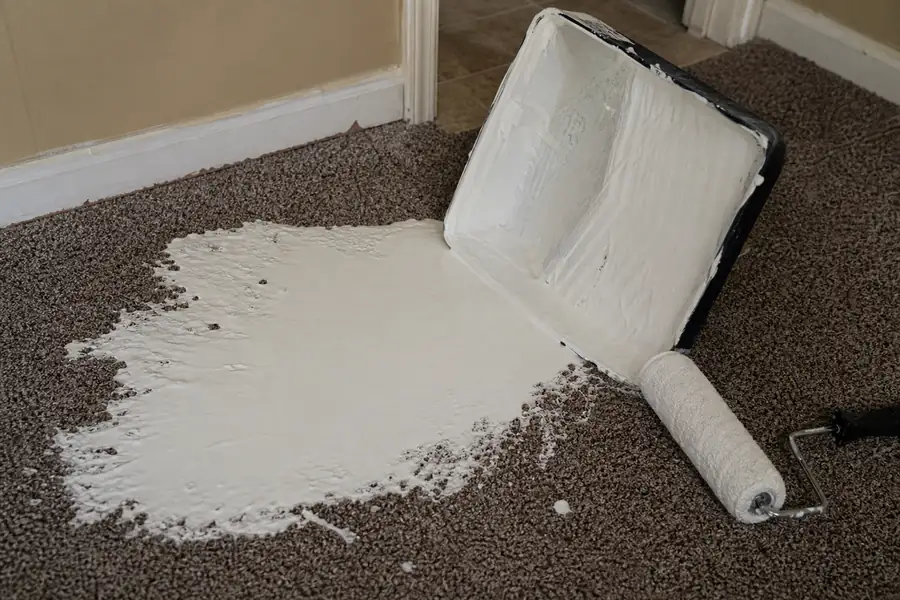
First Response While the Paint Is Wet
Wet paint comes out of carpet in minutes if you act before it skins over. Scrape up any excess with the edge of a spoon or dull knife first, working from the outer edge of the spill toward the center so you don't spread it wider.
Blot, don't rub. Rubbing pushes paint deeper into the pile and can smear it into fibers that were never touched. The same blot-first approach covered in Shiny Rhino's guide to how to remove carpet stains applies here: press a clean cloth straight down, lift, and move to a dry section of the cloth each time.
Check the paint can, the work order, or your memory for the paint type before you apply anything. That one detail decides whether you reach for dish soap, rubbing alcohol, or mineral spirits next.
Latex and Water-Based Paint (Dish Soap Method)
Latex paint on carpet comes out with dish soap and cool water, since latex stays water-soluble until it fully cures. Mix about a teaspoon of dish soap into a cup of cool water, dip a clean cloth, and blot the stain from the outside in.
Rinse by blotting with a cloth dampened in plain cool water, then press a dry towel over the spot to pull out moisture. Repeat the soap-and-rinse cycle two or three times rather than soaking the area once. Small amounts, applied often, lift more paint than one heavy application.
Never use hot water on latex paint. Heat can set the acrylic binders in latex paint the same way it sets an egg, turning a treatable stain into a permanent one.
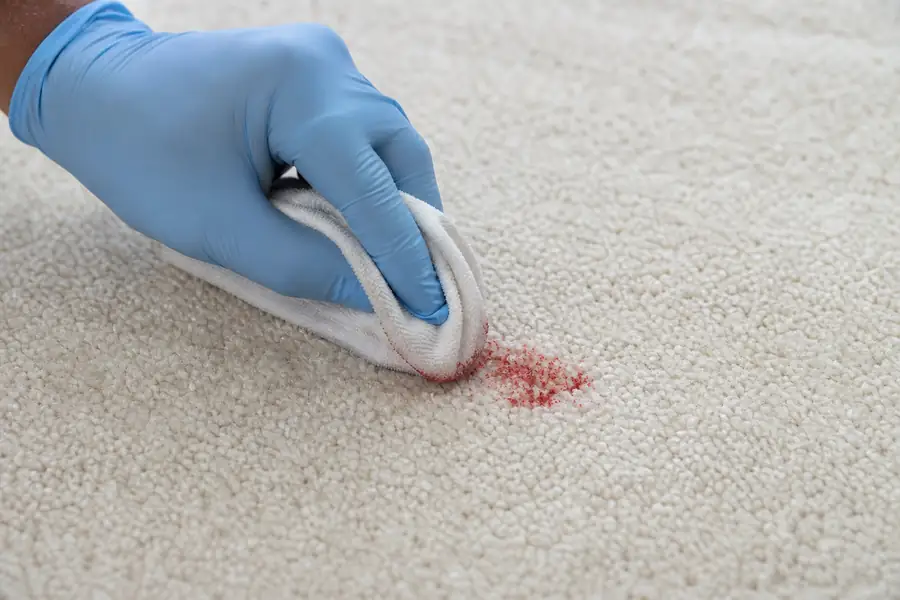
Acrylic Paint (Rubbing Alcohol)
Acrylic paint releases from carpet with rubbing alcohol, which breaks down the acrylic polymer before it cures rock-hard. Dab isopropyl alcohol onto a cloth, not directly onto the carpet, and blot the stain working from the edges inward.
Test the alcohol on a hidden corner of carpet first, since it can dull the finish on some synthetic fibers. If the test spot looks fine after a few minutes, continue on the stain and switch to a fresh section of cloth as it picks up color.
Acrylic paint that's already partly dry needs more passes and a little more patience, but it still responds to alcohol far better than to soap and water alone.
Not sure when your carpets were last deep cleaned?
Get an exact price online in about two minutes. No phone tag, no surprise fees.
Get My Instant QuoteOil-Based Paint (Mineral Spirits, Ventilation, Fiber Test)
Oil-based paint needs mineral spirits, not water, because oil and water repel each other and water just pushes the stain deeper into the pad. Open windows and a door before you start, since mineral spirit fumes build up fast in a closed room.
Test mineral spirits on a hidden patch of carpet before treating the visible stain. Some synthetic fibers discolor or soften on contact with strong solvents, and a hidden fiber test catches that before it becomes a second problem.
Apply mineral spirits to a cloth, then blot the stain in short strokes, switching to clean cloth sections often. Follow with a dish soap and water rinse to clear any solvent residue left behind, then blot dry.
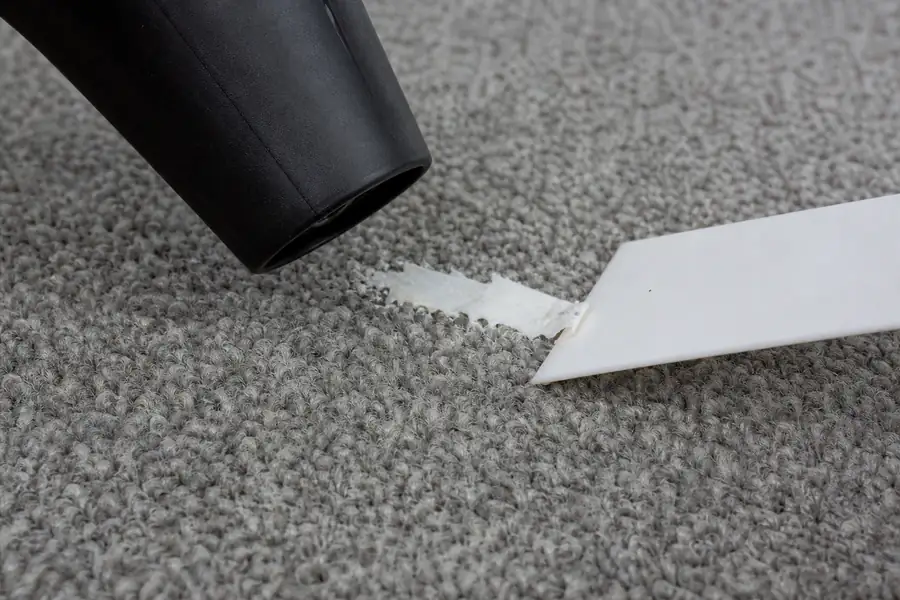
Dried Paint on Carpet: Soften, Scrape, Repeat
Dried paint on carpet comes out with the same basic sequence every time: soften it, scrape away what lifts, then treat what's left with the solvent that matches the paint type. Skipping straight to solvent on a hard, dried blob usually just smears it around the surrounding fibers.
Glycerin Method
Glycerin softens dried paint by penetrating the hardened layer without the fumes of a solvent. Apply a small amount to the stain, let it sit for 15 to 20 minutes, then work at the edges with a dull knife or an old toothbrush to flake off softened paint before treating the remainder with the matching solvent.
Steam Method
Steam softens dried paint fast by loosening the bond between the paint and the carpet fiber. Hold a garment steamer or a steam iron over a damp cloth a few inches above the stain, let the heat and moisture work for 20 to 30 seconds, then scrape gently and repeat until no more paint lifts.
What Not to Do When Removing Paint From Carpet
Oversaturating carpet with any solvent or soap solution does more damage than the paint itself. Excess liquid soaks through to the carpet backing and pad, where it can cause separation, mildew, or wicking, which is when a stain you thought you removed reappears at the surface as the carpet dries.
- Don't rub or scrub hard; it spreads paint and can fray carpet fibers.
- Don't use hot water on latex or acrylic paint before you know it's fully removed.
- Don't mix rubbing alcohol and mineral spirits on the same stain.
- Don't skip the hidden fiber test before using a new solvent for the first time.
- Don't wait days to treat a fresh spill if you can help it; every hour makes wet paint act more like dried paint.
If paint has soaked into a large area or worked down into the padding, home methods only get partway there. Professional carpet cleaning with truck-mounted hot water extraction reaches residue that surface treatment can't, and it's worth booking before the stain has more time to set.