
Quick answer: Vacuum the couch, check the fabric care code on the tag, and spot test any cleaner first. Then match the method to the material: a water-based cleaner for polyester, cotton, or linen, a dedicated leather cleaner for leather, and dry brushing or solvent for suede and velvet.
Couch cleaning tips that work on one fabric can ruin another, so how to clean a couch really depends on which couch you own. A dirty couch also traps dust and allergens that affect your home's indoor air quality. These steps work whether you call it a couch or a sofa.
- Vacuum before any liquid or cleaner touches the fabric.
- Check the tag for a W, S, WS, or X cleaning code.
- Spot test on a hidden seam or cushion underside first.
- Match cleaner to fiber: water-based for polyester, cotton, and linen; dedicated products for leather, suede, and velvet.
- Deep clean once or twice a year to clear odor and allergens that build up over time.
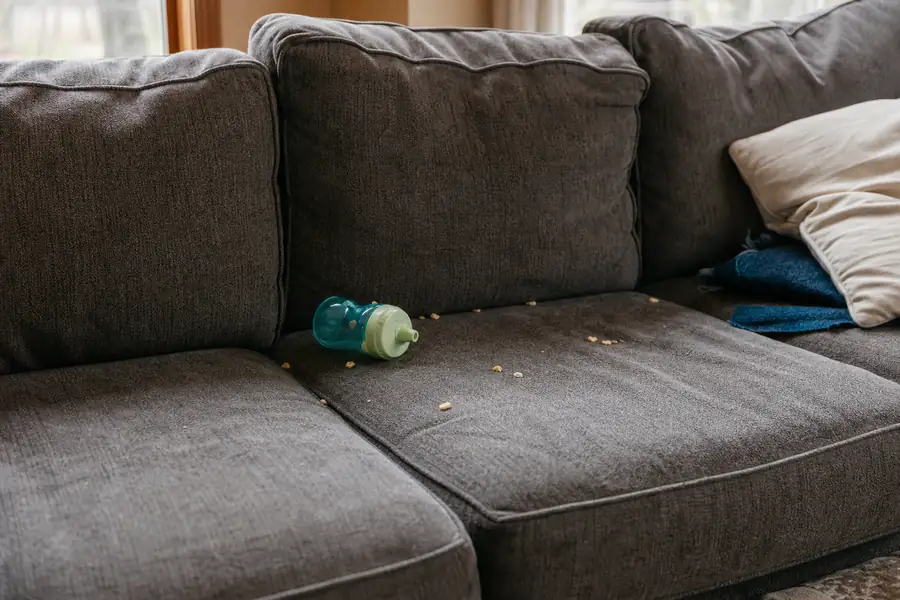
The 3 Universal First Steps to Clean a Couch
Every couch, whatever the fabric, starts the same way: vacuum, check the code, spot test. Skip any of these and you risk setting a stain permanently or damaging the fabric.
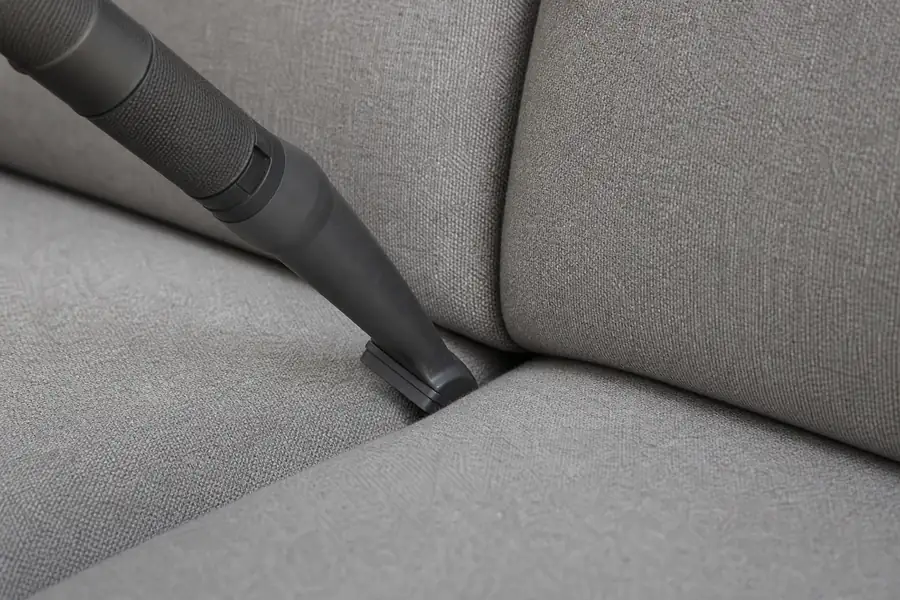
Vacuum with an upholstery attachment first, working into seams and under cushions where crumbs and dust collect. This clears loose debris before any product gets worked into the weave.
Then find the cleaning code, a letter on a tag under a cushion or on the frame. W means water-based cleaners are safe, S means solvent only, WS means either works, and X means vacuum only, no liquid at all.
Finally, test any product on a hidden spot. Apply a small amount, blot, and wait ten minutes to check for color change before treating a visible area.
How to Clean a Polyester or Microfiber Couch
Polyester and microfiber couches clean up with a mild dish soap solution and a soft cloth, blotted rather than rubbed. These synthetic fibers resist staining well, but they show water rings if you oversaturate them.
Mix a few drops of dish soap into warm water, dab it onto the stain, and blot dry, working from the outside of the stain inward. Let the cushion air dry fully, usually a few hours, before anyone sits on it.
Microfiber crushes or mats if scrubbed, so Shiny Rhino's guide to cleaning a microfiber couch covers brush technique and alcohol-based spotting for tougher marks.
How to Clean a Cotton or Linen Couch
Cotton and linen couches need gentle, low-moisture cleaning because both fibers wick water and can shrink or spot if soaked. A light mist of water with a small amount of mild detergent, blotted immediately, handles most spills.
Linen shows a faint ring if a damp patch dries on its own, so blot outward from the edge of the stain in overlapping circles, then fan the area with a dry towel to speed drying.
For dullness or set-in marks, a fabric-safe spot cleaner formulated for upholstery lifts grime without leaving the stiff residue some all-purpose cleaners do.
How to Clean a Leather Couch
Leather couches clean up with a dedicated leather cleaner and conditioner, never water alone and never upholstery shampoo. Water can darken leather permanently or leave stiff, cracked patches once it dries.
Wipe leather down with a dry microfiber cloth first, then apply leather cleaner in small circular motions. Condition every few months to keep the surface from drying out and cracking, especially in low-humidity climates.
Full steps for handling ink, grease, and scratches are in Shiny Rhino's leather couch cleaning guide.
Not sure when your carpets were last deep cleaned?
Get an exact price online in about two minutes. No phone tag, no surprise fees.
Get My Instant Quote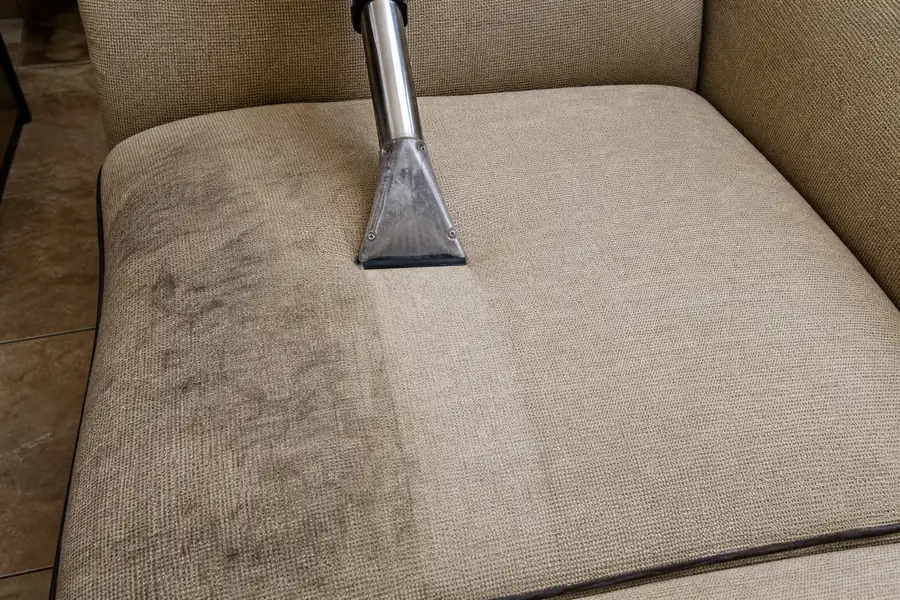
How to Clean a Suede or Velvet Couch
Suede and velvet couches clean up dry, with a suede brush, not with water or standard liquid cleaners. Water flattens the nap, the raised fiber texture that gives suede and velvet their look, and leaves hard, discolored spots.
Brush suede in one direction to lift crushed fibers and loosen dirt, then vacuum the dust away. Velvet responds the same way: brush against the pile to fluff it back up after use.
For stains, a dry cleaning solvent made for suede, applied sparingly, is the safer route. Shiny Rhino's suede couch cleaning guide covers safe solvents and how to handle water marks if they happen.
Whole-Couch Refresh Routine: Deodorizing, Cushions, and Frame
A full couch refresh covers three parts: deodorizing, the cushions, and the frame. Doing all three keeps the whole piece smelling and looking clean, not just the spots you notice.
Sprinkle baking soda over fabric cushions, let it sit 20 to 30 minutes to absorb odor, then vacuum it off. For stronger pet or smoke odor, an enzyme-based neutralizer breaks down odor molecules instead of masking them.
Remove cushions and clean both sides, plus the crevices they sit in, where crumbs and pet hair build up fastest. Shiny Rhino's guide to cleaning couch cushions covers zipper covers, foam inserts, and down-filled cushions, since each dries at a different rate.
Wipe wood legs and arms with a dry or barely damp cloth; standing water causes the same white ring damage on couch wood that it does on hardwood floors.
Steam Cleaning Cautions by Fabric Type
Steam is not safe for every couch fabric, and using it on the wrong material can shrink fibers or ruin a leather finish. The table below shows which fabrics tolerate steam and which need a dry approach.
| Fabric | Steam Safe? | Water-Based Cleaner? | Best Approach |
|---|---|---|---|
| Polyester/Microfiber | Usually, in moderation | Yes | Light steam or damp cloth |
| Cotton/Linen | Low heat only | Yes, sparingly | Blot with mild detergent |
| Leather | No | No | Leather cleaner and conditioner |
| Suede/Velvet | No | No | Dry brushing, solvent spotting |
Even on steam-tolerant fabrics, too much heat and moisture soaks the padding underneath and can take days to dry, inviting mildew. Truck-mounted hot water extraction, run at a controlled 200°F with metered pressure, avoids that problem by pulling moisture back out as it cleans.
When to Book Professional Upholstery Cleaning
Book a professional cleaning when a stain has set for more than a day, odor persists after deodorizing, or the couch has not been deep cleaned in a year. DIY spot cleaning handles fresh spills, but it rarely reaches the padding where odor and allergens actually live.
Shiny Rhino technicians identify fiber type before applying any product, then use truck-mounted hot water extraction or the right dry method for leather and suede, backed by over 25 years cleaning upholstery nationwide. Professional upholstery cleaning covers the frame, cushions, and hard-to-reach seams in one visit, and booking online applies an automatic discount.
Humid climates like Florida slow drying time, while dry heat in places like Colorado pulls moisture out of leather fast. Either way, cleaning on a set schedule keeps fabric from staying damp too long or drying out.